
















The United States has suspended its plans to impose sanctions on China’s Ministry of State Security due to a significant cyber espionage campaign, aiming to prevent the disruption of trade negotiations between the two economic powerhouses.
Current and former US officials informed The Financial Times that the intention to impose sanctions was “put on hold” to avoid jeopardizing the US-China détente.
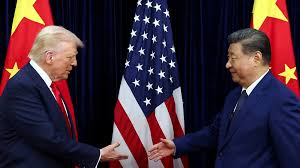
Initially, the US intended to sanction the Chinese intelligence agency and the contractors allegedly involved in a hacking operation against US telecom networks known as “Salt Typhoon.” While Washington may forfeit the opportunity to impose sanctions, US President Donald Trump’s administration is also preparing to implement substantial new export controls against China following an agreement reached in the South Korean city of Busan.
According to the Financial Times, several sources indicated that the focus of the Trump administration’s China policy has shifted towards ensuring “stability” until the US can diminish China’s supremacy in rare earths, which has hindered its capacity to take more aggressive measures.
Trump shows a favorable stance towards China ahead of his visit. The officials also remarked that Washington is adopting a softer approach towards China because Trump aims to avoid jeopardizing his trip to Beijing in April. Nevertheless, the choice not to impose sanctions regarding Salt Typhoon, which has effectively targeted the unencrypted communications of senior US officials, has generated discontent among China hawks within the Trump administration.
“The administration seems to be conceding on export controls to facilitate President Trump’s visit to Beijing and to gain time to reduce reliance on critical minerals from China,” stated Zack Cooper, an Asia security expert at the American Enterprise Institute, to FT. “I am concerned that this is merely concessions disguised as strategy.”
Another action that provoked the American China hawks was the decision to convene a high-level meeting to determine whether to grant licenses for Nvidia to export the H200, as reported by FT. In October, Trump indicated that he might permit Nvidia to sell an even more sophisticated chip known as the Blackwell to China; however, his advisors persuaded him against making that choice.
Furthermore, in recent weeks, the Trump administration has strengthened the coordination of its China policy by assigning Stephen Miller, the deputy White House chief of staff, the responsibility of ensuring that various departments refrain from taking actions that could jeopardize the détente, according to two sources cited by FT. Notably, Miller was appointed to this position after US Treasury Secretary Scott Bessent expressed concerns about being caught off guard by a White House memo that raised issues regarding Alibaba, the Chinese technology company.
Overall, it will be intriguing to observe whether the Trump administration’s lenient stance towards China proves beneficial in the trade negotiations between the two countries.