


















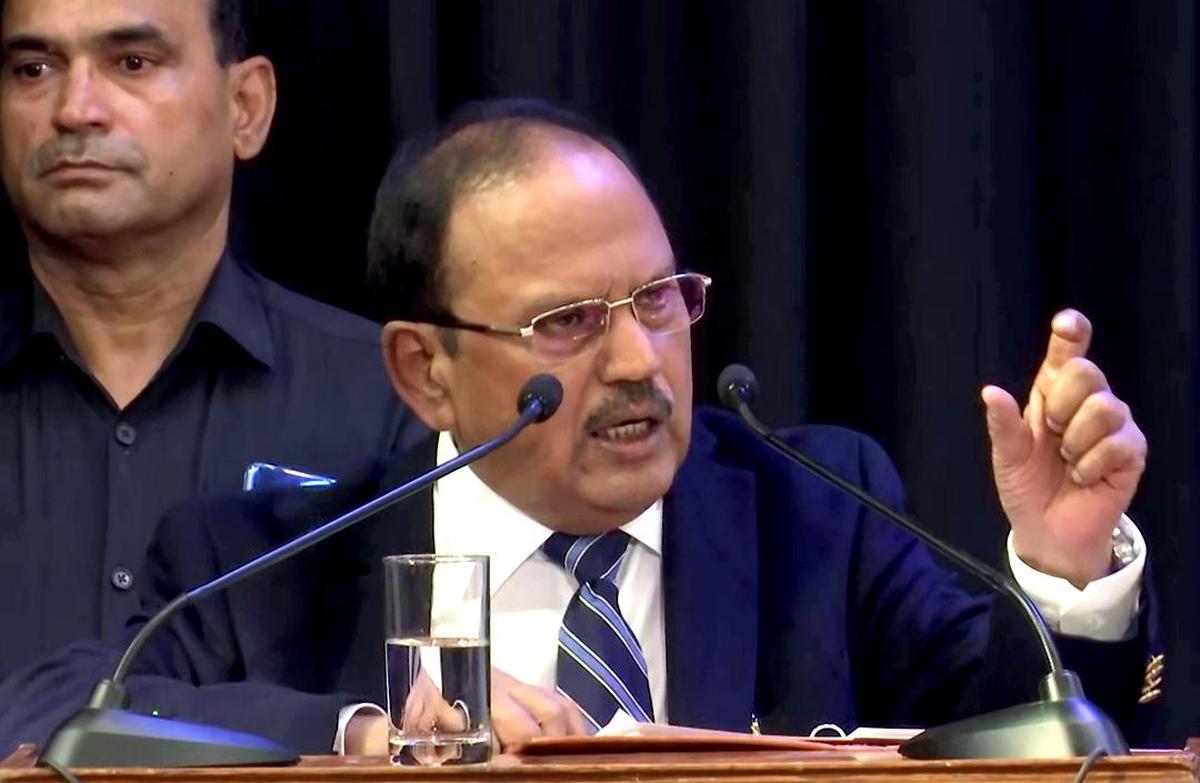
On Wednesday, Khalilur Rahman, the National Security Adviser of Bangladesh, met with Ajit Doval, India’s National Security Adviser, in Delhi, extending an invitation for Doval to visit Dhaka.
This meeting signifies the first high-level interaction between the two officials since the sentencing of former Bangladesh Prime Minister Sheikh Hasina, who is currently in India, to death.
Rahman arrived in New Delhi on Tuesday evening, a day ahead of schedule, in preparation for the Colombo Security Conclave (CSC) meeting that Doval is convening on 20 November.
Both parties have remained discreet regarding any bilateral discussions that may have taken place during Rahman’s originally planned visit. He was expected to attend a dinner hosted by Doval on Wednesday, engage in the CSC on Thursday, and subsequently return to Dhaka.
According to a statement released by the Bangladesh High Commission to India, “The Bangladesh delegation to the seventh NSA-level meeting of the Colombo Security Conclave (CSC), led by National Security Adviser Dr. Khalilur Rahman, met with India’s National Security Adviser Ajit Doval and his team today in (New) Delhi. They discussed the operations of the CSC and significant bilateral matters.”
Rahman is the second senior official from Bangladesh’s interim government to visit New Delhi following the ousting of former Prime Minister Sheikh Hasina in August 2024. His visit occurred just 48 hours after Hasina was sentenced to death by the International Crimes Tribunal-Bangladesh (ICT-B) for “crimes against humanity.”
Hasina’s conviction is linked to incidents arising from her government’s attempts to quell student protests in Bangladesh from June to August 2024. Additionally, her Home Minister, Asaduzzaman Kamal Khan, was also sentenced to death by the ICT-B. Hasina fled Dhaka on 5 August 2024 and has been residing in New Delhi since then.
On Monday, Dhaka officially requested India to facilitate her return, stating that any nation providing her refuge is engaging in an “intolerant act and a disregard for justice.”
Despite the existence of an extradition treaty between the two nations, concerns regarding the trial process have been raised.