

















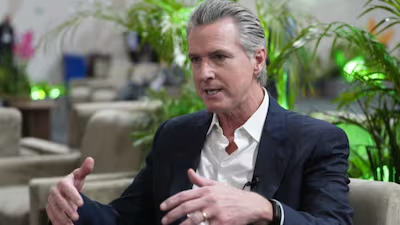
In a striking appearance at the UN climate summit, Gavin Newsom, the governor of California, announced that he was stepping into the void left by Washington, positioning himself and his state as leaders in climate action.
With the US federal delegation notably missing, Newsom quickly highlighted the differences. He criticized the Trump administration for withdrawing the United States from the significant Paris accord — on two separate occasions. As he stated, “It is ‘an abomination that he has twice, not once, pulled away from the accords.’”
During the summit held in Belém, the Brazilian Amazon city hosting Cop30, the California governor also underscored the economic implications of climate action. “It’s a moral commitment, it’s an economic imperative,” he remarked, adding that California — the world’s fourth-largest economy — is “two-thirds powered by renewables.”
Newsom’s participation at Cop30, alongside numerous state and city leaders who filled the void left by the national government, indicates a transformation: subnational entities are stepping up to occupy the leadership gap in global climate policy.
As he navigated the summit halls, Newsom effectively established California as the international representative of US climate ambition — sharply contrasting with the federal government’s absence and casting a significant shadow over the policy landscape leading up to 2028.