

















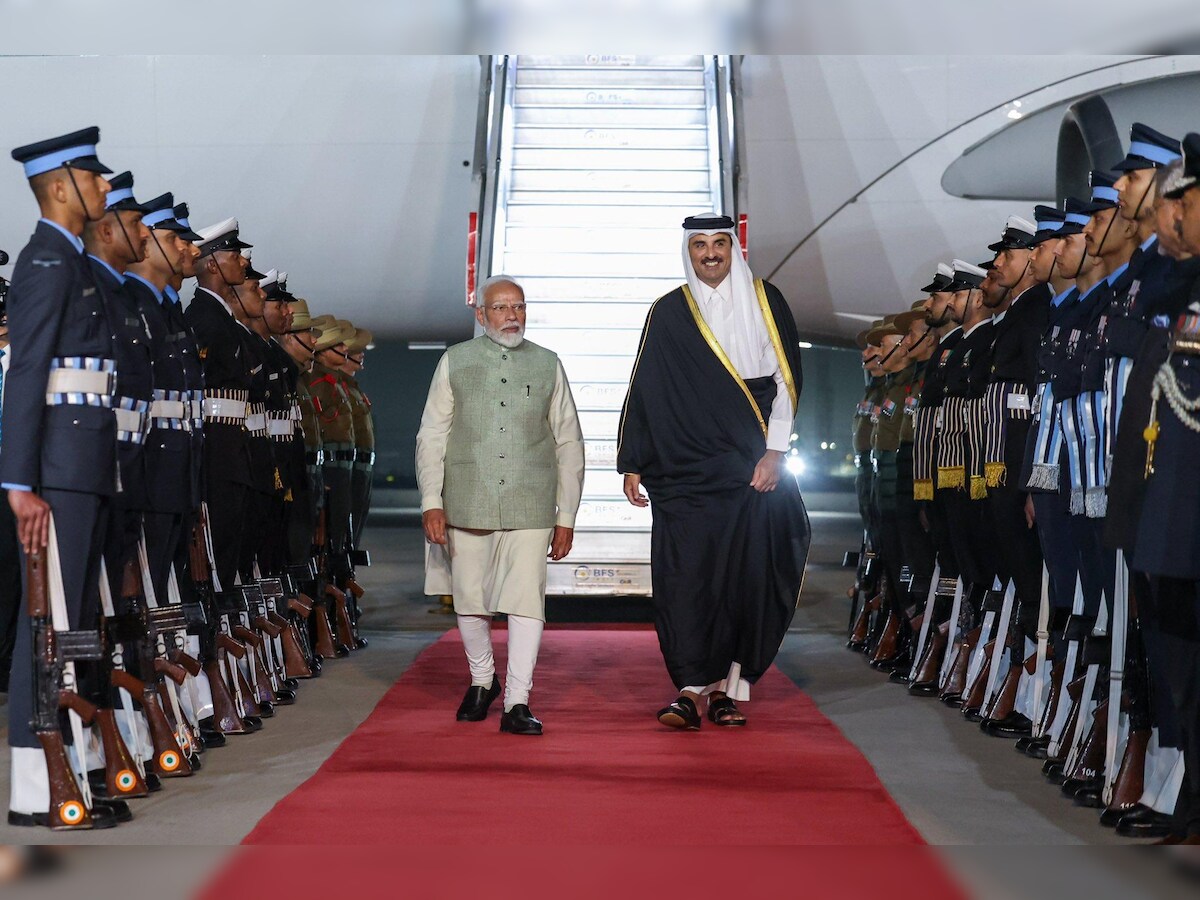
India and Qatar are anticipated to finalize the terms of reference for a free trade agreement (FTA) within this week, as stated by the Indian commerce ministry on Sunday.
This announcement precedes Commerce and Industry Minister Piyush Goyal’s two-day visit to Doha, commencing on October 6. During this visit, Goyal will participate in the Qatar-India Joint Commission on Trade and Commerce, which will be co-chaired by Sheikh Faisal bin Thani bin Faisal Al Thani, the Minister of Commerce and Industry of Qatar.
Goyal will be joined by senior officials from various ministries along with a substantial business delegation.
As per the ministry, the discussions will encompass a broad spectrum of topics, including an evaluation of bilateral trade performance, addressing current trade barriers and non-tariff obstacles, and identifying methods to enhance trade and investment flows between the two nations.
“The discussions are expected to involve considerations regarding the proposed India-Qatar FTA, focusing on the path forward for the finalization of the Terms of Reference (ToR) for the Comprehensive Economic Partnership Agreement (CEPA), which aims to further bolster economic collaboration between both nations,” the ministry remarked.
The ToR typically outlines the procedures for negotiating a trade agreement.
Collaboration in other significant sectors such as finance, agriculture, environment, tourism, culture, and healthcare will also be a crucial aspect of the discussions, it noted.
Qatar stands as a vital trading partner for India within the Gulf Cooperation Council (GCC), with bilateral trade exceeding USD 14 billion in 2024-25.
The GCC comprises Bahrain, Kuwait, Oman, Qatar, Saudi Arabia, and the United Arab Emirates (UAE).
India has already established a trade agreement with the UAE, and a comparable deal is anticipated to be finalized with Oman.
Goyal has previously indicated that the proposal for an FTA with the GCC is not currently under consideration.
In February of this year, India and Qatar reached an agreement to double bilateral trade to USD 28 billion over the next five years.