


















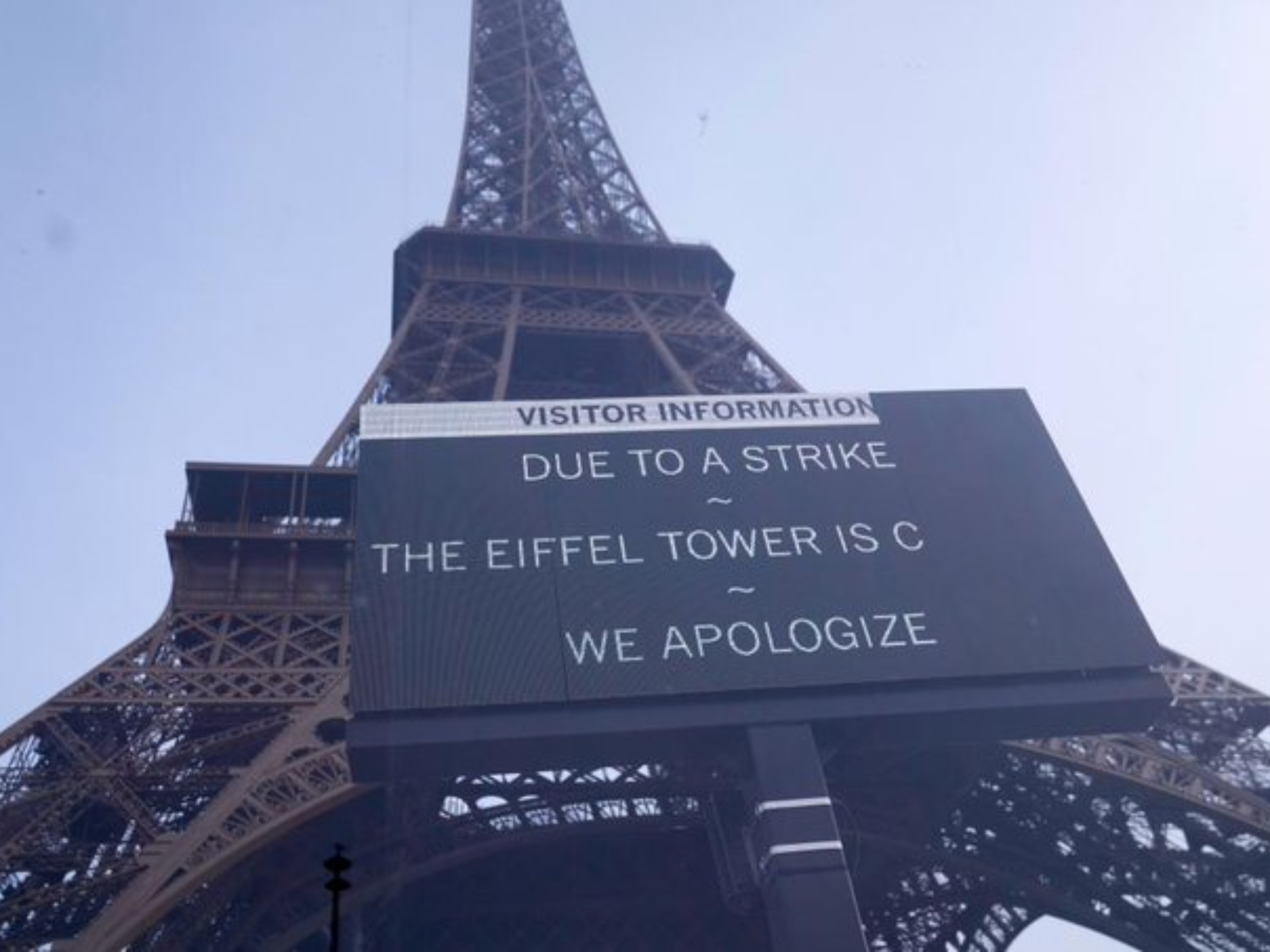
On Thursday, demonstrators organized protests in over 200 towns and cities throughout France, opposing spending reductions and advocating for increased taxes on the affluent.
In Paris, thousands of workers, retirees, and students marched from Place d’Italie, while the Eiffel Tower was closed due to strike actions, as stated by its management.
These nationwide strikes, coordinated by France’s major unions, represent the latest in a series of protests that commenced last month amid political turmoil and challenging budget discussions.
Union leaders are calling on newly appointed Prime Minister Sébastien Lecornu to eliminate austerity measures suggested by his predecessor, which involve freezing social welfare. They contend that these proposals would further diminish the purchasing power of low- and middle-income families.
Lecornu, who assumed office last month, has not yet disclosed his budget plan or appointed government ministers, with parliament anticipated to discuss the bill before the year’s end.
“It’s true, it’s the first time that there are three days of strikes and protests in a month without a government or budget. It shows the level of social anger,” stated Sophie Binet, head of the CGT union, on Thursday.
In an interview with BFM TV news broadcaster, she was questioned about the timing of the recent protests: “Why are we protesting now? Because we feel that it’s now that the decisions are being made, and we want to be heard.”
The French Interior Ministry reported that 195,000 protesters have taken to the streets nationwide, including 24,000 in Paris.
SNCF, the national rail operator, indicated that high-speed train services were operating normally on Thursday, although some regional lines experienced partial disruptions. In Paris, metro services were nearly normal, but many commuter trains were running at reduced capacity.
Some educators and healthcare professionals have also participated in the strikes; however, overall figures suggest that fewer individuals responded to the unions’ call compared to last month.
On September 18, over 500,000 protesters took to the streets in both small towns and large cities across France, including Paris, as reported by the police and the interior ministry. Unions indicated that there were more than one million strikers and demonstrators throughout the country.
The previous week, a nationwide day of anti-government protests resulted in streets filled with smoke, burning barricades, and clouds of tear gas during the “Block Everything” campaign.