

















This week, Chinese President Xi Jinping traveled to the troubled region of Xinjiang to commemorate the 70th anniversary of its governance under the Chinese Communist Party. Situated in the far-western part of China, Xinjiang has experienced violence that is reportedly linked to the actions of Xi’s administration against Uyghur Muslims.
During his visit, which marks his third trip in three years, Xi asserted that the Communist Party would continue to implement its policies aimed at pacifying and developing the region, stating that the culture of Xinjiang can be harmonized with that of Chinese society.
“Experience has demonstrated that the party’s approach to governing Xinjiang in this new era is both scientific and effective, and it is essential to maintain this strategy over the long term,” Xi remarked.
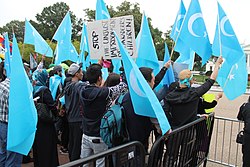
The Uyghur Muslim-majority autonomous region has drawn significant attention due to the extreme “corrective” measures enforced by the Xi administration. The United States and other nations have accused China of human rights abuses in its crackdown on Uyghurs and other Muslim ethnic minorities in Xinjiang, claims that have prompted many Western companies to refrain from operating in the area.
This visit followed Xi’s trip to Tibet, where he sought to reinforce Chinese control over the predominantly Buddhist region that was occupied by the Chinese communist regime in the 1950s.
What actions did Xi undertake in Xinjiang?
On Wednesday, the Chinese president arrived in Urumqi, the capital of Xinjiang, to celebrate the 70th anniversary of the Xinjiang Uyghur Autonomous Region, which was established in 1955 when China granted a degree of political autonomy to the area.
With this visit, Xi has become the first Chinese leader to participate in the anniversary celebrations in Xinjiang. Last month, he also traveled to Tibet for similar commemorative events.
The Communist Party has historically encountered difficulties in governing Xinjiang, a mountainous area that borders Central Asia and is home to approximately 12 million Turkic-speaking Muslim Uyghurs. For many years, there has been a persistent separatist sentiment among the Uyghur population, which has occasionally escalated into violent acts targeting symbols of Beijing’s authority and the Han Chinese majority.
Why is this significant?
James Leibold, a professor at La Trobe University in Australia, informed the Wall Street Journal that the Chinese president’s trips to Tibet and now Xinjiang were orchestrated as “a symbolic celebration declaring the party’s achievement in integrating its most restless borders into the core of the nation.”
In the past year, Beijing has intensified its attention on ethnic matters. The Communist Party has revamped its leadership regarding ethnic policies and dismissed several senior officials from ethnic minority backgrounds. Additionally, authorities have proposed a draft law aimed at “fostering ethnic unity and advancement,” which encompasses initiatives to encourage the use of standard Chinese among schoolchildren and mandates that parents and guardians instill loyalty to the Communist Party and the homeland in minors.
In Xinjiang, Chinese authorities have intensified surveillance of Uyghur Muslims by establishing advanced security measures and implementing a forced-assimilation initiative targeting Muslim ethnic groups.
International researchers have documented the existence of mass internment camps for political indoctrination, alongside limitations on religious practices and policies that have resulted in forced labor and family separations. Furthermore, authorities have demolished mosques and other places of worship.