


















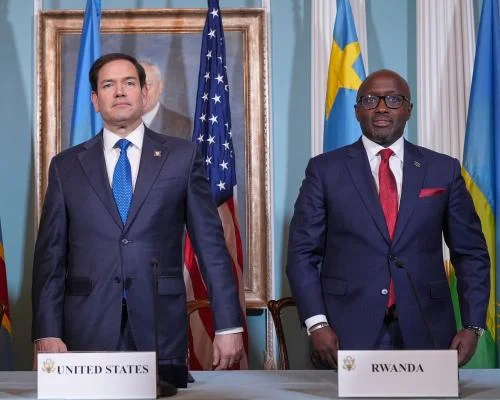
As part of an agreement to accept deportees from the United States, Rwanda has confirmed the arrival of seven migrants sent from the US in August. The Trump administration has been actively seeking agreements with countries such as South Sudan and Eswatini (formerly known as Swaziland) to accept migrants as a component of its broader deportation strategy.
“The initial group of seven vetted migrants arrived in Rwanda in mid-August,” stated government spokeswoman Yolande Makolo in a statement on Thursday, emphasizing Kigali’s readiness to implement the controversial arrangement.
Rwanda is among four African nations that have consented to host US deportees, alongside Uganda, Eswatini, and South Sudan. Earlier this month, Kigali announced its capacity to receive as many as 250 deportees.
This model is not exclusive to Rwanda. In July, eight individuals identified as violent offenders were deported from the US to South Sudan after the Supreme Court authorized the action. Shortly thereafter, five others were sent to Eswatini, where they were placed in solitary confinement under stringent controls. Uganda has also joined this framework, specifying that it will only accept migrants without criminal records and will not take unaccompanied minors.
Collectively, these arrangements indicate an increasing US dependence on African nations to accommodate migrants who are denied American asylum, which immigration hardliners perceive as an effective solution for detainees who cannot be returned to their countries of origin.
However, critics contend that this practice is both “dangerous and cruel,” expressing concerns that deportees may encounter violence, lack community connections, or face challenges in countries where they have no cultural or linguistic ties.
The Trump administration has defended these agreements as essential for the prompt removal of individuals, particularly those with criminal convictions, and has pursued similar arrangements beyond the African continent. In March, over 200 Venezuelans alleged to have gang affiliations were deported to El Salvador, where they were detained until a prisoner exchange resulted in their release last month.
Rwanda has actively positioned itself as a destination for Western partners looking to relocate migrants, despite enduring criticism from human rights organizations regarding its record on human rights. In May, the foreign minister confirmed that discussions with Washington about accepting US deportees were already in progress.
The Supreme Court’s ruling in June, which permits third-country deportations without migrants having to first demonstrate a risk of harm, has encouraged such transfers. However, the legality of this ruling is currently being contested in a federal lawsuit in Boston, which may eventually reach the Supreme Court.
For Rwanda and similar nations, these agreements provide diplomatic and potentially economic advantages with Washington. For the United States, they represent the expansion of a controversial migration strategy well beyond its own borders.