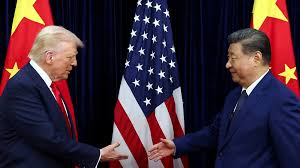

















With Donald Trump’s return to the White House, a new chapter has begun where personal relationships often take precedence over formal negotiations.
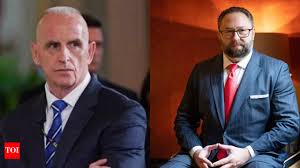
India and Pakistan have aligned their interests not based on party affiliations but rather on the capabilities of their selected ‘Trump whisperers’ Jason Miller and Keith Schiller, whose influence and strategies may be shaping tariff regulations, diplomatic actions, and even the dynamics of goodwill in South Asia.
The Trump ‘whisperers’: A tale of two lobbyists
India has opted for Jason Miller, a seasoned political strategist with strong ties to the Republican party. He has been a key player in Trump’s campaigns in 2016 and 2020 and is currently advising the 2024 campaign. India has engaged his firm, SHW Partners, for a significant contract worth $1.8 million, with a clear objective: to offer strategic advice and manage relationships with Congress and other essential stakeholders.
Conversely, Keith Schiller represents the other side, a figure whose influence stems not from political credentials but from personal loyalty. A former NYPD detective and Trump’s trusted bodyguard for over twenty years, Schiller’s firm, Javelin Associates, is contracted by Pakistan. His fee is considerably lower than India’s, at $50,000 per month, yet his access to the president is regarded as unparalleled.
Although both are referred to as “Trump whisperers,” recent developments indicate that Schiller’s personal ties may be yielding more favorable results than Miller’s political acumen. This has become particularly evident in the ongoing disputes regarding tariffs and diplomatic relations.
Tariffs, diplomatic snubs & shifting tides
The recent tariff conflict underscores the contrasting fortunes of the two countries. Pakistan’s army chief, Asim Munir, received a rare invitation to a White House luncheon, a gesture widely interpreted as a diplomatic achievement. In contrast, India faced a hefty 50% tariff and penalties if it persists in purchasing Russian oil, a contentious issue that has drawn public criticism from Trump’s senior aides, including Deputy Chief of Staff Stephen Miller. Pakistan’s tariff rate, on the other hand, remains significantly lower.
This disparity has caught the attention of many in New Delhi. Nevertheless, insiders assert that Trump remains unpredictable. Despite having strong connections, Schiller’s closeness does not ensure positive results; his tenure in the White House concluded in 2017, and some argue that Trump ultimately makes decisions based on what he perceives to be in America’s best interest. The current situation suggests that Schiller’s personal access to the President may hold more significance. Miller was considered for the role of White House communications director but is not included in the present inner circle.
The true advantage? Personal diplomacy:
Trump prefers direct phone calls, private meetings, and frequently enjoys a round of golf. Leaders such as Japan’s Shinzo Abe have formed a bond with Trump through golf; South Korea’s Yoon Suk Yeol took up the sport to foster rapport. However, PM Modi declined an invitation to the White House on the same day that Pakistan’s army chief was welcomed, a move interpreted as a distancing gesture, which may have contributed to India’s chilly reception regarding tariffs and energy policy.
The Prime Minister’s firm position on tariffs and Russian oil, along with a more detached approach to direct engagement with Trump, has reportedly caused some discontent. An Indian diplomat noted that PM Modi prefers to delegate tariff negotiations to his team, but this conventional approach seems to conflict with Trump’s more personal and often ego-driven diplomatic style.
The high expense and mixed results of lobbying for favor
Washington has become a battleground for influence, with nations investing tens of millions in lobbying contracts. This year, thirty countries have engaged new lobbyists specifically to navigate Trump’s trade agenda; Pakistan alone has enlisted seven firms, with Schiller’s team recognized for assisting in reducing tariff rates. India’s significant investment in Miller has yet to produce comparable benefits.
Both lobbyists possess distinct strengths; Miller excels in political acumen and message discipline, while Schiller is known for personal trust and access. However, the outcomes remain uncertain, as diplomatic successes often hinge on a leader’s capacity to engage directly with Trump, rather than relying solely on their appointed representatives.
Lobbying during the Trump administration
Although Trump ultimately makes decisions based on what he perceives as American interests, the right intermediary can still play a crucial role in framing those interests. Schiller’s network, which is founded on personal loyalty, seems to have assisted Pakistan in evading more severe tariff measures. Conversely, Miller, despite his campaign experience, has yet to achieve noticeable victories for India six months into his tenure.
The broader reality is quite sobering: numerous countries have invested millions in lobbying efforts in Washington since Trump’s return, ranging from economic powerhouses like Japan to smaller nations like Ecuador, often yielding mixed or minimal results. Switzerland’s president traveled to advocate against a 39% tariff but departed with little more than a handshake from a non-trade official.
“The current leadership in Washington appears to be disrupting the conventional methods of operation. It is not solely about business; it encompasses diplomacy and interactions with other nations. I believe the traditional model of influence is no longer effective,” stated Mukesh Aghi, CEO of the US-India Strategic Partnership Forum.
The implications extend far beyond tariffs. In a Washington where access serves as a form of currency, the rivalry between Miller and Schiller could subtly influence not only trade patterns but also the geopolitical landscape of South Asia itself.