

















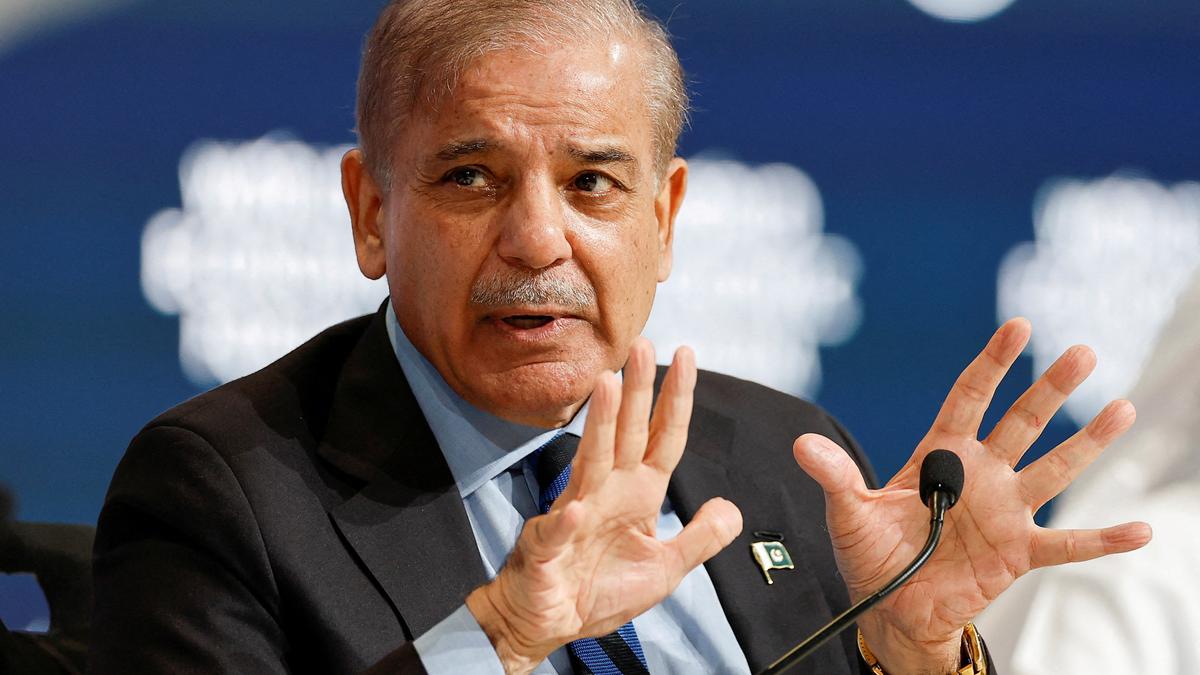
On Wednesday, Pakistan’s Prime Minister Shehbaz Sharif stated that his nation is prepared for a “meaningful dialogue” with India to address all unresolved issues. Nevertheless, this declaration follows a familiar and repetitive pattern that has caused India to be profoundly sceptical.
New Delhi perceives such peace initiatives from Islamabad as part of a well-established narrative, historically accompanied by treachery and aggressive actions.
Sharif made these comments during a meeting with British High Commissioner Jane Marriott in Islamabad, where they discussed regional matters and bilateral relations. As per an official statement, Sharif “expressed his gratitude for the UK’s involvement in reducing tensions during the Pakistan-India standoff” and reiterated that “Pakistan was prepared for a meaningful dialogue with India regarding all outstanding issues.”
These remarks come in the aftermath of Operation Sindoor, which India launched on May 7 to target terrorist and military infrastructure within Pakistan’s territories following the lethal Pahalgam terror attack.
However, India’s stance remains resolute: any dialogue must focus on Pakistan-occupied Kashmir (PoK) and the cessation of cross-border terrorism. Indian officials have consistently cautioned against being ensnared by rhetoric-driven diplomacy from Pakistan that lacks genuine intent and follow-through.
A history of peace talk proposals followed by betrayal
The leadership in Pakistan has a longstanding tradition of publicly extending olive branches while simultaneously allowing or orchestrating actions that undermine the very concept of peace.
1999 Kargil War: Just a few months following then-Prime Minister Atal Bihari Vajpayee’s historic visit to Lahore for a peace initiative with Nawaz Sharif, Pakistani troops and militants, guided by General Pervez Musharraf, infiltrated Indian territory in Kargil, igniting a violent conflict that resulted in the loss of hundreds of lives.
2001 Agra Summit: In the wake of the Kargil betrayal, India cautiously resumed diplomatic discussions. However, the summit ultimately failed, and in December of that year, terrorists from Pakistan launched an attack on the Indian Parliament, an assault that nearly pushed the two nations to the brink of war.
2008 Mumbai Attacks: Another significant setback occurred after years of back-channel diplomacy and confidence-building efforts. The 26/11 attacks, executed by operatives of the Pakistan-based Lashkar-e-Taiba, resulted in 166 fatalities and destroyed any remaining trust.
Post-Uri and Pulwama attacks: In more recent years, terror attacks in Uri (2016) and Pulwama (2019), once again linked to groups based in Pakistan, prompted Indian military responses, including surgical strikes and airstrikes in Balakot, respectively, further solidifying India’s perspective that engagement with Pakistan has consistently been undermined by acts of terrorism.
India’s cautious stance: The Indian government has consistently stated that discussions cannot advance under the threat of terrorism. Without clear and verifiable actions from Pakistan to dismantle terrorist networks operating from its territory, India remains reluctant to engage in any meaningful dialogue.
In this context, Sharif’s recent outreach is perceived in New Delhi not as a sincere diplomatic effort but rather as part of a familiar strategy, where calls for peace act as a facade for strategic inaction or deception.