


















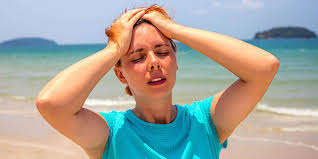
Climate change is establishing heat waves as the new standard. Extended exposure to these elevated temperatures can lead to numerous health problems, such as dehydration and heatstroke. Although specialists recommend remaining indoors, ideally in air-conditioned environments, this option is not available to everyone.
Recently, we have all experienced it — that oppressive, humid heat that makes breathing, sleeping, or even thinking clearly a challenge. This summer has been particularly harsh across many regions of the United States.
However, this is not merely a difficult summer. Climate change is transforming heat waves into a standard occurrence. Experts indicate that the planet is heating up more rapidly than anticipated, primarily due to the ongoing combustion of fossil fuels such as coal, oil, and natural gas. Consequently, areas that are already warm are becoming alarmingly hotter.
Extended exposure to such conditions can lead to dehydration, heatstroke, and exacerbate ailments like asthma and heart disease. Vulnerable groups include children, the elderly, pregnant women, and those who work outdoors.
Here are some tips to help you remain safe and cool.
First, what temperature is considered too hot?
It is not solely about how hot it feels — assessing when heat becomes perilous involves various factors beyond mere temperature.
One of the most precise methods for evaluating heat stress is known as the Wet Bulb Globe Temperature (WBGT). This measurement considers not only the temperature but also humidity, cloud cover, and wind — all of which influence how your body copes with heat.
A more commonly used measure, particularly in weather applications, is the heat index, which merges temperature and humidity to provide an understanding of how hot it genuinely feels outdoors.
Although it is less comprehensive than the WBGT, it is more accessible and still clarifies why a day at 90 degrees Fahrenheit (32 degrees Celsius) in arid Phoenix may be more bearable than an 80 degrees Fahrenheit (27 degrees Celsius) day in humid Little Rock — especially when you are outdoors.
The National Oceanic and Atmospheric Administration (NOAA) states that specific combinations of heat and humidity can swiftly become dangerous.
For example, if the temperature reaches 96 degrees Fahrenheit (36 degrees Celsius) with 45 percent humidity, that day would be classified as “dangerous” for prolonged exposure or vigorous physical activity.
The WBGT does not provide a definitive safety threshold; however, recent research indicates that even healthy young adults may experience difficulties with heat and humidity when exposed for extended durations, particularly during physical activity.
What makes hot nights particularly hazardous?
Although daytime heat often receives the most attention, elevated overnight temperatures can be equally detrimental, especially when they remain high and prevent the body from cooling down.
“Your body requires a break,” stated Ashley Ward, director of the Heat Policy Innovation Hub at Duke University, during a discussion with the Associated Press. “Without that overnight recovery, we begin the next day at a disadvantage.”
Ward explains that nights with temperatures not dropping below 75 degrees Fahrenheit (24 degrees Celsius) can result in a significant rise in heat-related illnesses, emergency room visits, and even fatalities. The lack of recovery time keeps the human body under stress, making it more susceptible the following day.
Her primary recommendation? Seek air conditioning whenever possible. However, she noted that census data frequently exaggerates the number of individuals who actually have functional AC units in their residences.
If cooling your entire home is not feasible, Ward suggests creating a “cool corner”—a designated space equipped with a fan or air conditioning where you can rest, aiding your body in recuperating for the next day.
In arid regions, evaporative or “swamp” coolers can provide some relief. However, caution is advised—”they can increase humidity and may actually hinder cooling efforts,” Ward remarked. In humid climates, a standard fan is typically more effective.
If you lack air conditioning at home, consider spending time in public venues that offer cooling, such as libraries, shopping malls, movie theaters, or designated cooling centers established by some communities during heatwaves.
You may also be eligible for assistance. In certain regions, the Low-Income Home Energy Assistance Program (LIHEAP) can help subsidize the cost of a window air conditioning unit, as per the National Council on Aging. Additionally, local non-profit organizations and civic groups may provide support if financial constraints are an issue.
What should you do if you are employed outdoors?
Working outdoors during a heatwave poses significant risks, and regrettably, there are currently no federal regulations in the United States to protect workers from heat exposure.
Some states have taken measures to address this issue. The Natural Resources Defense Council reports that states such as California, Oregon, Washington, Nevada, Colorado, Minnesota, and Maryland have established their own heat safety regulations. However, many other states still lack any legal protections.
Even in states with existing regulations, enforcement can be sporadic. Bharat Venkat, director of the UCLA Heat Lab, informed AP that workers frequently lack the ability to take necessary breaks, either due to the distance of shaded rest areas or the fear of losing wages for doing so.
“Most workers do not have actual control over their time or their work environment,” Venkat remarked, emphasizing the genuine challenges faced by many outdoor laborers.
Given these limitations, it is crucial to find methods to stay hydrated and reduce body temperature. This can be achieved by consuming plenty of fluids, dampening clothing, or applying cold water or a cool cloth to your hands, feet, armpits, and neck. Utilizing a portable handheld fan or wearing a cooling vest can also provide relief.
If you are engaging in physical activity, it is advisable to avoid the hottest parts of the day and to carry more water than you anticipate needing.
What are the signs of heat-related illness?
Symptoms of heat-related illness can differ from person to person, according to Venkat. Certain medications or pre-existing health conditions may also hinder the ability to regulate body temperature or recognize when one is overheating.
Initial warning signs include excessive sweating, muscle cramps, and headaches. At this point, it is essential to cease your activities and cool down—this can be done by splashing cold water on yourself or seeking an air-conditioned environment.
As heat exhaustion progresses, additional symptoms may emerge, such as an increased heart rate and feelings of dizziness. The next stage is heat stroke, which can manifest as confusion, slurred speech, and fainting. According to Ward, this is the moment to call 911.
“Do not hesitate to contact 911 or visit urgent care if you believe you may have overexerted yourself in the heat,” he stated.