

















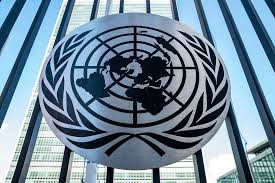
The United Nations, a collective global aspiration transformed into reality from the remnants of World War II, commemorates its 80th anniversary this month. However, there is little to rejoice about.
As the United Nations commemorates its 80th anniversary this month, the organization, originally conceived as the protector of global peace, finds itself at a pivotal moment. Confronted with geopolitical stalemates, diminishing resources, and a decline in influence, the UN is grappling to maintain its relevance in a world increasingly characterized by conflict, fragmentation, and unilateral actions.
From its inaction regarding the wars in Gaza and Ukraine to impending funding reductions from the US and postponed reforms, the foundational principles of multilateral cooperation are being rigorously challenged. Currently, amidst escalating tensions and decreasing support, the focus has shifted from merely assessing the UN’s effectiveness to contemplating its very existence. Even as conflicts persist in Ukraine, Gaza, Sudan, and Myanmar, the organization frequently remains on the periphery, immobilized by rifts among its most influential members.
“It’s not something to celebrate,” remarked Kazakhstan’s UN Ambassador Kairat Umarov. “This should be united nations not disunited.”
A vision adrift
When 50 nations ratified the UN Charter on June 26, 1945, in the aftermath of World War II, they committed “to save succeeding generations from the scourge of war.” That foundational vow, as Secretary-General António Guterres highlighted earlier this year, has so far prevented a third world war. However, smaller, protracted conflicts have proliferated, and the UN’s capacity to intervene has significantly waned.
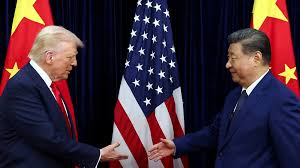
The Security Council, its most powerful entity, has largely been ineffective in addressing the wars in Ukraine and Gaza, hindered by vetoes and escalating divisions between permanent members, primarily Russia and China on one side, and the United States, Britain, and France on the other.
The most recent flashpoint — the brief yet intense conflict involving Iran, Israel, and the United States — saw the UN reduced to the status of a bystander.
Currently, the concept of multilateral cooperation is facing significant challenges, undermined by the rise of nationalism, the formation of regional blocs, and a resurgence of unilateralism from the United States under President Donald Trump. His administration is conducting a comprehensive review of the US’s involvement with international institutions.
Diminishing budgets, diminishing influence
The funding reductions initiated by Trump for the UN have caused widespread repercussions. Already, Guterres’ reform initiatives have resulted in a 20% reduction in jobs across the UN’s regular budget operations, impacting personnel in over 60 missions and agencies. Diplomats are concerned about further difficulties depending on the results of the US review anticipated in August.
The United States continues to be the largest single contributor to the UN. Its withdrawal, combined with budget cuts from other affluent nations, has severely affected humanitarian and development programs, even as global demands — ranging from famine assistance to refugee protection — become increasingly urgent.
Richard Gowan, the UN director at the International Crisis Group, indicated that this could signify a pivotal moment. “Everyone seems to be resigned to the fact that you’re going to have a smaller UN in a few years’ time,” he remarked. “And that is partially because virtually every member state has other priorities.”
Guterres’ “Pact for the Future,” which was approved last year, seeks to reimagine the UN for the 21st century. However, enacting changes — such as consolidating overlapping aid agencies or reforming the extensive bureaucracy — will necessitate agreement among the UN’s 193 member states, which is no easy task in the current fragmented geopolitical landscape.
Sustained relevance or diminishing legacy?
In spite of its challenges, numerous analysts contend that the UN remains essential.
Former Singaporean ambassador and academic Kishore Mahbubani attributed the prevention of World War III to the UN and described it as providing smaller nations “a buffer against occupation or aggression.” He also praised its peacekeeping history, which includes 71 missions since 1948 — spanning from Cambodia and Sierra Leone to Liberia.
The specialized agencies of the United Nations continue to receive commendations. The World Food Programme, UNICEF, the International Atomic Energy Agency (IAEA), and the International Telecommunications Union have made a significant global impact, ranging from providing food to millions to overseeing nuclear activities and enhancing internet connectivity.
As Guterres remarked earlier this year: “The United Nations remains the essential, one-of-a-kind meeting ground to advance peace, sustainable development and human rights.”
Every September, the General Assembly serves as a platform for global leaders. Daily, UN diplomats convene to negotiate policies on various issues, including climate change and gender equality — even though outcomes frequently fall short.
New York’s role as the UN’s headquarters also facilitates crucial backchannel diplomacy — and, as analysts humorously suggest, offers prime locations for international espionage. “If you were to close the UN, a lot of intelligence people would be deeply disappointed,” Gowan humorously noted.
Reform of the Security Council: the ongoing challenge
Perhaps no topic exemplifies the UN’s stagnation more than the halted initiative to reform the Security Council. While there is widespread agreement that Africa and Latin America merit permanent seats, achieving consensus on how to enlarge the 15-member body has proven elusive for diplomats over the decades.
For John Bolton, a former US ambassador to the UN and ex-Trump national security adviser, the current framework is “probably in the worst shape it’s been in since it was founded.” He attributes this to dysfunction within the Security Council and escalating global tensions.
Nevertheless, despite its flaws, the UN remains intact, unlike its predecessor, the League of Nations, which disintegrated during the rise of fascism and global conflict.
“The brilliance of the UN’s founders,” Mahbubani stated, “was to grant veto powers to the major nations, which ensures the UN’s survival even when it struggles to take action.”
Ian Bremmer, president of the political risk consultancy Eurasia Group and an advisor to Guterres, concurs.
“The United Nations lacks a military force, an autonomous foreign policy, and has restricted financial resources,” stated Bremmer. “However, its authority in representing 8 billion individuals is unparalleled.”
He remarked that as long as the principal global powers remain engaged within its framework, “each day they remain is a testament to their trust in the United Nations.”
With contributions from various agencies.