

















In spite of numerous attacks on Iran’s energy infrastructure, Israel has refrained from striking Kharg Island, the most vital oil export terminal for Tehran. Analysts caution that such an action could significantly damage Iran’s economy, which heavily relies on oil, as stated in a report.
Despite numerous attacks on Iran’s energy infrastructure, Israel has refrained from targeting Kharg Island, which is Tehran’s most vital oil export terminal. Analysts caution that such an action could significantly undermine Iran’s oil-reliant economy, as reported by the Economic Times.
In its recent operations, Israel has allegedly targeted various Iranian energy facilities, including the Shahran fuel and gasoline depot, which contains at least 11 storage tanks, as well as the Shahr Rey refinery, one of the largest in Iran.
Additionally, the South Pars Gas Field, a key component of Iran’s energy production and one of the largest globally, has also come under fire.
However, Kharg Island remains unscathed.
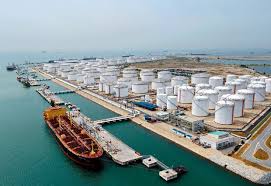
Situated in the Persian Gulf, this island is responsible for the majority of Iran’s crude oil exports and is regarded as one of the most sensitive and strategically significant locations within the country’s energy sector.
During the Iran-Israel conflict in October of the previous year, there were reports indicating that Israel was contemplating a strike on Kharg. This speculation led to the temporary withdrawal of several oil tankers from the waters near the terminal, highlighting the potential repercussions of such an escalation.
According to Reuters, referencing Homayoun Falakshai, the head of crude oil analysis at the tracking firm Kpler, all loadings from Kharg Island last week occurred at the site’s eastern jetty.
Local reports have also indicated that oil loadings are being shifted to the eastern jetty on the island, which is perceived to be safer than the exposed western jetty.
Iran is significantly increasing its exports, averaging 2.23 million barrels per day in the first five days following Israel’s latest military campaign, marking a 44 percent increase from previous levels.
“NIOC may consider it less risky than the other main jetty located on the western side, which is exposed to open waters,” Reuters quoted Falakshai as stating, referring to Iran’s state oil company, the National Iranian Oil Co.
Large oil tankers have been arriving at Kharg Island individually, leaving the western jetty unused for several days, while 15 to 16 other Iranian tankers remain dispersed throughout the broader Persian Gulf, as reported by Bloomberg.
The island is experiencing heightened activity as Iran ramps up oil exports to secure revenue amidst concerns of possible disruptions. In contrast to standard operations, many tankers are now anchoring further offshore and making only brief stops to load before swiftly leaving the area, the report noted.
Iran’s exports have surged following Israel’s military actions. During the initial five days of the campaign, Iran exported an average of 2.23 million barrels of oil daily, marking a 44% increase from prior levels.
If Kharg Island were to be targeted this time, Iran would lose a crucial revenue source but would have little reason not to retaliate in a similar manner.
The Importance of Kharg Terminal
Situated off Iran’s coast near Bushehr and adjacent to the strategic Strait of Hormuz, Kharg Island serves as the country’s primary offshore oil export hub.
Constructed in the 1950s and rebuilt after suffering significant damage during the Iran–Iraq war, the terminal is designed to accommodate the world’s largest oil tankers, including VLCCs and ULCCs. With several berths capable of loading 8 to 9 supertankers simultaneously and a storage capacity of approximately 28 million barrels, Kharg is a vital component of Iran’s oil infrastructure.
Over 90% of Iran’s crude oil exports transit through Kharg, supported by an extensive pipeline network from the nation’s principal oil fields. In a heavily sanctioned economy, Kharg’s output is essential for generating hard currency, which aids in financing Iran’s national budget and geopolitical objectives.
Its location near the Strait of Hormuz — the world’s most critical oil chokepoint — enhances its strategic importance, providing Iran with leverage over global energy supplies.
Despite sanctions that restrict Iran’s overall oil production, any significant disruption at Kharg could lead to instability in global markets, resulting in increased oil prices and heightened concerns regarding the security of supply from the Persian Gulf.
Striking Kharg is a high-stakes gamble.
In October 2024, amidst escalating tensions between Iran and Israel, there was rampant speculation that Israel might target Kharg Island, which serves as Iran’s most vital oil export terminal.
Iranian oil officials conducted prominent visits to the island, and tankers were observed departing the area as security alerts heightened. Although no attack occurred, this incident underscored both the vulnerability of Kharg and its crucial role in Iran’s strategic and economic considerations.
In this ongoing conflict, Israel has executed multiple strikes on Iranian energy assets, including the South Pars gas field. However, despite Kharg’s strategic importance, Israel has refrained from targeting it thus far.
A direct strike on Kharg would not only severely impact Iran’s oil exports but could also give Tehran a rationale to disrupt or obstruct traffic through the Strait of Hormuz, a narrow chokepoint that facilitates approximately 20% of the world’s oil supply.
Such an action would have extensive repercussions, causing global oil prices to surge and destabilizing energy markets and shipping routes, as reported by the Economic Times.
The report indicates that the implications of striking Kharg extend beyond Iran itself.
A bold move of this nature could incite Tehran to retaliate against oil infrastructure in neighboring Gulf states, such as Saudi Arabia’s Ras Tanura terminal, potentially dragging the region into a wider conflict. The ensuing escalation could evolve into a full-scale war, involving more parties and further destabilizing West Asia, the report added.
Israel’s current strategy seems to favor a measured approach: targeting key energy and nuclear-related sites while steering clear of actions that could lead to uncontrollable escalation or alienate international allies.
This calculated strategy indicates that Kharg is viewed as a significant red line, as reported by the Economic Times.
Although Iran has endeavored to create redundancy through facilities such as the Jask terminal located on the Gulf of Oman and offshore tanker-based storage, Kharg continues to serve as its economic lifeline.
Any disruption at this site would trigger a ripple effect on global oil supplies. For nations that import energy and for market analysts, even the mere threat of an assault on Kharg leads to price fluctuations and heightens geopolitical risk premiums.
In summary, Kharg is not merely an oil terminal; it represents the core of Iran’s export economy and a geopolitical flashpoint. Currently, Israel seems to acknowledge that launching an attack on it would entail consequences that are too significant to bear.
With contributions from various agencies.