

















Although Nigerian security forces have regained control of the majority of the territory previously held by Boko Haram, the group and its offshoots are still operational in rural and forested regions. Militants persist in executing ambushes, raids, and bomb attacks.
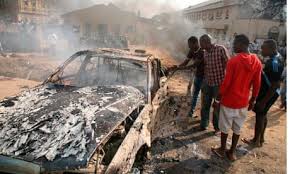
A roadside bomb detonated beneath a passenger bus in northeastern Nigeria on Saturday, April 12, resulting in the deaths of at least eight individuals and injuring over a dozen more in the conflict-ridden Borno state, as confirmed by local authorities.
It is suspected that the explosive device was planted by Islamist militants affiliated with the Boko Haram group.
The incident took place on the Damboa-Maiduguri highway, a crucial yet dangerous route that links various communities within Borno state. Police spokesperson Nahum Daso reported that the bus inadvertently drove over the concealed bomb, leading to the catastrophic explosion.
This attack marks the latest episode in a prolonged insurgency that has afflicted Nigeria’s northeast for more than a decade. Boko Haram initiated its violent campaign in 2009, initially focusing on schools and government facilities in an effort to enforce a strict interpretation of Islamic law. The conflict has escalated into one of Africa’s most lethal and enduring armed struggles.
The United Nations reports that over 35,000 individuals have lost their lives, and more than two million have been displaced due to the ongoing violence. The group’s activities have extended beyond Nigeria’s borders, affecting neighboring Niger, Chad, and Cameroon, thereby destabilizing the broader Lake Chad Basin region.
Although Nigerian security forces have regained control of most territories previously held by Boko Haram, the group and its splinter factions continue to operate in rural and forested regions. Militants persist in executing ambushes, raids, and bombings, frequently targeting civilians and lightly defended towns.
The explosion on Saturday has reignited concerns among local residents and travelers, many of whom depend on the Damboa-Maiduguri road despite the ongoing risks. Security remains tenuous, with state forces often stretched thin and lacking adequate resources in remote areas.
This incident occurs amid rising worries regarding the resurgence of extremist attacks in Nigeria’s northeast. Despite numerous military offensives and claims of success, Boko Haram and its offshoots continue to represent a significant threat to civilians in the region.