
















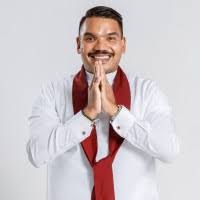
In a unique interview with Firstpost, Namal Rajapaksa highlighted that Sri Lanka is open to investments from all nations in a transparent way and reiterated that the people of Sri Lanka would never permit their land or waters to be utilized in opposition to India.
Namal Rajapaksa, a member of the Sri Lankan parliament and the son of former President and Prime Minister Mahinda Rajapaksa, issued a warning to the Colombo government on Tuesday, stating that Sri Lanka must not permit its territory to be utilized in a manner that jeopardizes India’s security interests.
Rajapaksa expressed that Sri Lanka is open to investments from all nations in a transparent way and stressed that the people of Sri Lanka will not allow their land or waters to be used against India.
In an exclusive interview with Firstpost during the News18 Rising Bharat Summit, Namal Rajapaksa highlighted the necessity of enhancing regional collaborations, particularly with India, in light of changing global circumstances and the increasing influence of China in the area.
Rajapaksa stated, “We Sri Lankans will always ensure that our land or sea is never used against India. It is fundamentally about trust. Currently, India is in a favorable position to engage with Sri Lanka on trade due to the economic climate. I believe it is essential to focus on progress rather than lingering on past issues.”
He further remarked, “The Sri Lankan government is transparent and collaborates closely with the most suitable investments entering the country, rather than concentrating excessively on any single nation.”
As the eldest son of Mahinda Rajapaksa and a former Minister of Youth and Sports (2020–2022), he is also the SLPP’s candidate for the upcoming presidential election in 2024.
Regarding the economic crisis in Sri Lanka and India’s involvement, Rajapaksa recognized New Delhi’s vital support, which included $4 billion in aid.
“I believe Sri Lanka has faced significant challenges, and India has consistently supported us—particularly during the COVID pandemic and the recent economic turmoil. India provided $4 billion in assistance and has been a crucial partner.”
Currently, investments are also being directed from India. Simultaneously, trade between our nations is approximately $5 billion, Rajapaksa noted.
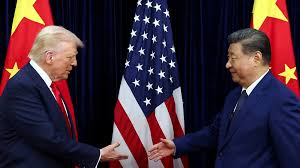
Rajapaksa advocates for enhanced trade relations between India and Sri Lanka. He emphasized the shifting global dynamics during the Trump administration and the changing geopolitical environment, stating that Sri Lanka will be affected by US tariffs, which makes it essential to fortify connections with regional allies, especially India.
“India ranks among the largest and fastest-growing economies globally. I am confident that Sri Lanka can gain from India’s economic expansion, and conversely, India can leverage Sri Lanka’s trade capabilities and strategic logistical position,” he remarked.
Regarding the future of India-Sri Lanka relations, Rajapaksa expressed, “I am optimistic that our relationship will strengthen further. We must recognize that the West may not always be our ally, but our region will be. As a political entity, we have acknowledged this and have fostered robust relationships with regional partners. I believe the upcoming decade presents an opportune moment for South Asian nations to collaborate more closely.”
On the topic of the ongoing fishing disputes in the Palk Strait, Rajapaksa addressed the tensions arising from the arrest of Indian fishermen by Sri Lanka, stating that it adversely affects local fishermen and advocating for a pragmatic approach to ensure that local issues do not escalate into national crises.
“This issue has persisted for a long time. More than the fishing dispute itself, the method of fishing—particularly bottom trawling—is problematic. It is illegal and harmful to the environment. Additionally, it is a delicate matter since for Sri Lankan fishermen, this represents their primary source of livelihood, and they operate small boats,” Rajapaksa explained.
He urged the central government to approach the situation with greater empathy and to prioritize the concerns of the people.
In response to inquiries regarding the potential construction of a bridge connecting the two nations across the Palk Strait, Rajapaksa stated, “The issue concerning the Palk Strait requires further discussions with the relevant communities. It is essential to establish a robust dialogue between the two countries to evaluate its feasibility and comprehend the possible environmental consequences. I recommend that Sri Lanka establish a Parliamentary Select Committee to deliberate on this matter.”
Regarding the post-civil war situation in Sri Lanka, when questioned about the nation’s strategy to progress without allowing the legacy of the civil war to hinder efforts in fostering unity among communities, Rajapaksa noted that the majority of former LTTE (Liberation Tigers of Tamil Eelam) members have undergone rehabilitation. He highlighted that northern Sri Lanka, previously the most affected region, is now experiencing positive developments in both economic and agricultural sectors.
“I believe the Tamil community was adversely affected during the conflict. The struggle was directed against the LTTE, and Prabhakaran, being Tamil, exploited Tamil youth as human shields and suicide bombers, leading to significant suffering within the community. That period is now behind us. Our focus must shift to the future—ensuring long-term economic stability for the nation.”
On the topic of a potential political resurgence for the Rajapaksa family, Namal Rajapaksa remarked to Firstpost, “Ultimately, it is up to the people. I am currently at the helm of my party, which comprises a youthful and dynamic team dedicated to addressing the needs of the upcoming generation. I believe the public is starting to recognize this more clearly.”
I contend that the Tamil community found itself in a precarious position during the conflict. The war was primarily directed against the LTTE, and Prabhakaran, being of Tamil descent, exploited Tamil youth as both human shields and suicide bombers. Consequently, the community endured significant hardships. That period is now behind us, and it is essential to concentrate on the future—specifically, achieving long-term economic stability for the nation.
Regarding the potential political resurgence of the Rajapaksa family, Namal Rajapaksa stated to Firstpost, “Ultimately, it is the people’s decision. I am currently at the helm of my party, which comprises a youthful and dynamic team dedicated to addressing the aspirations of the next generation. I believe the public is starting to recognize this more clearly.”
He also emphasized the proactive role of Indian Prime Minister Narendra Modi in strengthening India-Sri Lanka relations.
“PM Modi plays a crucial role as he emerges as a significant global and regional power. He has established a strong connection with Sri Lankan leadership and fostered positive relationships throughout the region. I am confident that his vision for a sustainable India will yield considerable advantages for Sri Lanka.”