


















Russia and Ukraine have reached an agreement to suspend military operations in the Black Sea and at energy facilities, following negotiations facilitated by the United States. The U.S. has proposed to alleviate restrictions on agricultural exports as an initial tangible incentive for Moscow.
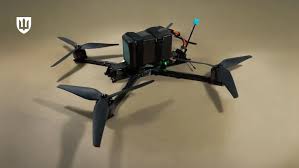
On Wednesday, the Ukrainian Defence Ministry granted approval for the domestically produced Bird of Prey unmanned aerial system to be utilized in unmanned operations, as the conflict continues despite the United States facilitating ceasefire discussions between Kyiv and Moscow.
According to a statement from the ministry, “The Bird of Prey has already demonstrated its capability in neutralizing enemy armored vehicles and fortified firing positions.”
During the negotiations mediated by the United States, Russia and Ukraine have consented to suspend military actions in the Black Sea and against energy facilities. The U.S. has proposed to alleviate pressure on agricultural exports as an initial tangible incentive for Moscow.
In related announcements, the White House indicated that both nations “agreed to ensure safe navigation, eliminate the use of force, and prevent the utilization of commercial vessels for military purposes in the Black Sea.”
About the Bird of Prey drones
The Bird of Prey is a sophisticated, compact weapon system designed for integration with drone platforms, enhancing the capabilities of infantry by allowing precise targeting of low-signature threats in complex environments, such as urban areas and scenarios requiring force protection.
This system accommodates a variety of modular, multi-role, and multi-caliber armaments, optimizing flight time and mission length. With advanced algorithms and autonomous target recognition, the Bird of Prey is capable of detecting, classifying, and tracking targets both day and night.
On the conflict front
In the meantime, Dmytro Lytvyn, an advisor to Ukrainian President Volodymyr Zelenskyy, has asserted that Russia has attacked Ukraine’s energy infrastructure at least eight times since President Vladimir Putin ordered a cessation of such strikes last week.
“Moscow is a city built on falsehoods, which is no surprise to anyone in Ukraine. However, the reality is that since March 18, they have been targeting our energy facilities with bombs, attack drones, and FPV drones,” Lytvyn stated.
Last week, Putin commanded a cease-fire on Ukraine’s energy infrastructure for a duration of 30 days, following Russia’s dismissal of Washington’s earlier suggestion for a temporary cessation of hostilities.