


















Nicaragua announced on Friday its decision to withdraw from both the International Organization for Migration and the International Labour Organization, furthering its exit from multilateral institutions in light of ongoing criticism regarding its human rights practices.
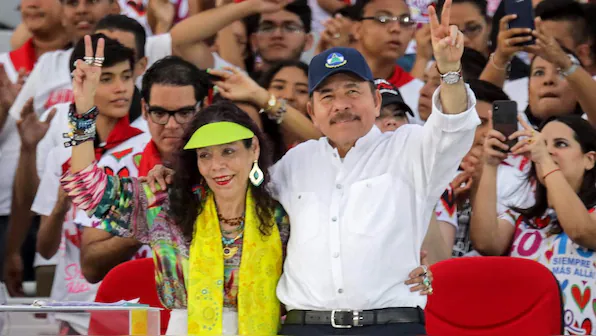
Rosario Murillo, who shares governance with her husband, President Daniel Ortega, stated that these organizations “do not fulfill the mission for which they were established.”
She emphasized, “We reaffirm our unwavering and resolute stance against all insults, offenses, falsehoods, aggressions, and the double standards of colonialist politics that dictate the actions of these entities,” as she expressed her sentiments at the age of 73.
This announcement follows Ortega’s administration’s recent declaration of its withdrawal from the United Nations Human Rights Council, prompted by allegations from experts appointed by the organization regarding widespread repression in Nicaragua.
Additionally, the government had previously indicated its intention to exit the UN Food and Agriculture Organization in response to a report highlighting increasing famine within the Central American nation.
Murillo criticized the ILO for acting in a “politicized manner, contributing to destabilization and interventionist efforts” when addressing complaints from both employers and employees concerning labor rights violations.
The government has charged the International Organization for Migration (IOM) with disseminating “false, malicious, and irresponsible information” regarding Nicaragua in its annual migration report.
At 79 years of age, Ortega has increasingly adopted authoritarian measures, consolidating control over various state sectors with the backing of Murillo, which critics label as a nepotistic dictatorship.
Ortega initially held the presidency from 1985 to 1990, emerging as a former guerrilla leader, and resumed power in 2007.
Since that time, Nicaragua has imprisoned hundreds of both actual and perceived opponents.
Additionally, the government has closed over 5,000 non-governmental organizations following the mass protests of 2018, during which the United Nations estimates that more than 300 individuals lost their lives.