

















Ind-Ra stated on Friday that India’s exports to the United States could potentially decrease by USD 2 billion to USD 7 billion in the fiscal year 2026 if the US proceeds with the reciprocal tariffs it is currently considering.
During the period from April to December of the current fiscal year, India’s exports to the US increased by 5.57 percent, reaching USD 59.93 billion. Conversely, imports during the first nine months of 2024-25 rose by 1.91 percent to USD 33.4 billion. The US has been India’s largest trading partner since 2021-22, representing approximately 18 percent of India’s total goods exports, over 6 percent of imports, and around 11 percent of bilateral trade.
From 2021 to 2024, the US maintained its position as India’s primary trading partner. Notably, it is one of the few nations with which India enjoys a trade surplus.
In the fiscal year 2023-24, the US emerged as India’s largest trading partner, with bilateral trade in goods amounting to $119.71 billion, comprising $77.51 billion in exports and $42.19 billion in imports, resulting in a trade surplus of $35.31 billion.
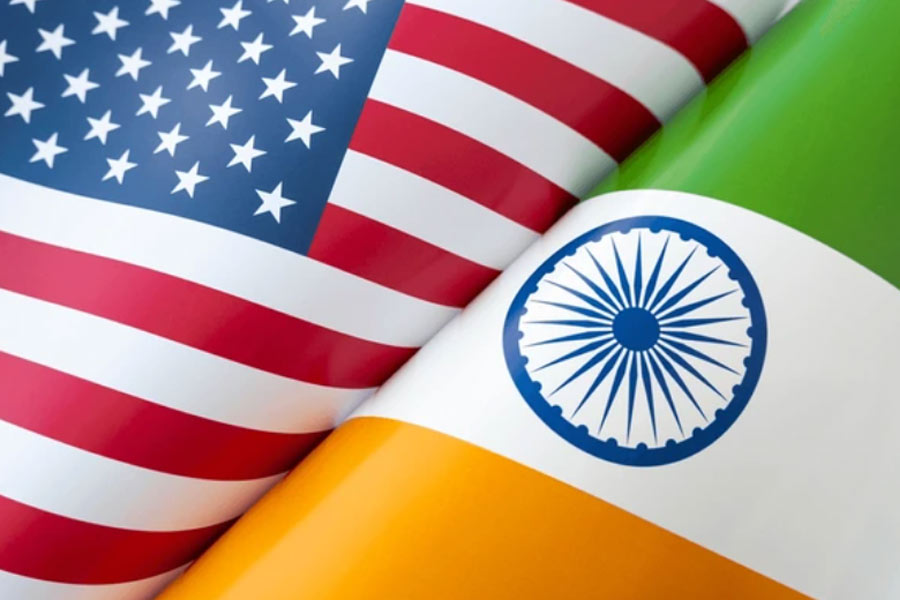
The growing trade relationship is significant as both nations aim to achieve $500 billion in two-way commerce by 2030, alongside a potential trade agreement.
According to estimates from India Ratings and Research (Ind-Ra), if the US imposes reciprocal tariffs, India’s exports to the US could decline by USD 2 billion to USD 7 billion in FY26.
“However, the weighted average tariff differential stands at approximately 7 percentage points (pp), and a more realistic scenario, as per Ind-Ra, suggests a reduction in exports to the US by USD 2 billion to USD 3.5 billion, which could lead to a decrease in GDP growth by 5 to 10 basis points from our current estimate of 6.6 percent,” remarked Devendra Kumar Pant, Chief Economist and Head of Public Finance at Ind-Ra.
Further clarity is expected in the next four to six weeks following discussions between the two governments. Consequently, the evolving geoeconomic landscape is a critical factor to monitor for the Indian economy.
Ind-Ra indicated that bilateral trade negotiations, along with defense and energy agreements between India and the US, could help mitigate the negative effects of reciprocal tariffs on India.