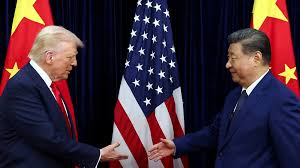


















A week after taking office, President Donald Trump of the United States reaffirmed his threat of tariffs against the BRICS nations, which include Brazil, Russia, India, China, and South Africa, along with several newly added countries.
This warning was reiterated in a recent post on his social media platform, TruthSocial. Trump had made a similar declaration immediately following his victory in the 2024 U.S. Presidential elections.
“The notion that BRICS countries are attempting to distance themselves from the dollar while we remain passive is OVER,” Trump stated on Truth Social on Thursday. “We will demand a commitment from these seemingly antagonistic nations that they will not establish a new BRICS currency or support any alternative currency to supplant the powerful U.S. dollar; otherwise, they will face 100% tariffs and should prepare to bid farewell to access to the thriving U.S. economy,” he further remarked.
In recent years, BRICS has emerged as one of the most economically influential coalitions. Two of its member countries rank among the top five largest economies globally. The group has significantly expanded with the addition of nations such as Egypt, Ethiopia, Indonesia, Iran, and the United Arab Emirates, enhancing its collective strength.
BRICS and the U.S. Dollar
It is important to highlight that this intergovernmental organization was established in 2009, primarily to challenge the dominance of the United States and its Western allies. Over the years, the economies of the member states have experienced remarkable growth. BRICS now represents nearly half of the global population and is viewed as a counterpart to the G7 nations.
Historically, the economic bloc has frequently proposed the introduction of an alternative reserve currency. This idea gained traction, particularly after the West imposed sanctions on Russia in response to its military actions in Ukraine in 2022.
Many have raised concerns regarding the group’s ambitions, particularly in light of the recent strengthening of the US dollar’s position globally. The American dollar continues to be the foremost reserve currency, with significant global dependence on it.
Navigating Challenges in India
In recent years, India has sought to diminish its dependence on the US dollar by promoting the use of the Indian rupee in international transactions. In 2022, in response to sanctions imposed on Russia, the Reserve Bank of India (RBI) permitted invoicing and payments for international trade to be conducted in Indian rupees.
During a discussion in Kazan, Prime Minister Narendra Modi remarked, “India supports initiatives aimed at enhancing financial integration among BRICS nations, and trade conducted in local currencies, along with streamlined cross-border payments, will bolster our economic collaboration.”
In November 2024, at the India-Russia Intergovernmental Commission meeting in Mumbai, External Affairs Minister S. Jaishankar emphasized that “the mutual settlement of trade in national currencies holds significant importance, particularly in the current context.” Nevertheless, India is also focused on reinforcing its relationship with the Trump administration to mitigate potential tariffs.