
















Five months following their unexpected offensive into Russian territory, Ukrainian forces find themselves battered and disheartened by the increasing likelihood of defeat in the Kursk region. While some factions advocate for holding the area at all costs, others are beginning to question the rationale behind the initial incursion.
The intensity of the battles has reached a point where certain Ukrainian commanders are unable to retrieve the deceased. Delays in communication and poorly executed tactics have resulted in significant casualties, leaving troops with limited options for counterattacks, as reported by seven front-line soldiers and commanders who requested anonymity to discuss sensitive operations.
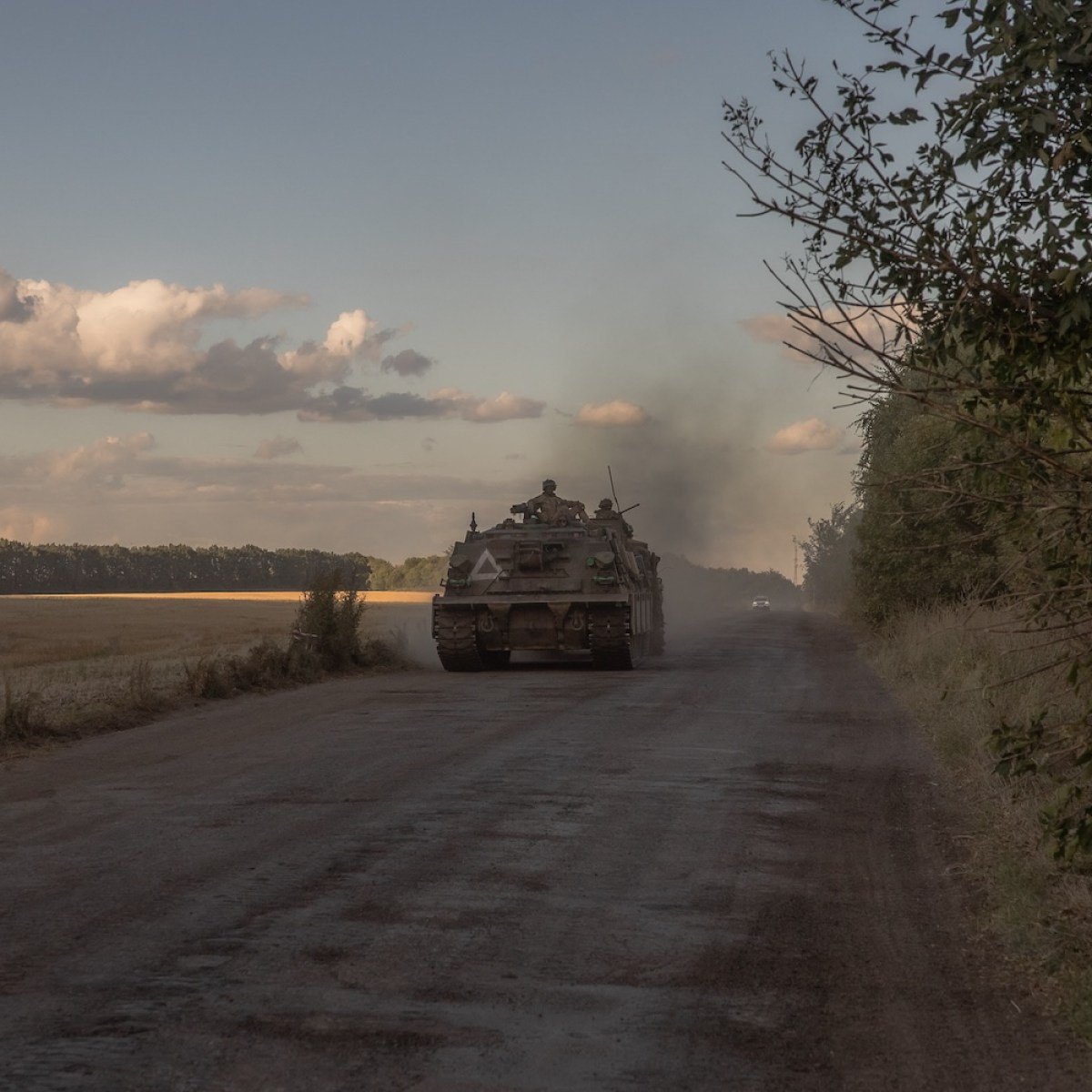
In response to the sudden Ukrainian advance, Russia has mobilized over 50,000 troops in the region, including reinforcements from its ally North Korea. Although precise figures are difficult to ascertain, Moscow’s counteroffensive has inflicted thousands of casualties, and the overstretched Ukrainian forces have lost more than 40% of the 984 square kilometers (380 square miles) of Kursk that they had captured in August.
Since the onset of its full-scale invasion three years ago, Russia has maintained control over a fifth of Ukraine. Ukrainian President Volodymyr Zelenskyy has suggested that securing Kursk could compel Moscow to engage in negotiations to end the conflict. However, five Ukrainian and Western officials in Kyiv, who spoke on the condition of anonymity to discuss sensitive military issues, expressed concerns that focusing on Kursk could jeopardize the entire 1,000-kilometer (621-mile) front line, as Ukraine continues to lose critical territory in the east.
“We have, as they say, hit a hornet’s nest. We have stirred up another hot spot,” remarked Stepan Lutsiv, a major in the 95th Airborne Assault Brigade.
The border raid that evolved into an occupation was initiated by Army chief Oleksandr Syrskyi, who stated that the operation was launched under the belief that Russia was preparing to mount a new offensive against northeastern Ukraine.
Assembling his troops, a company commander addressed them: “We are making history; the entire world will recognize our efforts, as this has not occurred since World War II.”
In private, however, he harbored doubts.
“It felt insane,” he remarked. “I couldn’t comprehend the reasoning behind it.”
Surprised by their success, which was largely due to the Russians being taken off guard, the Ukrainians received orders to push further than their initial objective, advancing to the town of Korenevo, located 25 kilometers (16 miles) into Russian territory. This area was among the first where Russian forces launched a counteroffensive.
By early November, the Russians began to reclaim territory at a swift pace. Once filled with pride over their achievements, the troops’ sentiments are now changing as they confront their losses. The company commander noted that half of his soldiers are either dead or injured.
Some front-line leaders reported that conditions are harsh, morale is dwindling, and soldiers are questioning the decisions made by their superiors, including the rationale for occupying Kursk.
Another commander indicated that some directives given to his men do not align with the current situation due to communication delays. These delays are particularly pronounced when territory is lost to Russian forces, he explained.
“They are unclear about our positions, the enemy’s locations, what we control, and what we do not,” he stated. “They lack an understanding of the operational landscape, forcing us to act independently.”
A platoon commander expressed frustration that his requests to alter his unit’s defensive stance have been consistently denied, as he is aware that his men cannot maintain their position.
“Those who remain until the end are becoming missing in action,” he stated. He also mentioned that at least 20 Ukrainian soldiers’ bodies have been left behind over the past four months due to the intensity of the fighting, which made evacuation without incurring further casualties impossible.
Russian forces intensify their efforts, leaving no room for retreat
Ukrainian soldiers expressed their unpreparedness for the aggressive Russian actions in Kursk, stating that they are unable to launch a counteroffensive or withdraw.
“There is no alternative. We must engage here because if we retreat to our borders, they will not cease their advance; they will continue pushing forward,” remarked a commander of a drone unit.
The Associated Press sought a statement from Ukraine’s General Staff but did not receive a reply prior to publication.
The deployment of American long-range weaponry has impeded the Russian advance, while North Korean soldiers, who joined the conflict last month, have become vulnerable targets for drones and artillery due to their lack of combat discipline and tendency to move in large, exposed groups, according to Ukrainian forces.
On Monday, President Zelenskyy reported that 3,000 North Korean soldiers had been killed or wounded. However, Ukrainian troops noted that these soldiers seem to be adapting by improving their camouflage techniques in forested areas.
A confrontation occurred last week near the Vorontsovo tract, a wooded region situated between the settlements of Kremenne and Vorontsovo.
Until recently, this area was under Ukrainian control, but this week, portions have been lost to Russian forces, raising concerns among Ukrainian troops about the potential threat to a vital logistics route.
As they assess frontline losses in the eastern Donbas region—where Russian forces are nearing a critical supply hub—some soldiers are increasingly questioning the value of the Kursk engagement.
“All the military can contemplate now is that the Donbas has essentially been sacrificed,” stated a platoon commander. “At what cost?”