

















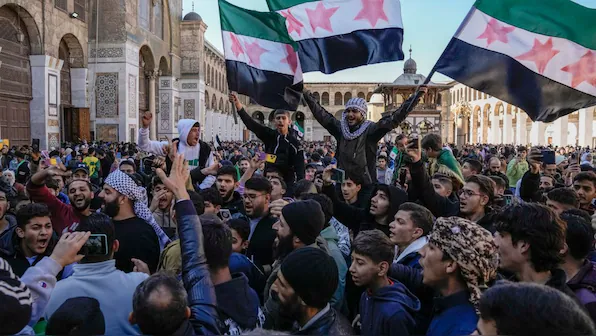
Syria’s newly established leadership has appointed Asaad Hassan al-Shibani as the foreign minister, as reported by the official Syrian news agency (SANA) on Saturday. This appointment is part of their efforts to enhance international relations following the ousting of Bashar al-Assad two weeks prior.
According to a source within the new administration cited by Reuters, this decision reflects the aspirations of the Syrian populace to foster international relations that promote peace and stability.
Ahmed al-Sharaa, the de facto leader of Syria, has been actively engaging with foreign delegations since taking office, including meetings with the U.N. envoy for Syria and senior diplomats from the United States.
Sharaa has expressed a readiness to engage diplomatically with international representatives, emphasizing that his main priorities are reconstruction and economic development, while explicitly stating his disinterest in initiating new conflicts.
The United States, along with other Western nations and many Syrians, welcomed Assad’s downfall as rebel factions, led by Hayat Tahrir al-Sham (HTS), gained control. However, it remains uncertain whether HTS will enforce strict Islamic governance or adopt a more flexible approach towards democracy. HTS, which was previously affiliated with al-Qaeda until severing ties in 2016, played a crucial role in the overthrow of Assad.
On December 8, Syrian rebels captured Damascus, compelling Assad to flee after over 13 years of civil war, thus concluding his family’s lengthy rule. Forces led by Abu Mohammed al-Golani, also known as Sharaa, established a temporary caretaker government to oversee the rebel-controlled northwest province of Idlib for a period of three months.
In 2013, Washington designated Sharaa as a terrorist, alleging that al-Qaeda in Iraq had assigned him the task of toppling Assad’s regime and instituting Islamic sharia law in Syria. U.S. officials announced on Friday that they would lift a $10 million bounty placed on him.
The conflict has resulted in the deaths of hundreds of thousands, triggered one of the largest refugee crises in modern history, and left cities in ruins while the economy has been severely impacted by global sanctions.