

















Paris, France:
On Monday, researchers announced that electrically stimulating a specific area of the brain may enhance the ability of individuals with spinal cord injuries to walk more effectively. One participant shared that this method helped him overcome his apprehension regarding stairs.
This innovative approach is designed for individuals whose spinal cord injuries have not completely severed the connection between the brain and spinal cord, allowing for some degree of leg movement. Wolfgang Jaeger, one of the two participants in an initial trial, reported a significant improvement in his mobility.
“Now, when I encounter a staircase with just a few steps, I am confident I can manage it independently,” stated the 54-year-old in a video accompanying a new study published in the journal Nature Medicine.
The research was led by a Swiss team known for several recent breakthroughs, including the use of spinal cord electrical stimulation to enable some paralyzed patients to walk again. In this study, the researchers aimed to identify the brain region most critical for recovery following spinal cord injuries.
“I feel the urge to walk.”
Employing 3D imaging techniques to analyze the brain activity of mice with spinal cord injuries, the team developed what they termed a “brain-wide atlas.” They were taken aback to discover that the targeted brain region was located in the lateral hypothalamus, an area known for regulating arousal, feeding, and motivation.
A specific cluster of neurons within this region “seems to play a role in the recovery of walking after spinal cord injury,” explained neuroscientist Gregoire Courtine from Switzerland’s Ecole Polytechnique Federale de Lausanne.
The team subsequently aimed to enhance the signal from these neurons through a method known as deep brain stimulation, which is frequently employed to address movement disorders in individuals with Parkinson’s disease.
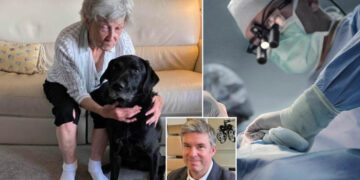
This procedure entails a surgeon placing electrodes in a specific area of the brain, which are linked to a device implanted in the patient’s chest. When activated, the device transmits electrical pulses to the brain. Initially, the team conducted experiments on rats and mice, discovering that it resulted in an “immediate” improvement in walking, as reported in the study.
The first human participant in the 2022 Swiss trial was a woman who, similar to Jaeger, had an incomplete spinal cord injury.
Neurosurgeon Jocelyne Bloch informed AFP that upon the initial activation of the woman’s device, she expressed, “I feel my legs.” When the electrical current was increased, she remarked, “I feel the urge to walk,” according to Bloch.
The patients had the ability to activate their device as needed and underwent several months of rehabilitation and strength training.
The woman’s objective was to walk independently without the aid of a walker, while Jaeger aimed to ascend stairs unaided.
“Both of them achieved their goal,” Bloch stated.
Jaeger, a resident of the Swiss municipality of Kappel, recounted his experience of facing eight steps leading down to the sea during a holiday last year.
With the device activated, he noted that “walking up and down the stairs was no problem.”
“It’s a wonderful feeling when you are not constantly dependent on others,” he remarked.
Over time, he “became faster and could walk longer” even when the device was turned off, he added.
Further research is necessary, and this technique may not be suitable for all patients, Courtine emphasized.
The effectiveness of the method relies on enhancing the brain’s signal to the spinal cord, which is contingent upon the initial strength of the signal being transmitted.
While deep brain stimulation has become relatively common, some individuals may feel uneasy about undergoing surgery on their brain, Courtine noted.
The researchers are of the opinion that, in the future, the most effective approach for recovery from such injuries may involve the simultaneous stimulation of both the spinal cord and the lateral hypothalamus.