

















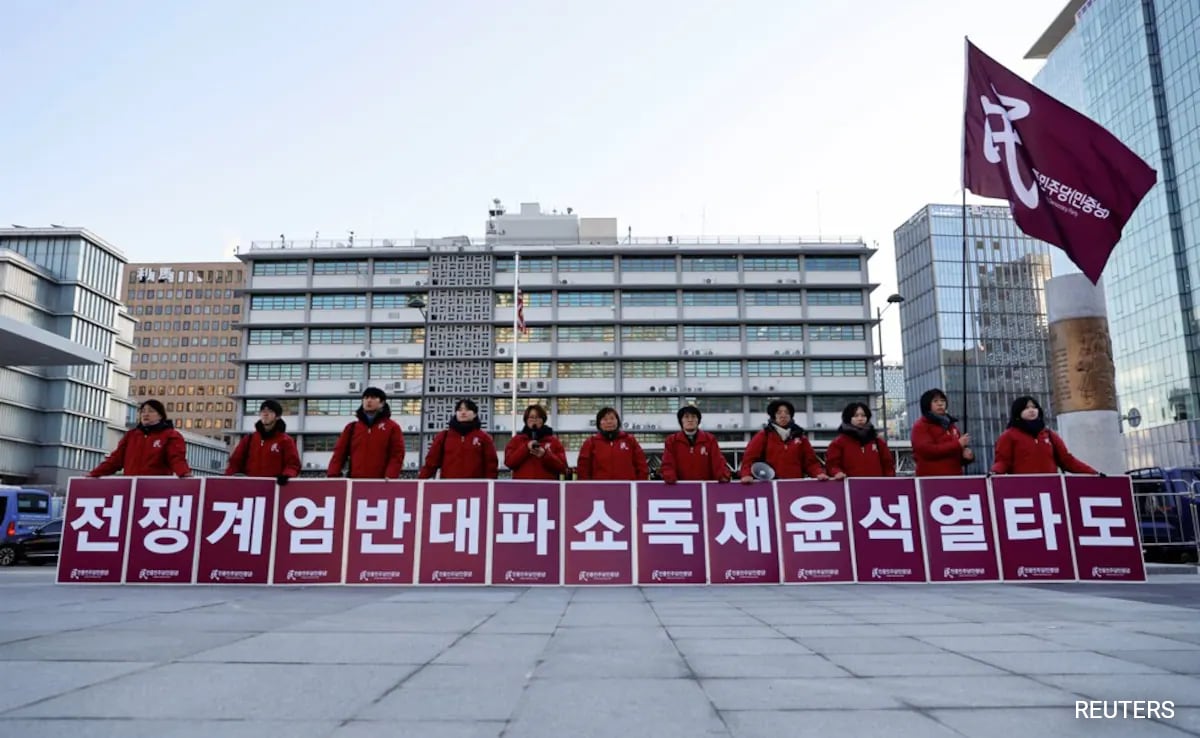
On December 3 at 10:25 PM Korean Standard Time (KST), the world was taken aback by startling news as social media reports emerged regarding the declaration of Martial Law by South Korean President Yoon Suk Yeol. This announcement came as a shock to many South Koreans, who have long cherished their democratic freedoms and have only encountered the concept of martial law through historical education. The news incited lawmakers and citizens to convene at the National Assembly, where the opposition, spearheaded by Lee Jae-myung, leader of the Democratic Party, entered to cast their votes on the president’s decision. Armed forces attempted to breach the assembly, clashing with lawmakers and staff, yet they were unable to disrupt the proceedings, resulting in a vote that rejected the martial law. Consequently, following the National Assembly’s resolution, the President was compelled to revoke martial law at 4:40 AM KST on December 4, after a tense six-hour ordeal.
Although the declaration of emergency martial law was unexpected, it was not entirely unforeseen. Numerous experts had previously speculated about the potential for martial law, especially in light of the recent appointments of close allies to Yoon’s cabinet, which raised concerns regarding a possible ‘palace coup’. However, what prompted such a drastic action?
Response to Escalating Pressure
President Yoon’s administration has been engulfed in allegations of corruption and mismanagement since 2022. His approach to the doctors’ protests and the Itaewon crowd disaster has drawn significant criticism from both the opposition and the general public. Additionally, the First Lady has emerged as a controversial figure, facing accusations of corruption, scandals, and undue influence within the presidential office. The situation escalated further following the April National Assembly elections, where the opposition gained a majority, complicating the president’s party’s ability to pass legislation and maintain normal operations.
Yoon’s drastic decision appears to stem from mounting pressure from various sources, including the Democratic Party (DP), the general public, and his own political faction. This pressure escalated in September with the commencement of the 22nd Assembly’s first regular session. Subsequently, Yoon encountered heightened partisan conflict as the assembly adopted a confrontational stance, persistently demanding accountability regarding actions taken against the First Lady. Recently, the president exercised his veto power for the third time against a bill proposed by the opposition, which sought a special counsel investigation into corruption allegations involving the First Lady. This friction between the president and the legislature coincided with a notable decline in his popularity.
In his public announcement of martial law, he proclaimed, “I declare martial law to safeguard the Republic of Korea from the threats posed by North Korean communist forces, to swiftly eliminate the unscrupulous pro-Pyongyang antistate elements that undermine the freedom and well-being of our citizens, and to uphold the free constitutional order.” He characterized the opposition’s actions to obstruct the National Assembly as a “legislative dictatorship,” which he claimed had incapacitated the administration and hindered governmental operations. The address underscored his dissatisfaction with the opposition’s conduct. Amid rising allegations against his wife and his diminishing popularity, the president also encountered increasing demands for action from within his party, particularly from Han Dong-hoon, the leader of the People Power Party (PPP), who publicly called for decisive measures. Perceiving a loss of support from both the public and his party, and recognizing the effectiveness of the opposition’s strategies, he may have felt it necessary to resort to this extreme measure, which garnered backing from only a limited number of cabinet members.
The media has reported that the Chungam Faction—a select group of close advisors, including the president and the Defence Minister—made the decision without consulting the Prime Minister or the party. This suggests that the president believed he had no alternative but to impose martial law in order to preserve his presidency.
What is Next for Yoon and His Party?
Following the lifting of martial law, the entire cabinet has offered to resign collectively. Several senior officials within the presidential offices, including the Chief of Staff, National Security Adviser, Chief of Staff for Policy, and seven others, have already tendered their resignations. The ruling party, the PPP, has expressed regret over the president’s actions, stating, “As the ruling party, we sincerely apologize to the public for this troubling situation.” Its leader, Han Dong-hoon, has called for immediate accountability for Defence Minister Kim Yong-hyun, who played a key role in the decision alongside the president.
In contrast, the opposition party, the DP, has intensified its stance. Following this incident, it has resolved to initiate impeachment proceedings against President Yoon should he refuse to resign promptly, labeling his decision as a “clear violation of the constitution” and asserting that it represents “a serious act of rebellion and a valid basis for impeachment.” While the impeachment process may be lengthy, starting in the National Assembly and subsequently moving to the Constitutional Court, the initial phase is anticipated to progress quickly. Six parties, led by the opposition DP, submitted the impeachment bill yesterday, which is set to be listed today. The impeachment process necessitates a majority to propose a motion and requires support from two-thirds of the National Assembly for passage. Although the DP holds 170 seats in the assembly, it still needs 200 votes to ensure the motion’s success. Even with the backing of smaller parties, such as the New Reform Party, the total only reaches 192—eight votes short of the required threshold.
The passage of the motion through the National Assembly may not expedite the judicial process, as the procedural requirements for the Constitutional Court are likely to prolong it significantly.
Additionally, the opposition is anticipated to advocate for a thorough investigation into the procedures related to the declaration of martial law. This includes scrutinizing the process of convening state council meetings for approval, with the aim of supporting insurrection charges against the president. It is evident that the president’s political career is likely at an end due to this decision. Furthermore, this situation will have considerable repercussions for his party, which was already facing serious allegations and internal strife prior to this event. However, it remains uncertain whether the ruling party, the PPP, will resist the president’s impeachment; should it choose to do so, it may further tarnish its reputation. Conversely, adopting a strategy of distancing itself from the president could potentially mitigate damage to its image. This incident, which unfolded over a mere six hours, has undeniably highlighted South Korea’s impressive democratic resilience.