

















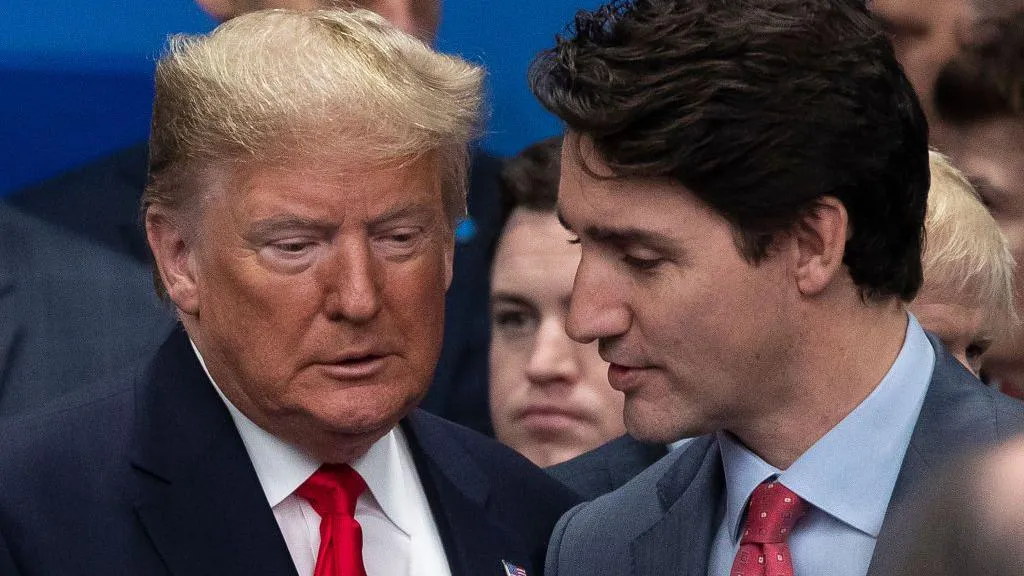
Prime Minister Justin Trudeau is currently in Florida to engage in discussions with Donald Trump, as Canada aims to mitigate the president-elect’s proposed 25% tariff on Canadian imports, as confirmed by a source to the BBC.
Reports from Canadian media indicate that Trudeau arrived at Palm Beach International Airport on Friday evening to meet Trump at his Mar-a-Lago residence.
Earlier in the week, the two leaders had a phone conversation following Trump’s announcement that he would impose a blanket tariff on all goods entering the United States from Mexico and Canada once he assumes office in January.
Neither Trudeau’s office nor Trump’s team has provided comments regarding the visit, which was not listed on Trudeau’s public schedule for Friday. According to the source, the two leaders are expected to have dinner together.
Trump has been at his Mar-a-Lago estate, engaging with his transition team. Trudeau is reportedly the first leader from the G7 to visit the president-elect since the election.
Trudeau has frequently emphasized the successful renegotiation of a significant trade agreement between the two nations during Trump’s first term, although their relationship has experienced some tensions.
During an event in Prince Edward Island on Friday, Trudeau remarked that the two countries “rolled up our sleeves and were able to create jobs on both sides of the border.” He expressed anticipation for engaging in many “great” discussions with Trump.
This visit to Florida represents Canada’s latest effort to avert the substantial tariffs, which could have extensive economic repercussions.
It remains uncertain whether the incoming Trump administration will proceed with the proposed tariffs, as analysts suggest that the president-elect has a history of utilizing such threats as a negotiating strategy to achieve his objectives.
Trump, who has also indicated similar tariffs against Mexico, has suggested that these measures would remain until both nations collaborate to secure their shared borders with the United States.
Trudeau stated on Friday that “when Trump makes statements like that, he intends to follow through on them.”
He emphasized that the proposed tariff would not only negatively impact Canadians but would also increase prices for Americans and adversely affect the U.S. economy.
Accompanying Trudeau on the trip was Dominic LeBlanc, the minister responsible for border security.
Reports from U.S. media indicated that Trudeau and Trump were joined at dinner by Howard Lutnick, Trump’s nominee for commerce secretary; Doug Burgum, selected to head the Department of the Interior; and Mike Waltz, who has been appointed as the next national security adviser.
Canada ranks among America’s largest trading partners, exporting approximately 75% of its total goods to the U.S. The two nations also benefit from highly integrated supply chains.
Following his phone conversation with Trump, Trudeau convened an emergency meeting on Wednesday with the leaders of Canada’s provinces and territories to discuss the management of the U.S.-Canada relationship.
Trudeau is committed to presenting a unified “Team Canada” strategy in collaboration with the U.S. to advocate against the proposed levy.
Numerous leaders from Canadian provinces have voiced their opposition to Trump’s plan, arguing that it would have a devastating impact on the Canadian economy, particularly in the oil, gas, and automotive sectors.
Additionally, Mexican President Claudia Sheinbaum also engaged in a phone conversation with Trump this week.
The volume of crossings at the US-Canada border is considerably less than that at the southern border, as indicated by data from the US Border Patrol regarding migrant encounters.
In the fiscal year 2024, approximately 23,700 apprehensions occurred at the northern land border, in contrast to over 1.53 million apprehensions at the southern border.
However, Canadian officials have recently stated that there remains collaborative work to enhance border security.