

















For many years, Western analysts have regarded Brics as a relatively insignificant organization. However, during its recent annual summit in Russia, the group demonstrated its substantial progress.
The three-day event was attended by prominent leaders from 36 nations, along with the UN Secretary General, marking a significant occasion as Brics officially welcomed four new members: Egypt, Ethiopia, Iran, and the United Arab Emirates. Further expansions in membership may be on the horizon. Since its establishment as Bric in 2006, the group had only added one member, South Africa, in 2010.
There is an increasing interest in Brics, which has consistently positioned itself as an alternative to Western-dominated global governance frameworks. It is gaining prominence and influence by tapping into the rising discontent with Western policies and financial systems.
Interestingly, India, which is arguably the most Western-aligned member of Brics, stands to gain significantly from the group’s growth and diversification.
India has established strong connections with many of the new Brics members. Egypt is emerging as a vital trade and security ally in the Middle East. The UAE, alongside Saudi Arabia— which has been invited to join Brics but has not yet done so—represents one of India’s key partnerships. Additionally, India’s relationship with Ethiopia is among its longest and most robust in Africa.
The original members of Brics also provide substantial advantages for India.
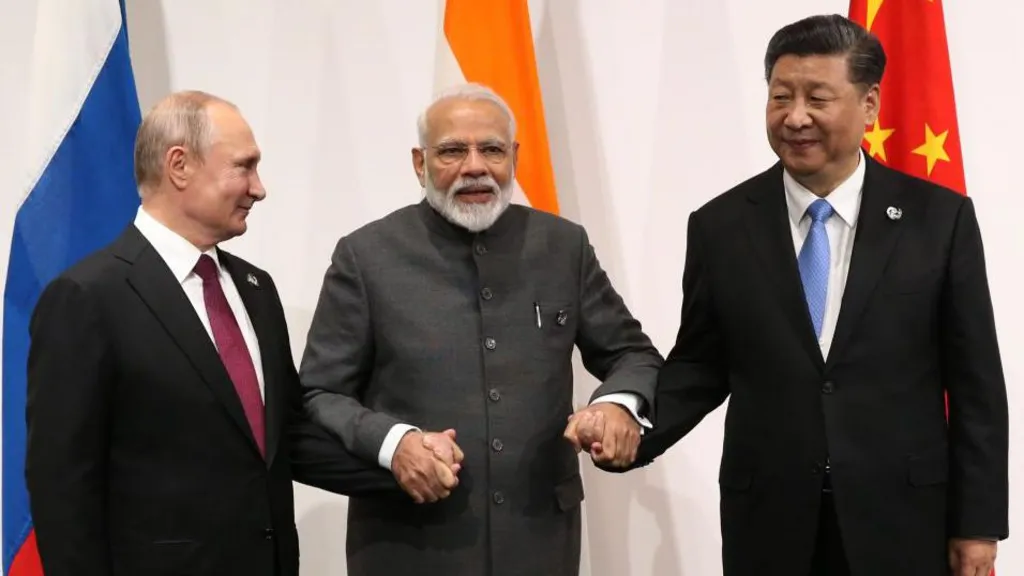
New Delhi can utilize Brics to reaffirm its ongoing commitment to its close ally Russia, despite Western attempts to isolate the nation. Collaborating with its rival China within Brics aids India in its gradual and cautious approach to reducing tensions with Beijing, particularly following a border patrolling agreement announced by New Delhi just before the summit. This development likely afforded Prime Minister Narendra Modi the diplomatic and political latitude to engage with Chinese President Xi Jinping during the summit’s informal discussions.
Furthermore, Brics provides India with an opportunity to further its fundamental foreign policy tenet of strategic autonomy, which seeks to maintain balanced relations with a diverse array of geopolitical actors without entering into formal alliances with any of them.
New Delhi maintains significant partnerships, both bilateral and multilateral, within and beyond the Western sphere. In this context, its involvement in a strengthening Brics, along with its relationships with member states, can be harmonized with its engagement in a revitalized Indo-Pacific Quad and its robust connections with the United States and other Western nations.
In a broader context, the priorities of Brics align closely with those of India.
The joint statement released following the recent summit emphasizes the same principles and objectives that New Delhi expresses in its public communications and policy frameworks: engaging with the Global South (a vital outreach focus for New Delhi), advocating for multilateralism and multipolarity, pushing for reforms within the United Nations (as New Delhi aspires for a permanent seat on the UN Security Council), and opposing the Western sanctions regime (which affects New Delhi’s trade with Russia and its infrastructure initiatives with Iran).
However, this situation may present challenges for India.
As Brics gains traction, welcomes new members, and draws in global dissenters, the group appears ready to begin realizing its long-held vision—strongly promoted by Beijing and Moscow—of acting as a counterbalance to Western influence.
Moreover, the inclusion of new members such as Iran, and potentially Belarus and Cuba in the future, indicates a possible shift towards a more pronounced anti-Western stance.
While India seeks to maintain a balance in its relationships with both Western and non-Western entities, it would prefer to avoid any association with arrangements that could be perceived as overtly anti-Western.
Furthermore, the recent expansion of Brics includes new members such as Iran, with the potential addition of Belarus and Cuba in the future, indicating a possible shift towards an anti-Western orientation.
While India seeks to maintain a balance in its relationships with both Western and non-Western nations, it is unlikely to engage in any alliance that could be perceived as overtly anti-Western.
However, such concerns are largely misplaced.
Brics does not function as an anti-Western organization. With the exception of Iran, the newly admitted members maintain strong connections with Western countries. Moreover, the nations speculated to join in the future do not form an anti-Western coalition; for instance, Turkey is a member of NATO, and Vietnam is a significant trading partner of the United States.
Even if Brics were to incorporate more members with anti-Western sentiments, the group would likely face challenges in executing initiatives that could genuinely threaten Western interests.
The joint declaration following the recent summit outlined various proposals, including the establishment of an international payment system aimed at diminishing the dominance of the US dollar and circumventing Western sanctions.
Nevertheless, a persistent critique of Brics remains: its inability to achieve substantial outcomes. For instance, initiatives designed to lessen dependence on the US dollar may not be feasible, as many member nations’ economies are not positioned to detach from it.
Additionally, the original Brics countries have frequently encountered difficulties in reaching consensus, and achieving unity will be even more challenging with an expanded membership.
While India may maintain amicable relations with most Brics members, many of the new entrants have strained relations with one another.
Iran, for example, has contentious relations with both Egypt and the UAE, while tensions persist between Egypt and Ethiopia.
One might hope that the recent thawing of relations between China and India could positively influence Brics.
However, it is important to note that despite their recent border agreement, India’s relationship with China remains significantly strained.
The persistent and extensive border dispute, coupled with escalating bilateral rivalry throughout South Asia and the Indian Ocean region, along with China’s strong partnership with Pakistan, makes the prospect of a détente unlikely in the near future.