


















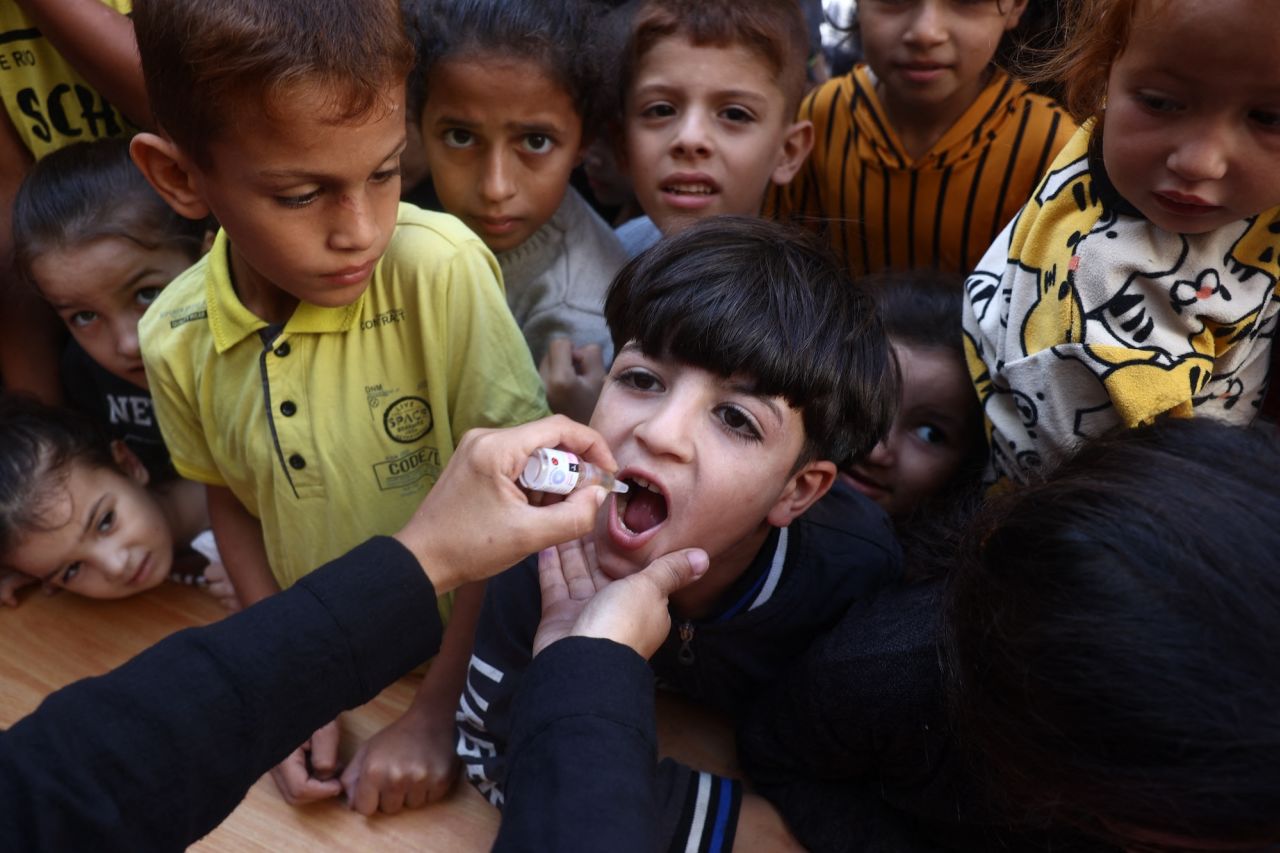
The second phase of the United Nations-led vaccination initiative against polio is progressing effectively in southern Gaza, with more than 140,000 children under the age of 10 vaccinated in the region on Saturday.
The United Nations Relief and Works Agency (UNRWA), the principal UN organization operating in Gaza, has established ambitious goals for the vaccination effort, which commenced at the beginning of September. The agency aims to immunize 640,000 children in the territory, representing over 90% of the population under 10 years old.
Health officials are implementing the campaign in three-day segments, organized by geographic location, starting with central Gaza, followed by southern Gaza, and concluding with northern Gaza. Each child is scheduled to receive two doses of the vaccine, administered in two rounds spaced four weeks apart.
On Saturday, 145,202 children under 10 received their second dose of the polio vaccine, while 119,055 children aged 2 to 10 were given vitamin A supplements in southern Gaza, as reported by the World Health Organization (WHO) on their official X account.
The campaign has been facilitated by a series of ceasefires agreed upon by the Israeli military, although it has faced significant challenges. Last week, a vaccination event planned at a UN school in central Gaza, where displaced individuals are taking refuge, had to be canceled due to severe damage inflicted by an Israeli airstrike.
In terms of polio prevention in Gaza, more than 560,000 children under 10 received their initial doses of the vaccine in September, according to WHO. Prior to the conflict, Gaza had nearly universal coverage for the polio vaccine; however, this rate fell below 90% at the onset of the vaccination campaign, which became critical following the destruction of water and sanitation infrastructure by Israel, leading to a resurgence of this deadly disease in the besieged region.
Polio primarily affects children under the age of 5 and can result in irreversible paralysis or death. It is highly contagious, and there is no cure; according to WHO, immunization is the only effective means of prevention.