


















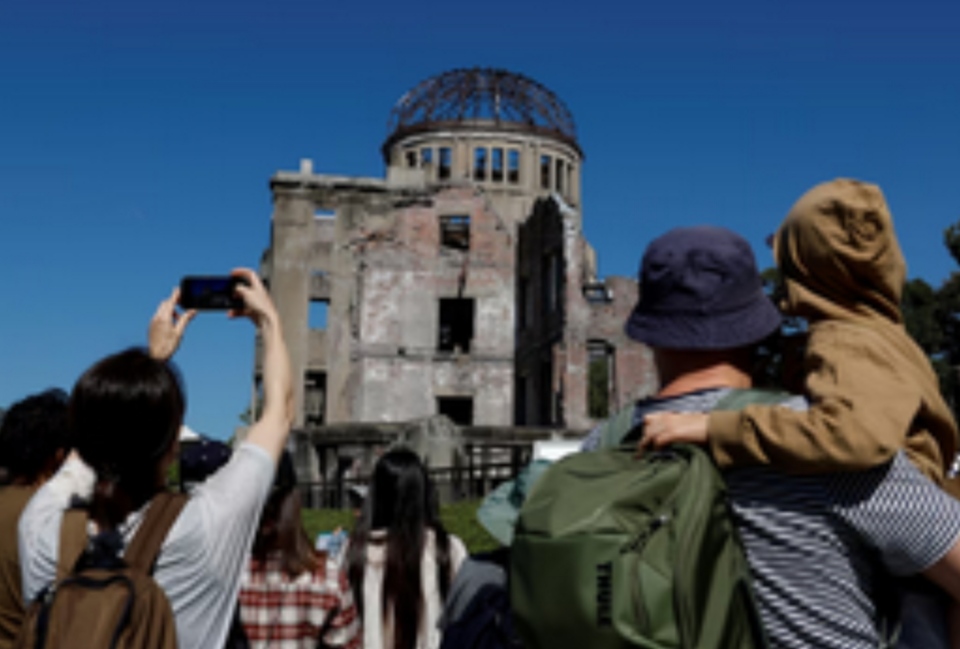
HIROSHIMA, Japan, Oct 12 (Reuters) – Attendees at the memorial park dedicated to the atomic bombing of Hiroshima expressed their hope that the Nobel Peace Prize awarded on Friday to Japan’s atomic bomb survivors would enhance global peace initiatives and encourage world leaders to visit the site. The Norwegian Nobel Committee recognized the Nihon Hidankyo group, which represents the survivors of the 1945 U.S. atomic bombings in Hiroshima and Nagasaki, for its longstanding commitment to the abolition of nuclear weapons.
Ui Torisawa, a 21-year-old student visiting the Peace Memorial Park with a friend, expressed to Reuters, “As Japanese citizens, it is imperative that we prevent a recurrence of such events. Given that Japan is the sole nation to have experienced atomic bombings, and considering the potential for similar occurrences in other nations, I believe Japan is uniquely positioned to advocate against this.” Next August will commemorate the 80th anniversary of the bombings, likely bringing attention to the experiences of the survivors, referred to as “hibakusha,” and potentially igniting a renewed discussion regarding nuclear armament.
Yasuhiro Suzuki, who was visiting the Peace Memorial Park with his wife, son, and daughter from Fukuoka Prefecture in southwestern Japan, described the awarding of the Nobel Peace Prize to the group representing atomic bomb survivors as “groundbreaking.” He remarked, “Nuclear power offers significant benefits to the world, yet we must exercise caution to prevent its misuse. I hope this serves as an opportunity for individuals globally to reflect on the various dimensions of this issue.”
Hiroshima’s Peace Memorial Park has historically attracted not only Japanese visitors but also international figures, including world leaders like Barack Obama, who delivered a speech at the site as U.S. president in 2016 and embraced a tearful hibakusha. Hiroshima resident Hirokazu Tanabe, a driver who visited the park to guide a friend, expressed, “I believe there are still many prime ministers and leaders worldwide who could come to Japan, and I hope they will take the initiative to visit.”
Many Japanese citizens feel that the United States should issue an apology for the bombings, which resulted in the deaths of hundreds of thousands and led to Japan’s surrender shortly thereafter. Since then, Japan has depended on the U.S. for security, renouncing the right to engage in warfare and defining its military solely for self-defense purposes.
Ayane Takiguchi, a 22-year-old student who visited the park with Torisawa, stated that it was a privilege for the group representing atomic bomb victims to receive the Nobel Peace Prize. “As a student of education, I have recently come to appreciate the significance of fostering peace through education,” she noted. “In that regard, I am pleased that this recognition has such a profound impact.”