

















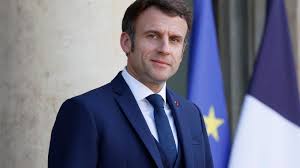
French President Emmanuel Macron’s anticipated political setback in crucial parliamentary elections on Sunday has the potential to paralyze the nation, diminish his influence on the global stage, and cast a shadow over his legacy, just as France is gearing up to host the Paris Olympics.
Macron, who is the youngest president in France’s history, is renowned internationally for his relentless diplomatic efforts and pro-European initiatives.
The question now is how he will navigate the country’s affairs with the likelihood of not having a parliamentary majority and facing a confrontational government.
With constitutional limitations preventing him from seeking a third consecutive term in 2027, Macron, 46, is grappling with the challenge of avoiding becoming a lame duck. Regardless of the outcome of Sunday’s runoff, it is unlikely to bode well for Macron.
Recent reports from French media have suggested an atmosphere of an “end of reign” at the Elysee presidential palace. Polls indicate that Macron’s centrist alliance is poised for defeat in Sunday’s runoff, following a third-place finish in the initial round.
“It seems that in the first round, the French electorate wanted to express their dissatisfaction with their president,” remarked Paris-based political analyst Dominique Moïsi in an interview with the Associated Press.
Macron has established himself as a prominent figure on the global stage, actively engaging in diplomatic efforts to support Ukraine following Russia’s invasion. He has also been advocating for diplomatic solutions in the Middle East alongside Arab partners. Additionally, Macron has emphasized the importance of the European Union strengthening its defense capabilities and implementing economic reforms to remain competitive internationally, particularly against China and the US.
While the French Constitution grants the president authority over foreign policy, European affairs, and defense, the extent of power-sharing with a prime minister from a different party is still ambiguous. Without full government support, Macron’s ability to enact his agenda may be constrained.
Despite controversy surrounding his pro-business policies, Macron’s tenure as president has seen a decrease in unemployment rates. His background as a former banker and economic adviser to President Hollande, followed by his role as economy minister, has shaped his approach to governance and policy-making. Elected as president in 2017, Macron has focused on labor market reforms and tax cuts to stimulate economic growth and job creation.
Macron’s re-election in 2022 marked his victory over Marine Le Pen for the second time in a row. However, despite his centrist alliance securing the largest number of seats in the National Assembly, he lost his parliamentary majority. His attempt to raise the retirement age from 62 to 64 was met with widespread protests, leading to a decline in his leadership. The fatal police shooting of a teenager also sparked riots in numerous cities, towns, and villages.
The election outcome may result in a weakened political center and leave Macron as a politically ineffective leader. His decision to dissolve the National Assembly has been met with criticism from within his own camp, with his finance minister expressing concern and incomprehension over the move. Macron’s political skills have been questioned by members of his own party, with his former prime minister accusing him of “killing” his centrist majority.
At the upcoming Nato summit in Washington next week, the fate of Macron could potentially spark discussions. This event will provide an opportunity for global leaders to convene with the newly appointed UK Prime Minister, Keir Starmer.