


















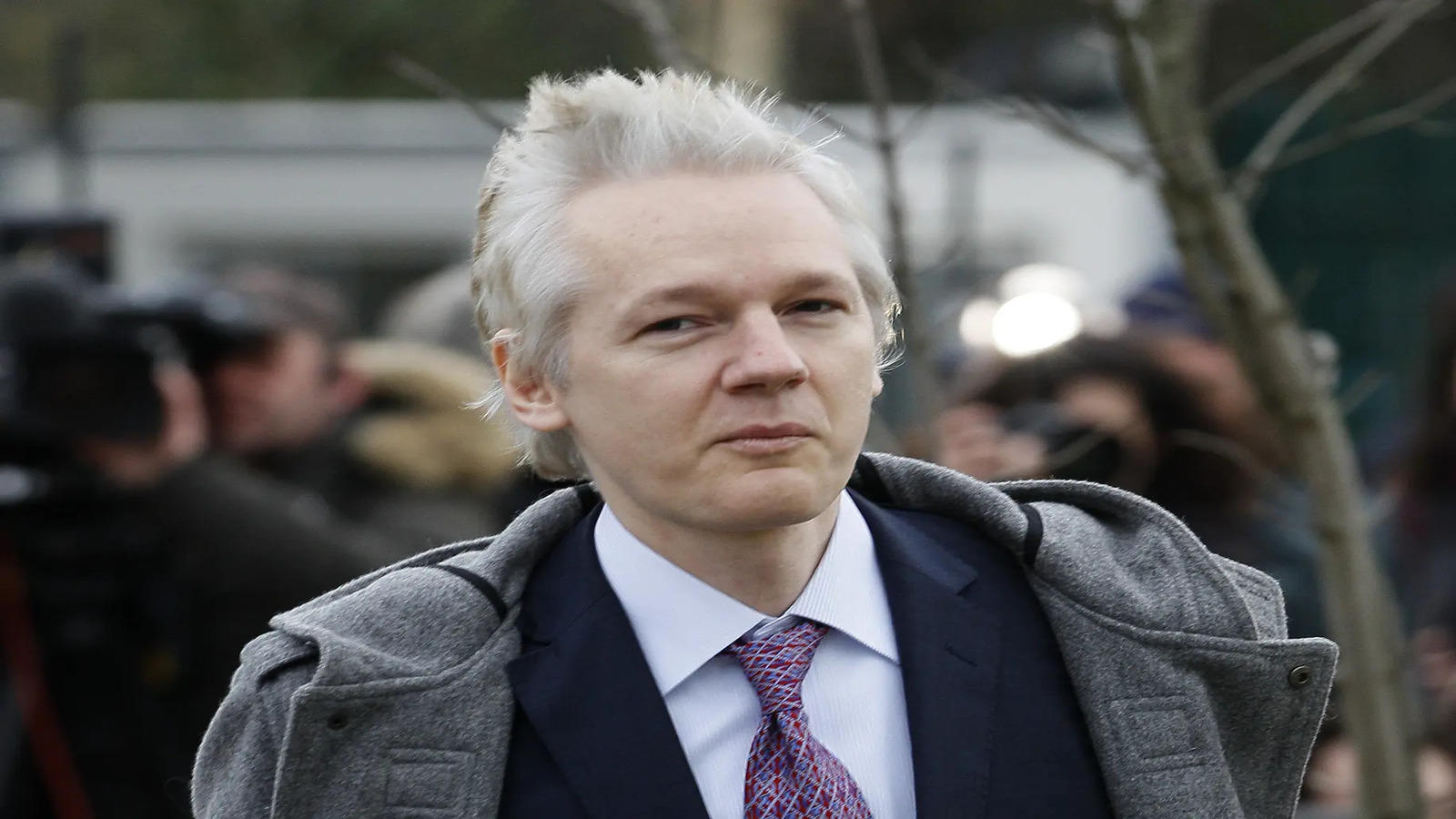
After numerous legal battles and conflicts with multiple governments, Australian citizen and WikiLeaks founder Julian Assange was released from a UK prison following a bail order from the London High Court on Monday (June 24).
In a statement on X, his website WikiLeaks announced: “JULIAN ASSANGE IS FREE”.
Assange faced charges of treason from the US government due to the classified documents released by WikiLeaks. He is now anticipated to strike a deal with the US, appear in a US court, and plead guilty to one charge in return for the resolution of the prolonged case against him.
What does this agreement entail and what were the details of the case against Assange? We will elaborate.
What is the arrangement between Assange and the US?
Over the years, the US government has made several efforts to bring Assange to trial in the US on espionage charges. Assange, who has been residing in the UK under confinement in recent times, has challenged this through various levels of the British legal system.
In a significant development last month, the High Court in London granted Assange permission to appeal against his extradition to the US. His legal team has reportedly been in discussions with the US Department of Justice since then. The Australian government has also been in contact with the US government, as per The Guardian.
As per The New York Times, Assange has now agreed to plead guilty to a “single felony count of illegally obtaining and disclosing national security material in exchange for his release from a British prison”.
Furthermore, it should be noted that top officials at the Justice Department reached an agreement with Julian Assange that did not involve any additional prison time. This decision was made due to the fact that Assange had already served a longer period of time in prison compared to most individuals charged with a similar offense. Specifically, he had spent over five years in prison in Britain. It is important to mention that Assange will now face trial in a US court located on the island of Saipan. The trial is scheduled to take place at 9 am on Wednesday, according to the local time. Saipan is situated in the western Pacific Ocean and serves as the capital of the Northern Mariana Islands, which is a US commonwealth. It is worth noting that Assange has voiced his opposition to being extradited to the US mainland.
To provide some background, Julian Assange is an Australian national, currently 52 years old. From an early age, he demonstrated an interest in computer hacking. Eventually, he utilized these skills to establish a website called WikiLeaks in 2006. WikiLeaks describes itself as a media organization that aims to promote transparency by publishing confidential government and corporate documents. In a relatively short period of time following the website’s launch, Assange gained international recognition. Notably, WikiLeaks disclosed various leaked US government documents, which revealed instances of unreported civilian casualties caused by the US military during their operations in Afghanistan and Iraq. One particularly notable leak was a video that depicted a US Apache helicopter firing at suspected insurgents in Iraq, resulting in the death of twelve individuals, including two Reuters news agency employees. The video further exposed the callous response of the US military crew, who were seen laughing at the casualties. In 2010, the same year as the military leaks, WikiLeaks publicly released over 250,000 classified cables from US embassies. These cables were shared with prominent media outlets, such as The Guardian and The New York Times.
The US government responded to the situation involving Assange by indicting him on 18 charges, including violations of the Espionage Act and the Computer Fraud and Abuse Act. They claimed that WikiLeaks had obtained information illegally and that sharing it had put the lives of US officials in foreign countries at risk. Additionally, Assange was accused of conspiring with Chelsea Manning, a US Army intelligence analyst who leaked documents to WikiLeaks. Manning was sentenced to 35 years in jail, but her sentence was later commuted and she was released in 2017. Since the indictments, there have been efforts to extradite Assange to the US for trial.
Assange’s situation took a turn after the leaks were made public. While he was in Sweden during the time of the US military leaks, he faced accusations of sexual assault and molestation from two women associated with WikiLeaks. Assange vehemently denied these charges and believed they were part of a larger scheme by the United States to extradite him. In an effort to evade arrest, he sought refuge in London.
Consequently, Swedish authorities issued an international arrest warrant for Assange. He willingly surrendered to the UK police and was initially detained, but later released on bail. However, a district court ruled in favor of his extradition to Sweden.
In fear of being arrested and extradited, Assange sought asylum in the Embassy of Ecuador in 2012. The South American country’s ruling leftist government granted him asylum, and he remained there for several years, living in a state similar to house arrest. During this time, he also made attempts to appeal against the Sweden case.
Over time, he started encountering issues with the Ecuador government, resulting in his removal from the embassy and termination of his asylum in 2019. This resulted in intense scenes, as the London police intervened to apprehend Assange for “failing to surrender to the court” regarding a warrant issued in 2012.
By the end of 2019, the Swedish legal cases against him had been dismissed due to various reasons, including outdated evidence. Nevertheless, Assange now faced the US legal case. How did the US try to extradite Assange previously? Assange was handed a 50-week prison sentence for his actions in the UK.
He was incarcerated in a high-security prison near London starting from 2019. In the same year, the US also charged him and initiated extradition proceedings with the UK authorities. Thus, a protracted legal battle ensued, with Assange challenging the extradition while the US government opposed him. The central concern was whether Assange would be treated fairly and humanely and receive a just trial upon arrival in the US if extradited.
Assange’s legal team emphasized his need for protection under the First Amendment of the US Constitution, citing that WikiLeaks and its publications were a form of journalism that should be safeguarded under free speech laws. They expressed concerns over the possibility of him facing the death penalty.
The US government contended that Assange’s actions surpassed those of a traditional journalist, alleging that he engaged in activities such as soliciting, stealing, and indiscriminately releasing classified government information.
In 2022, Britain’s Supreme Court denied Assange’s request to appeal his extradition, resulting in the British government issuing the extradition order. Despite this, Assange filed an appeal, which was later ruled in favor of the US government by a High Court judge. Subsequently, Assange’s legal team made a ‘final bid’ in his defense.