

















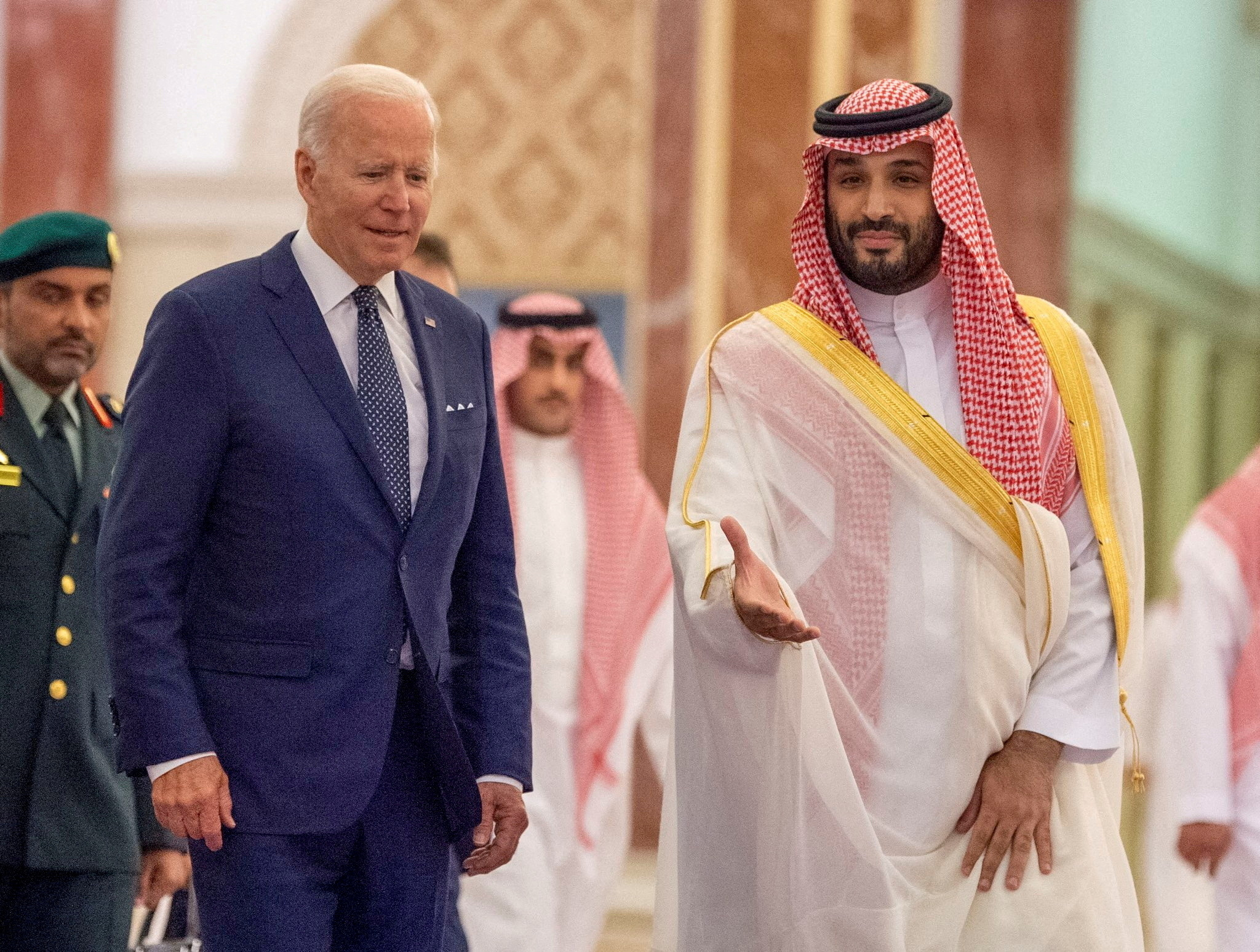
A series of agreements between the US and Saudi Arabia on security and technology-sharing were initially planned to coincide with a broader peace settlement involving Israel and the Palestinians.
However, due to the absence of a ceasefire in Gaza and strong opposition from Benjamin Netanyahu’s Israeli government regarding the establishment of a Palestinian state, along with its alleged intent to launch an offensive on Rafah, the Saudis are proposing a more scaled-back alternative known as plan B, which excludes Israel.
In this proposed plan B, the US and Saudi Arabia would engage in agreements related to a bilateral defense pact, US support in developing Saudi Arabia’s civil nuclear energy sector, and increased collaboration in areas like artificial intelligence and other emerging technologies, according to a report from Bloomberg.
As part of this proposal, Israel would be offered the normalization of diplomatic relations with Riyadh in return for its acceptance of a two-state solution to the longstanding Israeli-Arab conflict.
However, under Riyadh’s plan B, the implementation of the US-Saudi agreements would not be subject to approval from the Netanyahu government.
Firas Maksad, senior director for strategic outreach at the Middle East Institute, was cited by Bloomberg as suggesting that there should be space for a less-for-less model, so the relationship with the US does not have to be influenced by Israeli politics or Benjamin Netanyahu’s decisions.
Meanwhile, a Democratic US senator on Wednesday urged President Joe Biden to include stringent nonproliferation safeguards in any nuclear power agreement with Saudi Arabia that may be part of a potential normalization of relations deal brokered by Washington between the kingdom and Israel.
The Biden administration has been in discussions with Saudi Arabia and Israel regarding a potential peace agreement since before the Oct. 7 deadly attacks by Hamas on Israel, and talks have continued during the Israeli conflict with the militant group in Gaza.
The Middle East would undergo a significant transformation if a pact were to be established, wherein the largest oil exporter in the world receives military protection from the United States in exchange for normalizing relations with Israel.
This agreement would bring together two historical adversaries and solidify the bond between Riyadh and Washington. Notably, this development comes at a crucial juncture as China expands its influence in the region.