

















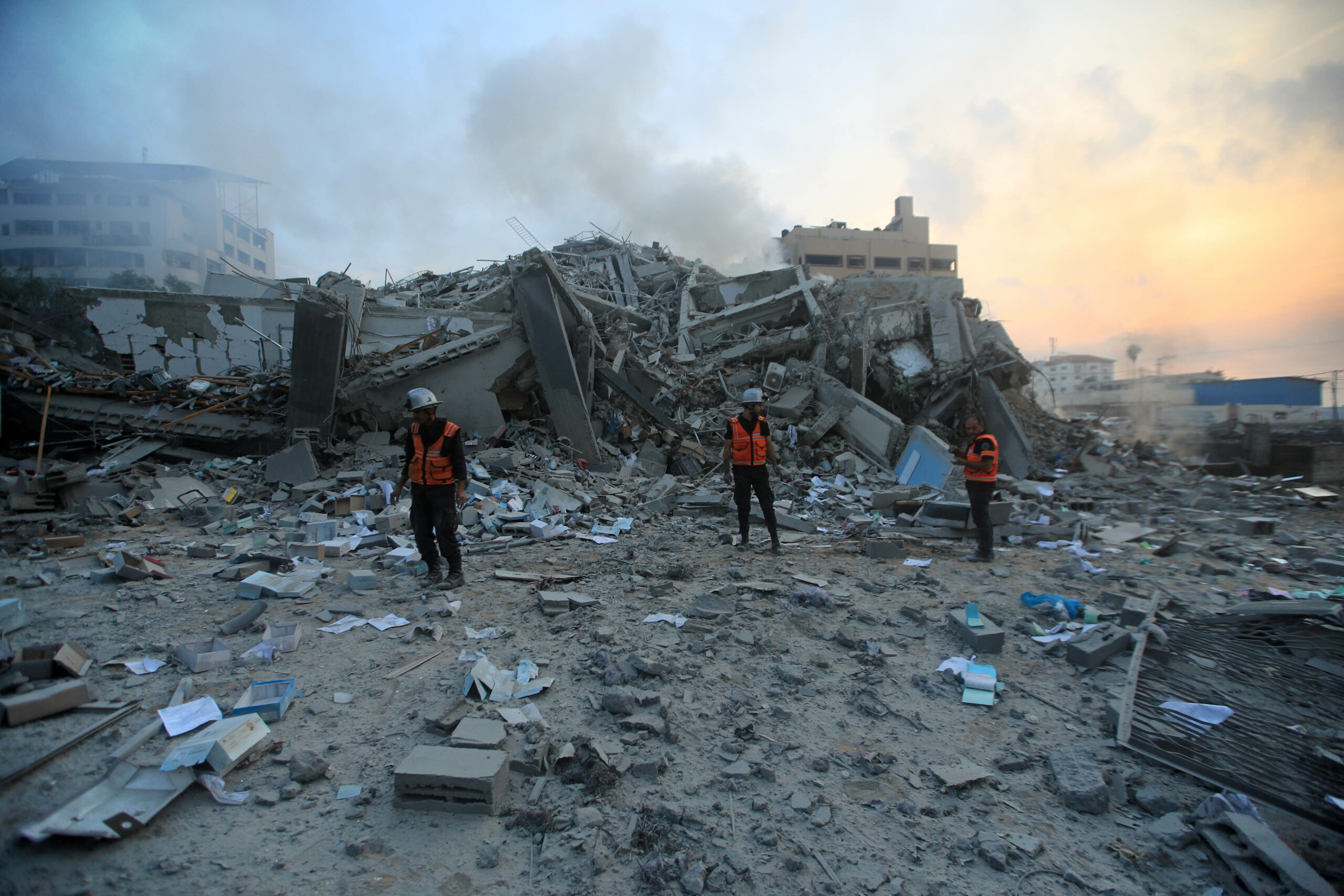
Israel announced on Wednesday that its forces were engaged in “offensive action” in Lebanon, following cross-border strikes targeting Hezbollah, a Hamas ally. Israeli aircraft and tanks continued to bombard the Gaza Strip.
Since the start of the Israel-Hamas conflict on October 7, Lebanon’s Hezbollah, backed by Iran, and Israeli forces have been exchanging fire almost daily, raising concerns of a broader conflict.
In Gaza, which has already been devastated by war, there is growing worry about Israeli plans to launch an attack on the southern city of Rafah, where 1.5 million people have taken shelter, many in makeshift camps.
Despite warnings from aid organizations about the catastrophic impact on civilians, Israeli government spokesperson David Mencer stated that Israel was proceeding with its operation in Rafah, considered the “last” major Hamas stronghold where militants may be holding hostages.
Hamas, on the other hand, released a video of an Israeli-American man who is among the 129 hostages believed to be in Gaza, including 34 who are presumed dead.
On the same day, US President Joe Biden signed a bill approving $13 billion in military aid to Israel, along with $1 billion in humanitarian aid for Gaza, which Biden urged Israel to allow to reach Palestinians promptly.
Tensions in the Middle East remain high after more than 200 days of the devastating conflict, which has also led to increased violence between Israel and Iran’s allies and proxies in the region.
Defence Minister Yoav Gallant stated that numerous forces are stationed along Israel’s northern border, claiming that the military has eliminated “half of Hezbollah’s commanders in southern Lebanon” during months of conflict.
Israel has continued its incursions into Lebanon, while Hezbollah has intensified its attacks on Israeli military bases with rockets and drones across the border.
Gallant, an IDF (military) spokesperson, stated that offensive operations were underway in southern Lebanon, but did not specify if ground troops had crossed the border.
UNIFIL, the United Nations peacekeeping force, confirmed that they had not detected any ground crossings on that day, according to an AFP report.
The Israeli army had previously announced that it had targeted approximately 40 Hezbollah sites in southern Lebanon, with Lebanese official media reporting at least 13 strikes on various villages.
If Israeli troops enter Rafah, it would leave no safe place, warned a spokesperson.
The conflict began when Hamas launched an unprecedented attack on October 7, resulting in the deaths of around 1,170 people, according to Israeli official figures compiled by AFP.
In response, Israel initiated a military offensive that has claimed the lives of at least 34,262 people in Gaza, predominantly women and children, as reported by the health ministry of the Hamas-controlled territory.
In a video released by Hamas, the hostage identified himself as Hersh Goldberg-Polin, a 23-year-old Israeli-American who was among those abducted during the Nova music festival on October 7.
In the video, AFP has not been able to independently verify the authenticity of Goldberg-Polin missing a hand, a wound he suffered during his capture.
In an apparent reference to Jewish Passover, which began this week, Goldberg-Polin informed Israeli government members that they should think of the hostages still in hell while enjoying holiday meals with their families.
Rachel Goldberg-Polin and Jon Polin, his parents, expressed relief at seeing him alive but also voiced concerns about his health, well-being, and that of all hostages and suffering individuals in the region.
The European Union, the UN rights office, and most recently the White House have all called for an investigation into reports of mass graves found at Gaza Strip’s largest hospitals after Israeli raids.
US National Security Advisor Jake Sullivan emphasized the need for a thorough and transparent investigation into the matter.
Israel has targeted hospitals during the war, accusing Hamas of using them as command centers and holding hostages abducted on October 7. Gaza’s Civil Defence agency reported nearly 340 bodies found at Nasser Hospital in Khan Yunis.
Israeli army spokesman Major Nadav Shoshani stated that the grave in question was dug by Gazans a few months ago.
While the Israeli army acknowledged examining corpses buried by Palestinians in search of hostages, they did not directly address allegations of Israeli troops being responsible for the killings.
Relatives of missing Palestinians have been visiting Nasser Hospital in search of their loved ones, with some confirming that the bodies recovered were buried by relatives.