


















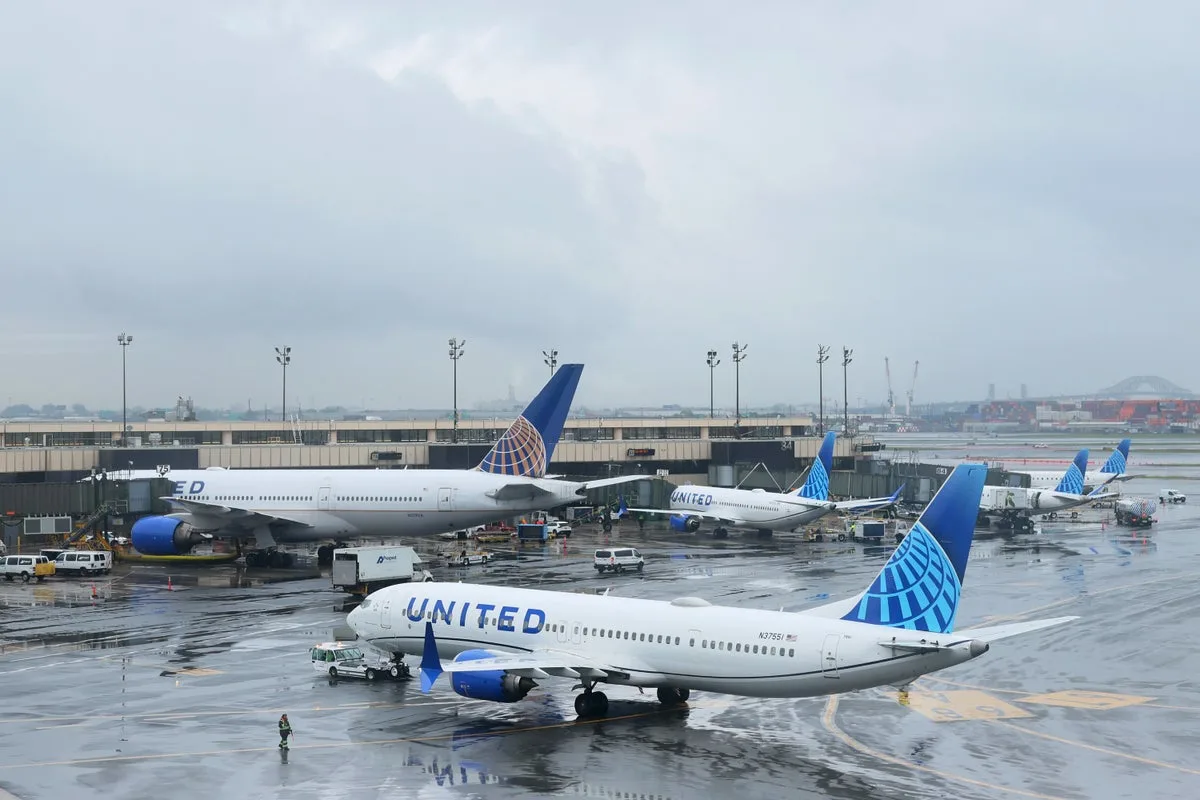
On Friday, two aircraft collided on the tarmac at LaGuardia Airport in New York as the United States faces travel disruptions due to adverse weather conditions and staffing shortages. The aviation sector has been experiencing difficulties since the government shutdown affected the nation.
As reported by The New York Times, a United Airlines flight returning from Orlando, Florida, was maneuvering into its arrival gate when it struck the tail of another United aircraft on the taxiway. A spokesperson for the airline informed the news outlet that the impacted plane, which was preparing for its journey to Houston, was stationary at the time of the incident.
A passenger, who chose to remain anonymous, recounted to The New York Post shortly after the collision, “We all felt a bump during taxi to the runway but didn’t know it was another plane until the captain said it was.”
Footage acquired by the American news outlet depicted numerous emergency vehicles present at the scene following the collision. Both aircraft eventually returned to the gate, and all passengers disembarked.
No injuries were reported
Authorities confirmed that there were no injuries among the 328 passengers and 15 crew members aboard the two planes. In the video, maintenance teams were seen inspecting the damaged aircraft for any issues following the incident.
According to The New York Post, the plane bound for Houston was already experiencing a delay of 90 minutes, which continued to increase throughout the night. Following the incident, LaGuardia had both planes secured several hours earlier due to strong winds.
Ground delays at LaGuardia averaged two hours and 15 minutes, with some flights delayed by as much as five hours. On the same day, the National Weather Service issued a wind advisory effective until midnight.
Airports nationwide were already contending with air traffic control staffing shortages, which Transportation Secretary Sean Duffy warned could lead to a “disaster” if the shutdown persisted into November and the holiday season.
“Air traffic controllers who are not receiving payment may be compelled to seek additional employment in order to meet their financial obligations, which could lead to widespread problems across the airspace,” he cautioned.