

















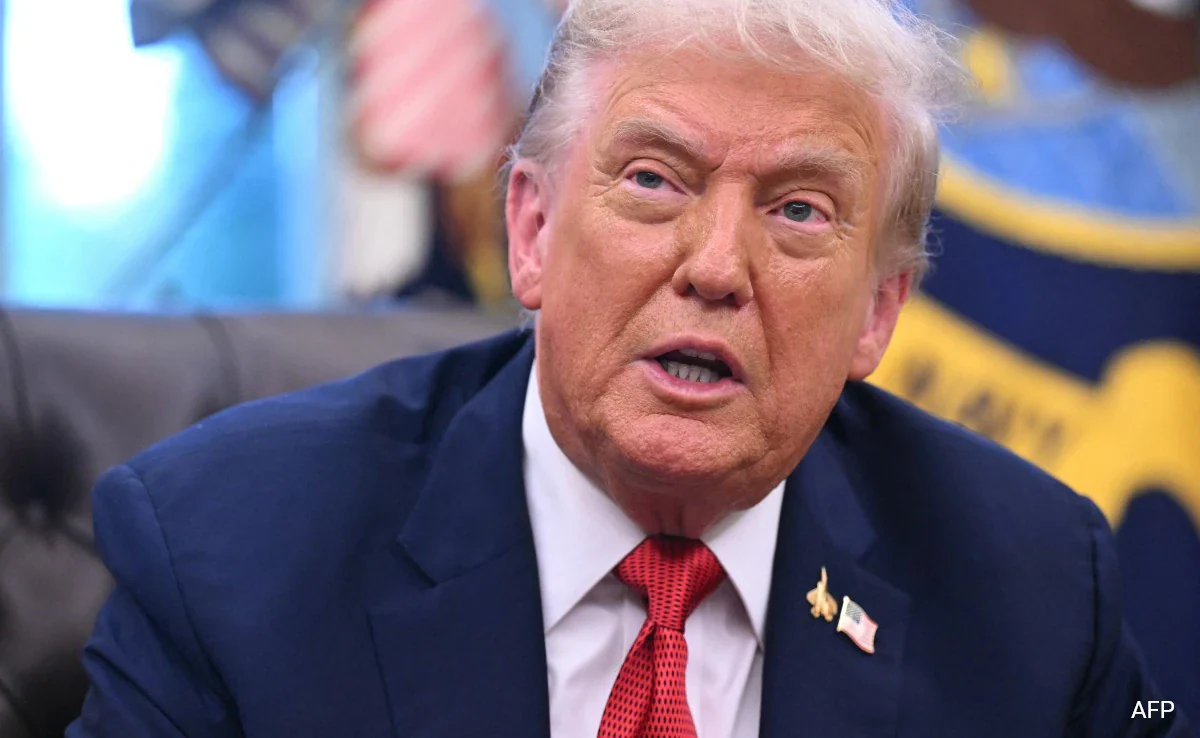
On Friday, US President Donald Trump declared a substantial 100 percent tariff on pharmaceutical products and a 50 percent tariff on kitchen cabinets and bathroom vanities. Additionally, the American leader has instituted a 30 percent duty on upholstered furniture and a 25 percent duty on heavy trucks.
These actions are perceived by many as Trump’s latest effort to tighten control over international trade, with the measures set to take effect on October 1. The announcement from the American president was made through a series of posts on his social media platform, TruthSocial, demonstrating his ongoing commitment to tariffs that extend beyond the trade frameworks and import taxes established in August.
“Beginning October 1st, 2025, we will implement a 100% Tariff on any branded or patented Pharmaceutical Product, unless a Company IS BUILDING their Pharmaceutical Manufacturing Plant in America. ‘IS BUILDING’ will be defined as ‘breaking ground’ and/or ‘under construction,’” Trump stated in a post on TruthSocial.
While discussing the tariffs on trucks, Trump remarked: “To safeguard our Great Heavy Truck Manufacturers from unfair foreign competition, I will impose, effective October 1st, 2025, a 25% Tariff on all ‘Heavy (Big!) Trucks’ produced in other regions of the World. Consequently, our esteemed Large Truck Company Manufacturers, including Peterbilt, Kenworth, Freightliner, Mack Trucks, and others, will be shielded from the influx of external disruptions. It is essential for our Truckers to remain financially robust and resilient, primarily for National Security reasons!”
“We will enforce a 50% Tariff on all Kitchen Cabinets, Bathroom Vanities, and related products, commencing October 1st, 2025. Furthermore, we will impose a 30% Tariff on Upholstered Furniture. This decision is driven by the extensive ‘FLOODING’ of these products into the United States from other foreign Nations. This practice is exceedingly unfair, but we must defend our Manufacturing process for National Security and other critical reasons.
Trump asserted that the tariffs would promote domestic investment, disregarding worries that increased import taxes elevate expenses for both consumers and businesses. He maintained that inflation was manageable, even though the consumer price index had increased by 2.9% in the last year.
Nevertheless, there is scant evidence to support the notion that tariffs are generating jobs or establishing new manufacturing plants, as manufacturers have eliminated 42,000 jobs and construction firms have decreased their workforce by 8,000 since April.