

















In the past week, thirty-two bodies have been exhumed in southeastern Kenya, a tragedy that is provoking renewed criticism of authorities who had promised to take action against extremist sects following the deaths of hundreds of doomsday cult members two years ago.
The Kenyan government, along with local residents, has associated the bodies found in the village of Kwa Binzaro with the same Christian sect responsible for the deaths of over 400 individuals in the nearby Shakahola Forest in 2023.
On Thursday, seven additional bodies were recovered, raising the total number of exhumations in the remote, forested area to 32, as reported by government pathologist Richard Njoroge.
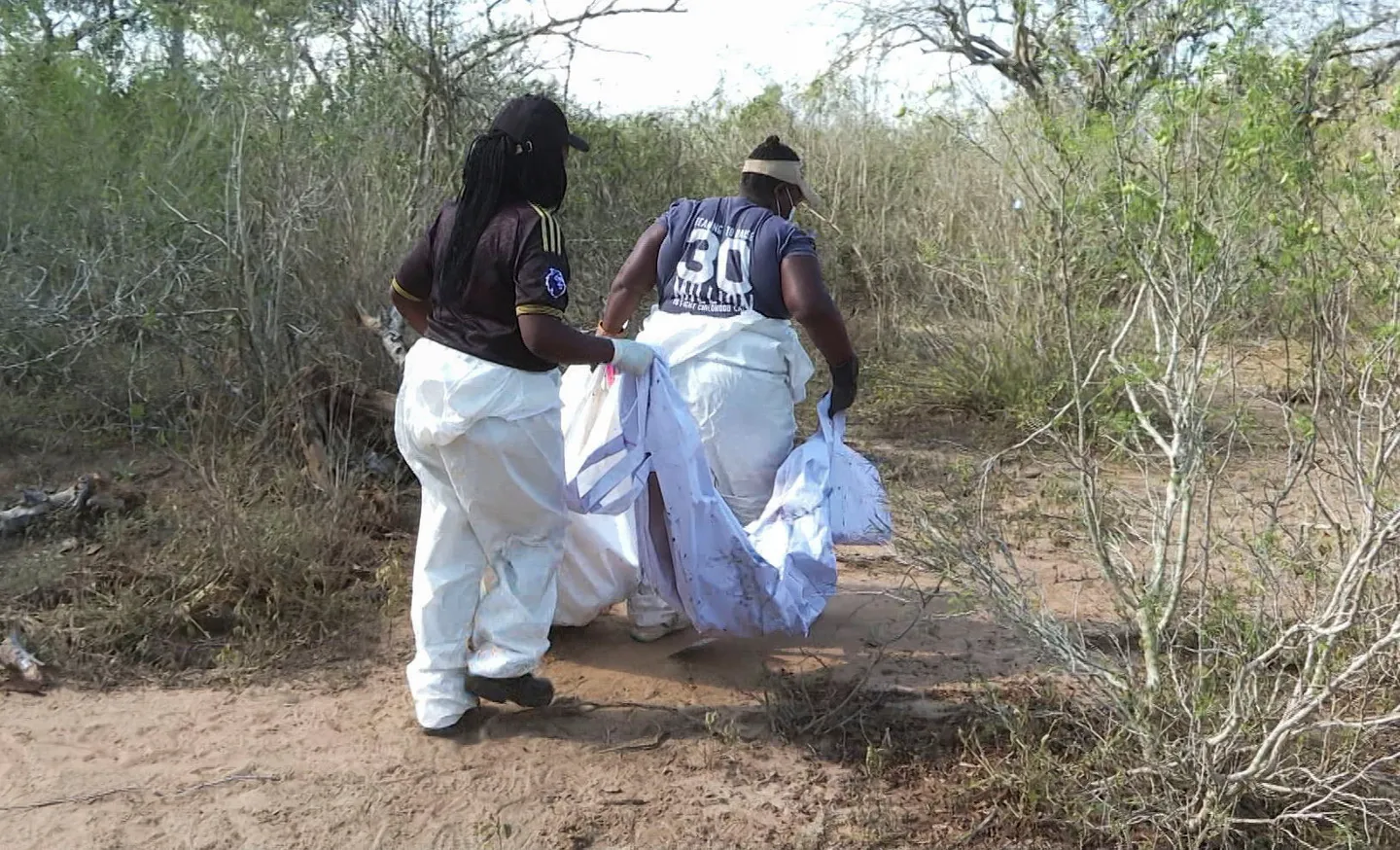
Search efforts continued on Friday, with workers dressed in white hazmat suits and blue gloves meticulously searching through thick underbrush using shovels and hoes.
Kwa Binzaro is located approximately 30 km (18 miles) from Shakahola, where prosecutors allege that cult leader Paul Mackenzie instructed his followers to starve themselves and their children in order to reach heaven before the end of the world.
Mackenzie, who is facing charges of murder and terrorism, has denied the allegations against him.
Earlier this month, Interior Minister Kipchumba Murkomen connected the graves found in Kwa Binzaro to Mackenzie’s cult, stating that survivors rescued from the village reported that the self-proclaimed pastor was praying for them from prison.
In response to the findings in Shakahola, President William Ruto’s administration committed to enhancing oversight of religious organizations and improving community-based monitoring.
11 suspects have been arrested.
In an article published in the Star newspaper on Thursday, human rights activist Hussein Khalid remarked that the recent fatalities highlight the shortcomings of a top-down, security-focused strategy that has neglected to engage with local communities.
“What we are observing is a profound betrayal. A betrayal of the most fundamental obligation of any government – to safeguard the lives of its citizens,” Khalid stated.
Representatives for Ruto, the national administration, and the police department did not promptly reply to inquiries for comments.
The commissioner of Kilifi County, where Kwa Binzaro is situated, announced this week that 11 individuals had been apprehended in connection with the case.
Families of those who became involved with Mackenzie’s cult are once again awaiting DNA test results that may reveal whether their relatives are among the deceased.
Eight members of William Ponda Titus’ family became part of the cult, starting in 2015. The remains of four, including his mother and one of his brothers, were discovered in Shakahola. Four others are still unaccounted for, and the family suspects they may have moved to Kwa Binzaro.
“This situation has caused me immense pain because currently, it is just my father and me. I have been unwell since receiving the news,” he expressed to Reuters outside the family residence in the nearby town of Malindi.
His cousin, Michael Ruwa, voiced his frustration that the government has remained largely silent regarding the findings in Kwa Binzaro.
“The issue is being treated with a lack of seriousness,” he remarked. “We urge the government to address this matter with the gravity it deserves, as it involves people who have gone missing, not animals.”