

















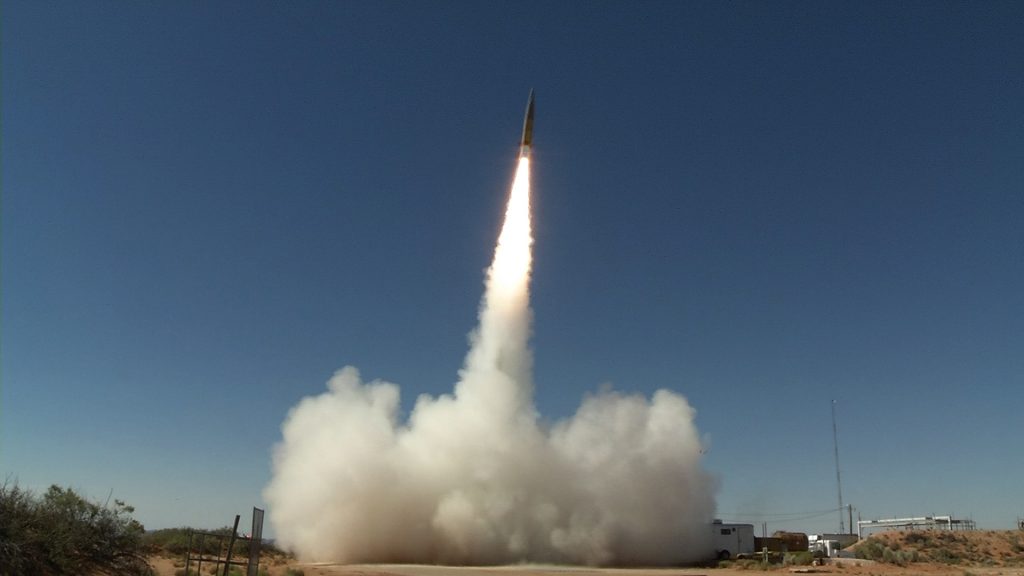
In the most recent episode of perilous nuclear posturing, Russia announced on Monday the termination of its moratorium on the deployment of nuclear-capable intermediate-range missiles.
This development occurred just days after US President Donald Trump stationed nuclear submarines near Russian waters in reaction to war threats from Dmitry Medvedev, a prominent ally of Russian leader Vladimir Putin.
With such reciprocal actions over recent years, often instigated by Trump’s impulsive decision-making, decades of nuclear arms reduction and non-proliferation efforts are being reversed, bringing the world closer to a nuclear disaster than it has been in decades.
It is not solely the nuclear powers like the United States, Russia, and China that are increasing their nuclear arsenals and modernizing their delivery systems. More countries, particularly those traditionally under the US security umbrella in Europe and East Asia, are contemplating the development of their own nuclear weapons as well.
While each nation, whether Poland in Europe or South Korea in Asia, has its own justification, the underlying reason for all these pursuits is Trump’s disruption of the international order that he initiated during his first term.
Consequently, nations such as Poland, Saudi Arabia, South Korea, and even Japan are now engaging in discussions about nuclear weapon development, a topic that was once considered taboo. His flawed strategy of ‘maximum pressure’ has already brought Iran to the brink of developing a nuclear weapon, necessitating the three-way talks earlier this year.
Trump and Putin display nuclear might
In the past two weeks, the escalating rhetoric between the United States and Russia has finally resulted in tangible consequences.
Since the onset of the full-scale invasion of Ukraine, Putin and his close allies, including Medvedev, have frequently referenced nuclear weapons. Medvedev has repeatedly threatened Western capitals with nuclear strikes in response to their support for Ukraine.
Last month, Medvedev finally crossed a line in his personal conflict with Putin on X. After he issued a direct threat of war against the United States, Trump ordered the positioning of two nuclear submarines close to Russia. A few days later, Russia reacted by pulling out of the Intermediate-range Nuclear Forces (INF) Treaty.
Trump had previously withdrawn the United States from the INF during his first term in 2019.
The treaty, originally established in 1987 between the United States and the Soviet Union, mandated the prohibition and gradual dismantling of intermediate- and short-range nuclear missiles with ranges between 500 and 5,500 kilometers.
Trump terminates arms control agreements
The INF is not the sole arms control treaty that Trump has abandoned.
In 2020, Trump removed the United States from the Open Skies Treaty with Russia, which permitted both nations to conduct aerial surveillance over each other’s territories using sensor equipment to ensure neither was preparing for military conflict.
In his characteristic arrogance, Trump claimed he would negotiate new treaties with Russia regarding the INF and Open Skies. However, those agreements never materialized.
Instead, in 2023, Russia exited the New START treaty, which was the last remaining arms control pact with the United States.
The New START treaty, signed in 2010 and succeeding the Moscow Treaty of 2002, established limits of 1,550 strategic nuclear warheads and up to 800 delivery systems of various types for both nations.
During his first term, Trump also withdrew the United States from the Iran nuclear agreement of 2015 and implemented a ‘maximum pressure’ strategy. Although his intention was to compel Iran into negotiating a new deal that would ostensibly benefit the United States, it ultimately proved to be a significant failure, pushing Iran closer to developing a nuclear weapon.
Earlier this year, Israel leveraged Iran’s near-nuclear capability as a justification for war, which ultimately entangled the United States in the conflict as well.
As Trump has effectively retracted the long-standing security commitment to Europe under NATO’s collective defense principle due to his rapport with Putin, and has also threatened to forsake Asian allies such as Japan and South Korea, there is growing apprehension in these nations that their adversaries—Russia in Europe and China and North Korea in Asia—might interpret the US withdrawal as a signal to adopt a more aggressive stance or even to initiate direct attacks and invasions.
These apprehensions have prompted serious discussions in countries like Poland, South Korea, and Japan regarding the development of nuclear weapons as a final means of deterrence. In West Asia, it is also believed that Saudi Arabia is engaging in similar dialogues.