


















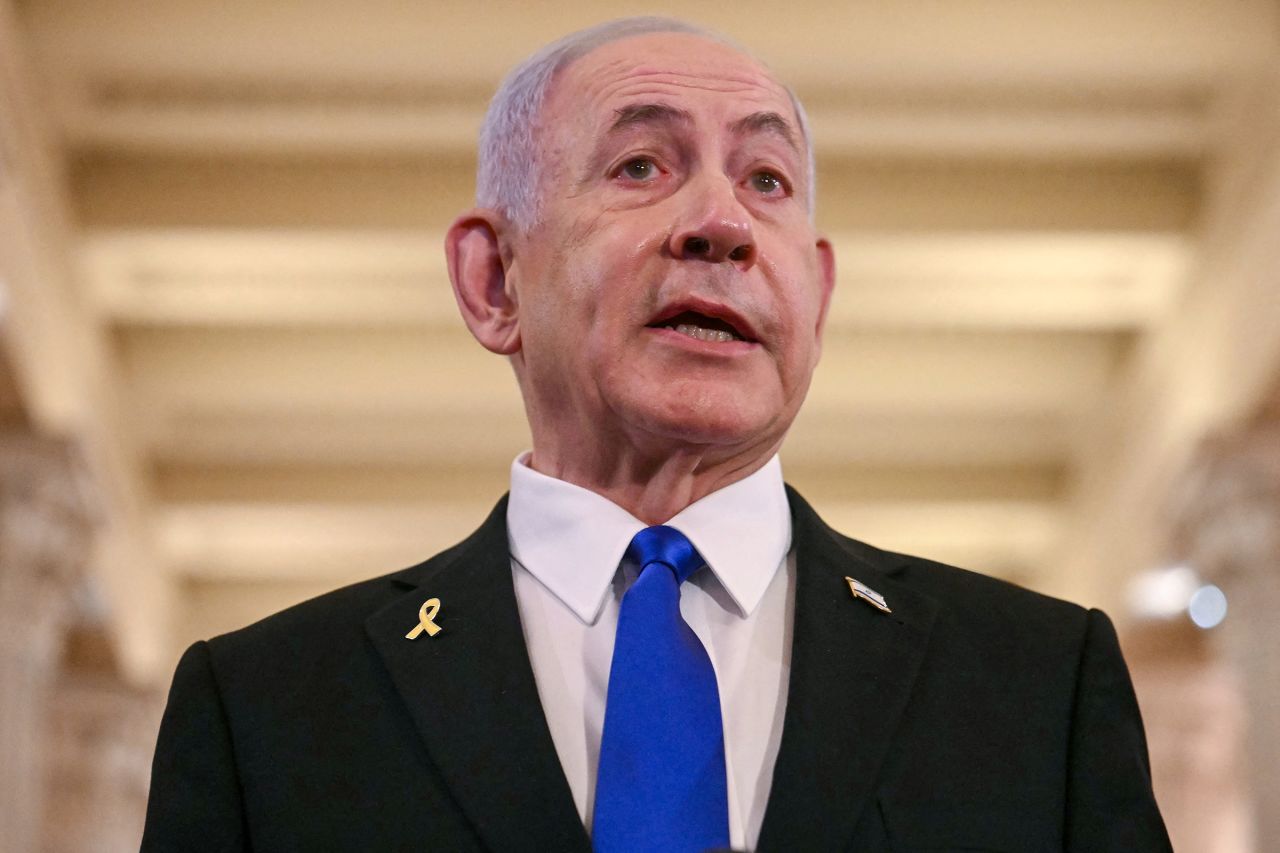
Israeli Prime Minister Benjamin Netanyahu stated on Friday that his administration, in collaboration with the United States, is investigating “alternative options” to secure a ceasefire with Hamas after both countries withdrew their negotiators from the ongoing discussions in Qatar. This action has sparked new uncertainties regarding the future of the long-stalled negotiations.
The Israeli and American delegations departed Doha on Thursday, with U.S. envoy Steve Witkoff condemning Hamas’ recent response as indicative of a “lack of desire” for a truce. Witkoff mentioned that Washington is currently reevaluating its strategy but did not provide any details.
In a statement issued by his office, Netanyahu reiterated Witkoff’s sentiments, asserting, “Hamas is the barrier to a hostage release agreement.”
“In conjunction with our U.S. partners, we are now contemplating alternative options to bring our hostages home, terminate Hamas’s reign of terror, and ensure enduring peace for Israel and our region,” he remarked. He did not provide further details. The Israeli government has not yet responded regarding the potential resumption of negotiations next week.
A significant advancement towards a ceasefire agreement between Israel and Hamas has remained elusive for the Trump administration as humanitarian conditions in Gaza deteriorate. Israel faces increasing pressure as hunger among Gaza’s over 2 million residents intensifies and malnutrition-related fatalities rise.
In recent days, more than two dozen Western-aligned nations and over 100 charitable and human rights organizations have urged an end to the conflict, sharply criticizing Israel’s blockade and a new aid delivery framework it has implemented. The charities and rights organizations reported that even their personnel are struggling to obtain sufficient food.
On Thursday, French President Emmanuel Macron declared that France would officially recognize Palestine as a state, stating, “The urgent thing today is that the war in Gaza stops and the civilian population is saved.″
On Friday, Hamas official Bassem Naim reported that the group had been informed that the Israeli delegation had returned home for consultations and would come back early next week to continue ceasefire negotiations.
Hamas indicated that Witkoff’s comments were intended to exert pressure on the group for Netanyahu’s advantage during the upcoming discussions, asserting that negotiations had made progress in recent days. Naim mentioned that several issues had nearly been resolved, including the ceasefire agenda, assurances for ongoing negotiations to achieve a permanent agreement, and the logistics of delivering humanitarian aid.
The parties have engaged in weeks of discussions in Qatar, noting minor signs of advancement but no significant breakthroughs. Officials have indicated that a primary obstacle is the redeployment of Israeli troops following any ceasefire.
The proposed agreement is anticipated to encompass an initial 60-day ceasefire during which Hamas would release 10 living hostages and the remains of 18 others in phases in exchange for Palestinians detained by Israel. Humanitarian aid would be increased, and both sides would engage in discussions regarding a sustainable ceasefire.
The negotiations have been hindered by conflicting demands for concluding the war. Hamas asserts that it will only release all hostages in return for a complete Israeli withdrawal and cessation of hostilities. Conversely, Israel maintains that it will not consent to end the conflict until Hamas relinquishes power and disarms. The militant organization claims it is willing to step down from power but will not surrender its arms.
Hamas is thought to be holding the hostages in various locations, including tunnels, and has reportedly instructed its guards to execute them if Israeli forces approach.
Approximately 50 hostages remain in Gaza, but it is believed that fewer than half are still alive. Their families express that the intermittent negotiations are agonizing.
“I had hoped that perhaps something would arise from the time the Israeli negotiation team was in Doha,” stated Yehuda Cohen, whose son Nimrod is currently being held hostage. “And upon hearing that they were returning, I found myself wondering: When will this nightmare come to an end?”
In the meantime, Israeli airstrikes persisted throughout Gaza.
The Gaza Health Ministry reported that approximately 80 individuals have lost their lives since Thursday night, primarily due to airstrikes, with nine fatalities occurring while individuals were seeking assistance. One of the strikes targeted a school that was serving as a shelter for displaced persons in Gaza City, coinciding with the gathering of people for the weekly Friday prayers. At least five individuals, including an 11-year-old boy, were reported dead, as confirmed by an AP journalist who witnessed the aftermath.