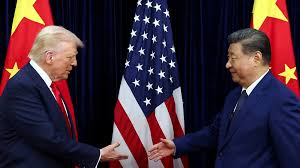

















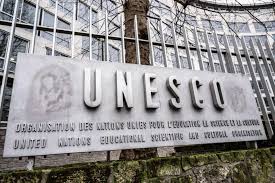
On Tuesday, July 22, the United States announced its decision to withdraw from UNESCO, citing the UN cultural and education agency’s bias against Israel and its pursuit of a “globalist, ideological agenda”.
State Department spokeswoman Tammy Bruce stated, “Continued involvement in UNESCO is not in the national interest of the United States,” confirming that the withdrawal will take effect in December 2026.
Bruce criticized UNESCO for endorsing “divisive social and cultural causes” and for prioritizing the UN’s sustainability goals, which she referred to as a “globalist, ideological agenda”.
She also pointed to UNESCO’s 2011 decision to admit Palestine as a member state and its recognition of heritage sites in the West Bank and east Jerusalem as Palestinian as additional justifications for the US’s exit.
Bruce remarked, “UNESCO’s decision to admit the ‘State of Palestine’ as a member state is highly problematic, contrary to US policy, and contributed to the proliferation of anti-Israel rhetoric within the organisation.”
This announcement signifies the second occasion on which Washington has distanced itself from the United Nations Educational, Scientific and Cultural Organisation during President Donald Trump’s administration. The US had previously withdrawn in 2017 during Trump’s first term, only to rejoin under President Joe Biden.
Director-General Audrey Azoulay expressed her deep regret over President Donald Trump’s decision to withdraw the United States from UNESCO once more, stating that this action contradicted “fundamental principles of multilateralism”.
She added, “However regrettable, this announcement was anticipated, and UNESCO has made preparations for it.”
Azoulay noted that the organization has implemented “major structural reforms” and diversified its funding sources in recent years, thereby mitigating the financial repercussions of the US exit. She highlighted that the US currently contributes only 8 percent of UNESCO’s budget, a decrease from nearly 20 percent a decade ago, according to an agency source.
She remarked that Washington’s assertions “contradict the reality of UNESCO’s efforts”, especially regarding its initiatives on Holocaust education and the fight against antisemitism.
A UNESCO representative, who preferred to remain anonymous, stated that the organization had already adjusted to operating without US financial support following the 2017 withdrawal, although it would still require additional funding.
French President Emmanuel Macron, in a post on X, expressed that UNESCO had his “unwavering support” and emphasized that the organization’s backing would remain steadfast despite the American decision.
Israeli Foreign Minister Gideon Sa’ar expressed his approval of the US action. “This is a necessary step, aimed at advancing justice and ensuring Israel’s right to fair treatment within the UN system,” he shared on X.
UNESCO, recognized worldwide for its designation of world heritage sites, also focuses on fostering education, scientific collaboration, and cultural preservation. Its renowned heritage list features sites such as the Great Barrier Reef, the Serengeti, the Acropolis, and the Pyramids of Giza.
Notwithstanding the withdrawal, the US is anticipated to maintain its position on the World Heritage Committee, similar to its status during its prior absence.