

















A former adviser to the Pentagon has issued a serious warning regarding the condition of America’s military preparedness, asserting that the United States possesses only sufficient offensive and defensive missiles to engage in combat for eight days before potentially needing to resort to nuclear options.
Retired Colonel Douglas Macgregor, who acted as a senior adviser to the Secretary of Defence during the Trump administration, made this concerning assertion in a post on X (formerly Twitter), urging the United States to immediately cease the export of weapons overseas.
These comments arise amid renewed worries about the dwindling military stockpiles of the United States, especially considering its ongoing military assistance to Ukraine. Just days prior to Macgregor’s post, President Donald Trump announced a significant new shipment of American arms to Kyiv, reversing his previous calls for restraint regarding military support.
Trump’s decision was positively received by Ukrainian officials, who regarded it as a crucial lifeline in their persistent defense against Russian aggression. Nevertheless, analysts have expressed concerns about the sustainability of the scale of US military assistance, given the pressure on domestic reserves.
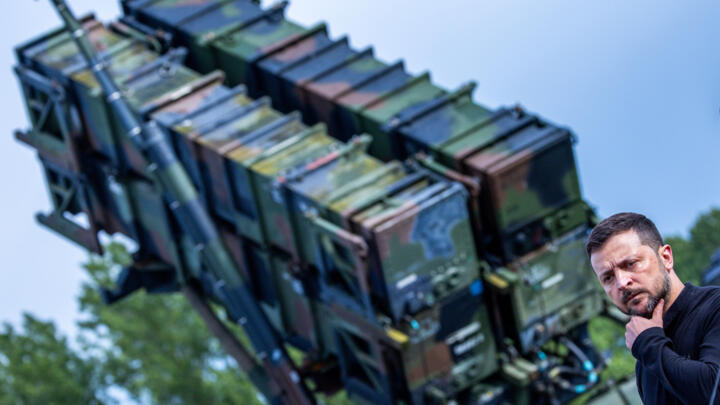
Recent reports have highlighted the Pentagon’s challenges in replenishing high-quality weapons systems and munitions following years of support for Ukraine. The US military has already recognized that certain critical arms deliveries, including long-range missiles, Patriot interceptors, and 155mm shells, are encountering production bottlenecks and supply delays.
Macgregor’s comments have intensified calls within conservative circles to reevaluate America’s foreign military obligations. Detractors contend that ongoing exports jeopardize the nation’s capacity to respond to a future significant conflict involving comparable adversaries.
The situation is further exacerbated by escalating tensions with Russia, which has vehemently condemned Western arms deliveries to Ukraine.
Moscow has accused Ukrainian forces of utilizing long-range weaponry provided by the US and its allies to target civilian regions within Russian territory, claiming that these actions undermine peace initiatives.
Russian President Vladimir Putin has previously cautioned that the introduction of such systems could fundamentally change the nature of the conflict. “We will make the necessary decisions based on the threats we face,” Putin stated recently, implying that the Kremlin might reassess its military strategy if NATO nations are viewed as directly engaged in the conflict.
As the Biden administration and Trump’s political team navigate both domestic and international pressures, uncertainties persist regarding whether Washington can effectively reconcile its global military obligations with its national defense preparedness.