

















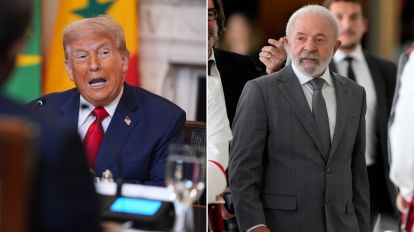
On Wednesday (local time), Brazilian President Luiz Inácio Lula da Silva issued a warning regarding potential retaliation and condemned the notion of “tutelage” following the announcement by United States President Donald Trump of a significant 50 percent tariff on “any and all” imports from Brazil.
This action, perceived as connected to Trump’s ongoing support for the coup-accused former Brazilian president Jair Bolsonaro, has resulted in a diplomatic impasse between the two nations.
In a strong response to Trump’s comments and trade decision, Lula expressed on X, “Brazil is a sovereign nation with independent institutions and will not accept any form of tutelage.” He further stated that “any unilateral tariff increases will be addressed in accordance with Brazil’s Economic Reciprocity Law.”
Lula also highlighted the broader issue of judicial independence and foreign interference in the ongoing trial of Bolsonaro. He remarked, “The judicial proceedings against those responsible for planning the coup d’état fall exclusively under the jurisdiction of Brazil’s Judicial Branch and, as such, are not subject to any interference or threats that could compromise the independence of national institutions.”
This announcement followed Brazil’s summoning of the US ambassador in Brasília to express discontent over a statement from the American embassy that characterized Bolsonaro as a victim of “political persecution.” Bolsonaro, who was defeated by Lula in the 2022 presidential election, is currently on trial for allegedly conspiring to maintain power after his electoral loss.
President Donald Trump, who has consistently defended Bolsonaro, made a passionate post earlier this week on his platform Truth Social: “LEAVE BOLSONARO ALONE. They have done nothing but come after him, day after day, night after night, month after month, year after year!” Lula deemed this an unacceptable interference in Brazil’s domestic matters, asserting firmly: “No one is above the law.”
The 50 percent tariff imposed on copper imports, which will take effect on August 1, is a component of Trump’s larger strategy aimed at revitalizing America’s industrial sector. In his announcement, he associated copper with national security and defense, stating: “Copper is essential for Semiconductors, Aircraft, Ships, Ammunition, Data Centers, Lithium-ion Batteries, Radar Systems, Missile Defense Systems, and even Hypersonic Weapons, of which we are constructing many.”
Referring to copper as the “second most utilized material by the Department of Defense,” Trump attributed the weakening of the sector to previous US leaders and criticized the policies of the Biden administration as “thoughtless” and “stupid.” US Treasury Secretary Scott Bessent noted that the administration has already garnered $100 billion through tariffs and is targeting a total of $300 billion by December.
In a letter addressed to President Lula, Trump intensified the dispute by labeling the Bolsonaro trial an “international disgrace” and warned of further trade actions should Brazil retaliate. He also declared a formal review of Brazil’s trade practices. Although Trump has recently threatened tariffs against several US trade partners, Brazil had not been a prior target. It currently ranks as the second-largest steel exporter to the United States, following Canada.
In response, Lula, in his post on X, countered Trump’s assertion regarding the US trade deficit with Brazil, describing it as misleading. “The assertion concerning a US trade deficit in its commercial relationship with Brazil is incorrect. Data from the US government itself indicates a surplus of $410 billion in the trade of goods and services with Brazil over the last 15 years,” he stated.
He also remarked on the operations of foreign companies in Brazil: “All companies—whether domestic or foreign—are required to adhere to Brazilian law to operate within our territory.” He cautioned that “freedom of expression must not be mistaken for aggression or violent practices,” particularly in relation to digital platforms and content moderation.
The diplomatic strain was also evident at the BRICS summit held in Brazil this week, where member countries expressed their disapproval of Trump’s tariff policies and US military interventions in Iran. In response, Trump threatened to impose an additional 10 percent tariff on all nations aligned with BRICS, accusing them of initiating “insidious attacks on Free Elections.”
On Wednesday, the US embassy in Brasília reiterated Trump’s stance, declaring: “Jair Bolsonaro and his family have been strong partners of the United States. The political persecution against him, his family, and his supporters is disgraceful and undermines Brazil’s democratic principles.”
Although he is prohibited from participating in future elections due to disseminating misinformation about Brazil’s electoral process, Bolsonaro continues to be a significant player in the nation’s political landscape. He expressed gratitude to Trump for advocating for “peace, justice, and liberty.” Trump, in response, asserted that Bolsonaro remains the leading candidate for Brazil’s upcoming election — a contest he is currently ineligible to enter.
As the legal matters surrounding both Bolsonaro and Trump progress concurrently, the rising tensions and retaliatory economic threats between the US and Brazil are capturing international attention. Lula concluded his post on X with a more comprehensive message: “Sovereignty, respect, and the steadfast defense of the interests of the Brazilian populace are the principles that direct our global relationships.”