


















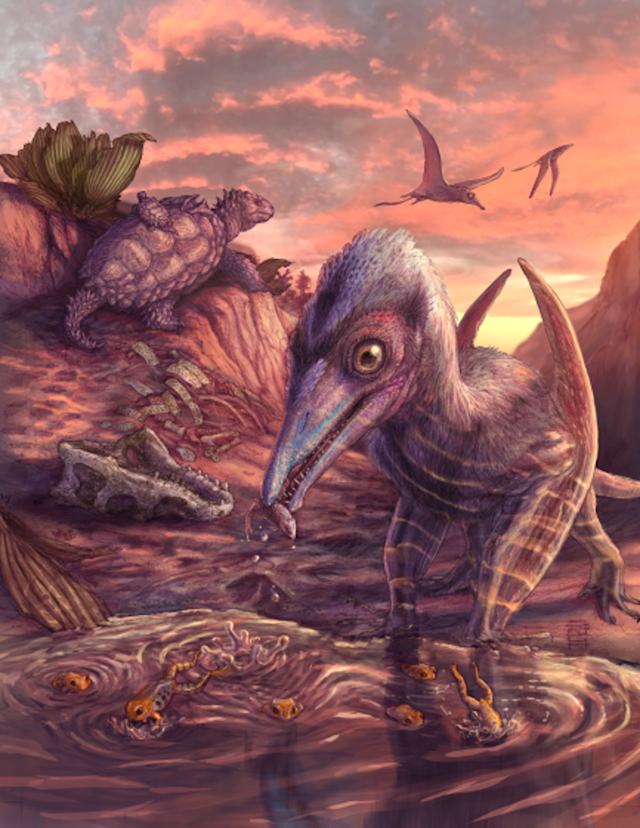
The pterosaur is estimated to be around 209 million years old, originating from the late Triassic period.
Researchers have discovered a new species of pterosaur that existed 200 million years ago alongside the dinosaurs. The fossilized jawbone of this creature was excavated by scientists at the Smithsonian’s National Museum of Natural History in 2011. They have now classified the fossil as the oldest known pterosaur species in North America.
The scientists have designated the pterosaur as Eotephradactylus mcintireae, which translates to “ash-winged dawn goddess,” a reference to the volcanic ash that contributed to the preservation of its bones. The name also pays tribute to volunteer Suzanne McIntire, who found the jawbone.
“What was thrilling about discovering this specimen was that the teeth remained in the bone, making it much easier to identify the animal,” McIntire stated, as reported by The Independent.
The pterosaur is approximately 209 million years old, dating back to the late Triassic period, and was located in Petrified Forest National Park, Arizona. Advanced micro-CT scanning enabled scientists to uncover anatomical features specific to pterosaurs, confirming it as a new species.
Eotephradactylus mcintireae was roughly the size of a small seagull, with winged reptiles likely preying on armored fish, as suggested by the significant wear on its preserved teeth.
This finding addresses a deficiency in the limited Triassic pterosaur fossil record, offering new perspectives on the origins of powered flight and indicating that analogous Triassic rock formations globally could harbor pterosaur fossils.
“The skeletal remains of Triassic pterosaurs are diminutive, slender, and frequently hollow, which leads to their destruction prior to fossilization,” stated palaeontologist Ben Kligman from the Smithsonian Institution’s National Museum of Natural History in Washington during an interview with BBC.
“Our capacity to identify pterosaur bones within [these ancient] river sediments implies that there may be additional comparable deposits from Triassic strata worldwide that could also contain pterosaur remains.”