


















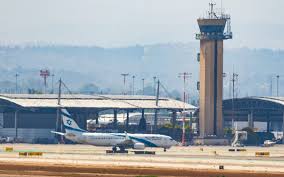
The intervention of the United States in the Iran-Israel conflict has resulted in airlines steering clear of the West Asian airspace. FlightRadar24 has observed that since the onset of hostilities on June 13, over 3,000 flights are being cancelled daily in the area. Numerous other diversions have also occurred. This situation is inflicting significant financial losses on the aviation sector, which is already facing challenges due to the closure of airspaces stemming from the Russia-Ukraine war and other airspace restrictions.
When examining a world map that illustrates the locations of aircraft in flight, one notable feature emerges — the significant voids in the sky where flights are absent. Airlines persist in avoiding the airspace over Iran and Israel following the US’s involvement in the conflict that began on Sunday. Other regions in West Asia, including Iran, Iraq, and Syria, also remain inaccessible to airlines. Likewise, images indicate a limited number of aircraft traversing the skies of Russia and Ukraine.
This scenario is resulting in substantial financial losses for the aviation industry; after all, steering clear of certain airspace necessitates longer flight routes, which consequently leads to increased expenditures. As CNN highlights, “Global travel is influenced by the unpredictable nature of international geopolitics at nearly all times, but never more so than in the air.”
We will examine in detail how various airspaces have been impacted due to conflicts and the financial implications for airlines.
Airlines steer clear of West Asian airspace
On Sunday (June 22), airlines continued to avoid extensive areas of West Asia following the US’s strikes on three nuclear sites in Iran, escalating the conflict to a perilous level. On social media, FlightRadar24, a service that monitors aircraft movements, stated, “In light of US attacks on Iranian nuclear facilities, commercial traffic in the region is operating as it has since new airspace restrictions were implemented last week.”
The website indicated that airlines were refraining from flying over the airspace of Iran, Iraq, Syria, and Israel. They have opted for alternative routes, such as traveling north over the Caspian Sea or south through Egypt and Saudi Arabia, even though this results in increased fuel and crew expenses and extended flight durations.
Indeed, British Airways and Singapore Airlines canceled their flights to Dubai on Sunday due to the rising tensions. Additionally, British Airways has also suspended its flights to Doha and previously announced a halt on flights to Bahrain.
The Emirates, recognized as the largest airline in West Asia, announced on June 15 its decision to suspend flights to and from Iraq, Jordan, Lebanon, and Iran in response to the Israeli strikes. The airline indicated that flights to Amman and Beirut would remain halted until June 22, while services to Tehran, Baghdad, and Basra would be suspended at least until June 30.
Similarly, Qatar Airways and Etihad have also announced flight cancellations. An analysis conducted by FlightRadar24 indicates that since the outbreak of the Israel-Iran war on June 13, there have been over 3,000 flight cancellations daily in West Asia, with airlines avoiding Iranian, Iraqi, and Syrian airspace in favor of routes over Saudi Arabia and Egypt.
Airlines are also cautious regarding the airspace over Russia and Ukraine. The invasion of Ukraine by Russia, which commenced in February 2022, has led airline companies to avoid flying over these two nations. In the initial stages of the conflict, both Ukraine and Russia restricted their airspace to each other and to international flights.
Currently, there is limited international air traffic over Russia, primarily involving Chinese airlines such as Air China, Xiamen Air, and Cathay Pacific. Furthermore, Russian airspace adjacent to Ukraine has been closed to all commercial airlines since the invasion began.
This closure of airspace between Russia and Ukraine has particularly impacted certain airlines, including Finnair and Japan Airlines. These carriers have been compelled to reroute flights over the Arctic Ocean to circumvent Russian airspace, resulting in significantly longer travel times; for instance, the flight from Helsinki to Tokyo is now approximately four hours longer.
As a consequence of the airspace closures, airlines are facing substantial financial losses. Tony Stanton, consultant director of Strategic Air in Australia, remarked to CNN, “Regardless of the airline, flight disruptions incur significant costs — a considerable amount.”
He elaborated that the ongoing hostilities between Israel and Iran are necessitating airlines to add an additional two hours to non-stop flights from London to Hong Kong. According to the same CNN report, this situation translates to increased fuel expenses.
At a time when oil prices are continuing to rise, this presents an additional financial burden for airlines.
In addition to the strain of fuel expenses, flight diversions and extended flight durations result in higher costs for crew time and new fees for traversing various airspaces.
To recover these losses, airlines are increasing ticket prices — however, this strategy may adversely affect the aviation sector in the long term. According to Jatinder Paul Singh, global CEO of Viacation, a travel solutions provider, Europe is expected to experience the most significant fare increases, particularly for routes to France, Germany, and the UK, as reported in the Economic Times. “Airfares to Europe have risen by 20–35 percent from March to July based on forward booking data.”
In a similar vein, airfares from India to Dubai and Abu Dhabi have increased by 10-15 percent compared to a month ago, while fares to Japan and South Korea have risen by 5-10 percent, as noted by Abraham Alapatt, president and group head for marketing, service quality, value-added services, and innovation at Thomas Cook (India) in the Economic Times report.
Beyond the issues of cost and pricing, geopolitical conflicts such as the Israel-Iran war and the Russia-Ukraine conflict further elevate the risks associated with flying, placing additional stress on already overwhelmed air traffic controllers. For example, FlightRadar24 illustrates how air traffic is currently being funneled into two narrow corridors. This situation increases the workload for air traffic controllers, who must accommodate more aircraft in limited airspace, according to experts.
Furthermore, Safe Airspace, a website managed by OPSGROUP, has indicated that US military actions against Iran may heighten risks for US operators in the area. “Although there have been no specific threats against civil aviation, Iran has previously indicated it would respond by targeting US military interests in West Asia — either directly or through proxies like Hezbollah,” stated Safe Airspace.
The website also mentioned that risks could extend to Bahrain, Kuwait, Oman, Qatar, Saudi Arabia, and the United Arab Emirates. “We continue to recommend exercising a high degree of caution.”