















The situation involving this individual has come to light once again, following the emergence of satellite images that suggest the presence of a substantial stealth flying-wing aircraft at a testing site in Xinjiang, China. These images depict a drone-like vehicle that closely resembles the US B-2.
A former engineer from India, who contributed to the development of the United States’ stealth B-2 Spirit bomber, subsequently sold its secrets to China, facilitating advancements in Beijing’s own stealth aircraft program, as indicated by court documents and declassified reports.
Noshir Gowadia, hailing from Mumbai, served as a propulsion and low-observable technology specialist at Northrop (now Northrop Grumman), where he was instrumental in enhancing the stealth features of the B-2, recognized as one of the most sophisticated bombers in the history of the US military. Gowadia possessed top security clearance and even instructed university-level aeronautics courses after departing from the defense contractor in 1986.
However, by 2005, he found himself under investigation by the FBI. Agents discovered classified documents concealed in a furniture container sent to him, prompting an inquiry. Gowadia was apprehended in Hawaii and charged under the Arms Export Control Act and the Espionage Act for supplying sensitive information to foreign governments, including China, as reported by the Economic Times.
Concerns over technology transfer
According to the FBI, Gowadia made several trips to China between 2003 and 2004, during which he provided designs related to infrared-suppression and low-visibility propulsion systems. This information was aimed at assisting China in developing cruise missile and bomber technologies. Investigators revealed that Gowadia received at least $110,000 over a three-year period in exchange.
Initially, he refuted the allegations but later acknowledged in a written confession: “Upon reflection, my actions were wrong in aiding the PRC in creating a cruise missile. What I did constituted espionage and treason.” In 2010, he was found guilty on 14 counts and was sentenced the following year to 32 years in federal prison. He is presently incarcerated at the Florence ADX supermax facility in Colorado.
His son, Ashton Gowadia, continues to assert his father’s innocence, alleging that the FBI suppressed crucial evidence and influenced the narrative during the trial.
China’s stealth aircraft raises concerns
The issue has come to light again following the release of satellite images that seem to depict a sizable stealth flying-wing aircraft at a Chinese testing site in Xinjiang. These images, taken on May 14 and reported by The War Zone, showcase a drone-like vehicle with an estimated wingspan of 52 meters—almost identical to the US B-2.
The aircraft was observed near newly constructed hangars, indicating it could be part of China’s high-altitude, long-endurance (HALE) program or associated with other advanced projects such as the H-20 stealth bomber or J-36 fighter.
These sightings have rekindled worries that China’s advancements in stealth aviation might have been facilitated by appropriated US defense technology. Although the complete capabilities of the Chinese platform are still unclear, analysts suggest it marks a considerable advancement.
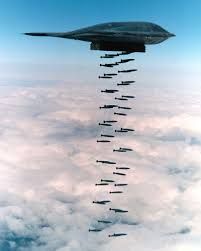
The B-2 Spirit, manufactured by Northrop Grumman, continues to be one of the most clandestine and proficient bombers in the US military’s inventory. Its radar-evading architecture enables it to infiltrate enemy airspace without detection and deliver both conventional and nuclear munitions.
Recently, the US utilized the B-2 in combat operations over Iran for the first time, targeting deeply buried nuclear sites in Fordow—an operation perceived as a showcase of the aircraft’s unparalleled capabilities. This strike occurred amidst escalating regional tensions and may highlight the reasons behind China’s substantial investment in comparable technology.