

















As Iran finds itself at this pivotal juncture, its decisions—whether to seek compromise or intensify its escalation—will influence its future and the stability of the region.
Last week, Israel executed a series of devastating strikes against Iran, focusing on nuclear facilities, missile sites, and prominent military leaders, including the chief of staff and the head of the Islamic Revolutionary Guard Corps (IRGC). Although Supreme Leader Ali Khamenei survived, Iran’s military leadership suffered significant losses, leaving the regime in disarray. The rapidity and magnitude of this collapse have prompted a crucial inquiry: Why did Iran’s deterrence, meticulously developed over decades, disintegrate so swiftly?
Iran’s excessive dependence on proxies
Iran’s deterrence strategy has traditionally relied on a “horizontal” approach, utilizing a network of proxies—Hezbollah in Lebanon, Hamas in Gaza, the Houthis in Yemen, and Iraqi militias—to exert power and threaten adversaries indirectly.
This strategy was bolstered by a formidable missile program, intended to overwhelm foes through sheer volume. Collectively, these components enabled Iran to sustain influence while circumventing direct confrontation. However, the events of June 2025 revealed the vulnerability of this strategy.
Escalation
The unraveling commenced with Hamas’s attack on October 7 against Israel. As the Jewish state initiated a retaliatory response, an emboldened Iran urged its proxies to escalate attacks on Israeli targets throughout the region.
This escalation backfired dramatically.
Israel first dismantled Hamas in Gaza and subsequently Hezbollah in Lebanon in a campaign that spanned several months.
In the midst of this turmoil, the collapse of the Assad regime in Syria further diminished Iran’s strategic depth.
After significantly weakening Iran’s network of proxy groups, the Jewish state last week finally turned its attention to the fulcrum, the Shi’ite nation situated miles from its borders.
Missile failures: A significant embarrassment
Iran’s missile program, once a fundamental aspect of its deterrence, also demonstrated ineffectiveness.
In April and October 2024, Iran conducted direct missile strikes on Israel, only to witness nearly all of them intercepted by Israeli, US, and allied air defenses.
These failures not only underscored the technological disparity between Iran and its opponents but also dismantled the notion of Iran’s missile threat as a viable deterrent.
With its arsenal incapable of breaching advanced defenses, Iran’s capacity to project power was significantly weakened.
Leadership was decimated.
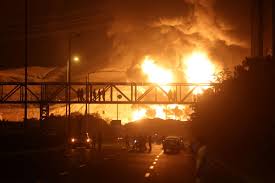
The Israeli strikes in June 2025 dealt a devastating blow to Iran’s military leadership and infrastructure. The fatalities of high-ranking commanders, including the head of the IRGC, obliterated decades of institutional knowledge and trust within the regime.
These losses resulted in a strategic void that Iran cannot swiftly address, as seasoned leaders are not easily substituted. Concurrently, Israel obliterated substantial portions of Iran’s air defenses, missile reserves, and nuclear enrichment facilities. Lacking sufficient air defenses, Iran’s airspace is now exposed, and its capability to threaten adversaries or advance nuclear ambitions has been drastically diminished.
Iran’s ‘vertical approach’.
In light of these challenges, Iran seems to be shifting from its conventional “horizontal” deterrence to a more centralized, “vertical” strategy.
This approach prioritizes advanced technologies such as drones, enhanced air defenses, and possibly expedited nuclear development.
Nevertheless, this transition incurs a significant cost. Iran is grappling with escalating economic sanctions, internal unrest, and the necessity for increased military expenditure, all of which exert pressure on its already delicate economy. The regime now faces a critical dilemma: to compromise by relinquishing essential components of its strategy, risking domestic backlash, or to escalate further, potentially aiming for a nuclear breakout—a decision that could provoke even harsher international repercussions.
A pivotal juncture
With its network of proxies in disarray, its missile program revealed as ineffective, and its military leadership and infrastructure severely damaged, Iran finds itself more exposed today than at any time since the 1979 Islamic Revolution.
The swift disintegration of its deterrent capabilities highlights the dangers of excessive dependence on proxies and antiquated military assets when confronted with a resolute and technologically advanced opponent. As Iran maneuvers through this pivotal juncture, its decisions—whether to seek compromise or intensify escalation—will influence its future and the stability of the region.