


















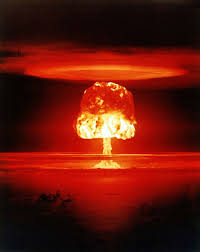
The chain reaction is said to have generated a fireball that surpassed 1,000 degrees Celsius and lasted for over two seconds. This device can be utilized when necessary to blanket a wide area with extreme heat while concentrating its energy on high-value targets for their destruction.
Chinese researchers may have conducted tests on a hydrogen-based explosive device that initiates significant chemical chain reactions without the involvement of nuclear materials, as reported by the South China Morning Post (SCMP) based on a study released last month. The research indicates that the chain reaction generated a fireball exceeding 1,000 degrees Celsius, which lasted for over two seconds.
The device is said to have been developed by the 705 Research Institute of the China State Shipbuilding Corporation (CSSC). According to the SCMP report, the device utilized “a magnesium-based solid-state hydrogen storage material.”
This magnesium-based hydrogen storage material is a silvery powder capable of containing a significantly higher volume of hydrogen in a compact form. The study explains that when activated by conventional explosives, this material rapidly decomposes and releases hydrogen gas, which subsequently ignites, resulting in a powerful and sustained flame.
Such a mechanism holds potential applications in high-energy propulsion systems or advanced weaponry due to its compactness and high energy density.
The researchers noted, “Hydrogen gas explosions require minimal ignition energy, possess a wide explosion range, and produce flames that spread rapidly and extensively.”
“This combination enables precise control over blast intensity, facilitating uniform destruction of targets across large areas,” they further elaborated.
Potential military applications are also believed to have been investigated by the researchers, particularly in scenarios where there is a need to cover extensive areas with intense heat and concentrate power on high-value targets for destruction.
The source of the substantial quantity of magnesium hydride used in the tests remains unclear. Additionally, the paper did not address the possible situations in which the People’s Liberation Army of China might deploy these weapons.
The significance of magnesium hydride production
Historically, researchers were limited to producing only a few grams of magnesium hydride daily in laboratory settings due to the requirement of extremely high temperatures and pressures for its synthesis. Additionally, exposure to air poses a risk of explosion.
Recently, China has established a large-scale factory in Shaanxi capable of producing 150 tonnes of magnesium hydride annually. This facility employs an innovative technique known as “one-pot synthesis,” which enhances both the cost-effectiveness and safety of the production process, as noted by the Chinese Academy of Sciences.
Furthermore, scientists are investigating additional applications for this material, such as its potential use in submarine fuel cells and power systems for long-endurance drones.