

















A report indicates that the implementation of reciprocal tariffs by US President Donald Trump may result in a financial impact of $3.1 billion on India, equivalent to 0.1 percent of its GDP.
According to a report from CareEdge Ratings, the implementation of reciprocal tariffs by US President Donald Trump could result in a financial impact of $3.1 billion for India. This development is projected to reduce India’s GDP by 0.1 percent.
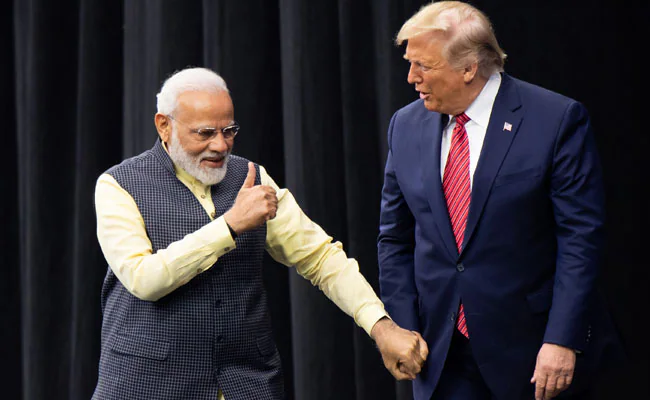
Trump is scheduled to initiate the rollout of these tariffs on Wednesday. Despite his consistent characterization of India as a trade violator due to the historically high tariffs it has levied on US products, the anticipated effect of his tariffs on India is expected to be relatively modest. The two nations are currently in discussions regarding a bilateral trade agreement, with India proposing several concessions to Trump to mitigate the risk of facing severe tariffs.
Should Trump enforce an 8 percent differential tariff on Indian exports, and considering an estimated 4 percent depreciation of the Indian Rupee, the net impact on exports would amount to $4 billion after adjusting for currency fluctuations, as reported by Moneycontrol, referencing the CareEdge report.
However, when factoring in price elasticity and uniform additional tariffs across all export categories, the direct financial loss is projected to be $3.1 billion.
“We have made a straightforward assumption that the US will impose an additional 8 percent tariff on all imports from India. We have also considered a 4 percent depreciation of the rupee based on last year’s data, which would mitigate some of the impact of the increased tariffs, and we have further assumed that the price elasticity of demand for India’s exports to the US is 1,” stated Smita Rajpurkar, Director at CareEdge.
It remains uncertain how Trump will implement these tariffs. The concept of reciprocal tariffs was intended to match the tariffs imposed by other countries on US goods. This approach would have required a country-specific and product-specific implementation of tariffs. However, recent reports indicate that Trump may be contemplating a more generalized tariff rollout rather than targeted actions.
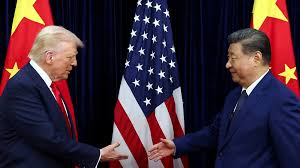
Trump has declared a 25 percent tariff on automobiles, steel, and aluminum. Additionally, he has implemented a 20 percent tariff on China in two phases. Furthermore, he has enforced a 25 percent tariff on both Canada and Mexico. Through these tariffs, he anticipates generating up to $6 trillion in annual revenue.