


















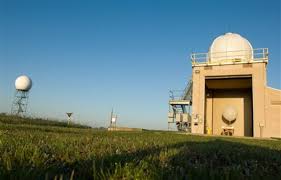
Balloons ascend to an altitude of 100,000 feet, equipped with sensors known as radiosondes that dangle approximately 20 feet beneath them. These instruments collect data on temperature, dew point, humidity, barometric pressure, as well as wind speed and direction.
Due to significant job reductions, the National Weather Service is either discontinuing or scaling back essential weather balloon launches in eight northern locations. Meteorologists and former leaders of the agency have expressed concerns that this will compromise the accuracy of weather forecasts as the severe weather season approaches.
Typically, weather balloons are launched twice daily from approximately 100 sites, providing critical data that forecasters and computer models rely on to predict weather conditions and assess potential dangers. Eight scientists, meteorologists, and former senior officials from the National Oceanic and Atmospheric Administration (NOAA), the parent agency of the weather service, have criticized this decision as a serious error.
These balloons ascend to altitudes of 100,000 feet, equipped with sensors known as radiosondes that hang about 20 feet below. These instruments collect data on temperature, dew point, humidity, barometric pressure, wind speed, and direction.
D. James Baker, a former NOAA administrator during the Clinton administration, emphasized the unique value of weather balloons, stating, “They provide information that cannot be obtained through any other means.” Although he had to implement budget cuts during his leadership, he maintained that observations like weather balloon launches were indispensable. “It’s an absolutely essential piece of the forecasting system,” he asserted.
Renee McPherson, an environmental professor at the University of Oklahoma, remarked, “This is frankly just dangerous.”
Ryan Maue, who served as NOAA’s chief scientist at the end of President Donald Trump’s first term, expressed his disapproval in an email, stating, “We should not degrade our weather system by skipping balloon launches. This is not only embarrassing for NOAA, but the halt in weather balloon launches will also deteriorate the quality of weather forecasts in America.”
The National Weather Service announced that launches will be discontinued in Omaha, Nebraska, and Rapid City, South Dakota, “due to a lack of Weather Forecast Office (WFO) staffing.” Additionally, the frequency of launches will be reduced from twice daily to once daily in Aberdeen, South Dakota; Grand Junction, Colorado; Green Bay, Wisconsin; Gaylord, Michigan; and North.
The Trump administration, along with its Department of Government Efficiency, terminated the employment of hundreds, potentially over 1,000, NOAA employees earlier this year. Subsequently, the government issued notifications to the dismissed probationary staff, informing them that they would receive compensation but should refrain from reporting to work.
Earlier this month, the agency announced reductions in weather balloon operations in Albany, New York, and Gray, Maine, and in late February, it ceased launches in Kotzebue, Alaska. This brings the total to 11 locations where balloon observations have been reduced or eliminated, representing approximately one out of every nine launch sites, which include areas in the Pacific and Caribbean.
According to an analysis of launch data by the Associated Press, NOAA had an average of only one balloon launch outage per day among its regularly reporting weather stations from 2021 to 2024.
Meteorologists Jeff Masters and Tomer Burg have determined that 14 out of 83 U.S. balloon sites, or 17%, are currently conducting partial or no launches. This includes two stations that are unable to launch due to a helium shortage and a third that is affected by coastal erosion.
Susan Buchanan, a spokesperson for the weather service, stated in an email, “The more data we can incorporate into our weather models, the more precise our forecasts will be, but I cannot predict the extent of future impacts.”
Kristen Corbosiero, a meteorology professor at the University at Albany, examined the launch map on Friday and remarked, “Wow, that is an empty area… That’s not ideal.”
Corbosiero is based in the building where the Albany weather service previously launched weather balloons twice daily from the roof. Currently, they are down to one launch at night, which she expressed concern about as the severe weather season approaches.
“For those of us located east of the Rocky Mountains, this is likely the most critical time of year,” noted McPherson from Oklahoma. “This period often sees some of our largest tornado outbreaks, particularly as we transition into April and May.”
Elbert “Joe” Friday, the former Director of the National Weather Service, explained that weather balloons collect crucial data on temperature and humidity at lower atmospheric levels, which can indicate the potential for severe storms and their intensity.
While satellites effectively capture a broad overview and ground measurements along with radar provide real-time conditions, weather balloons fill an essential gap in weather forecasting by offering insights into the atmospheric conditions where weather phenomena develop, according to several meteorologists.
The ten reductions announced are concentrated in the northern United States, an area where the jet stream—an air current that transports weather systems globally—resides during this season. The lack of sufficient observations in this region poses significant challenges, as noted by McPherson and Corbosiero.
Additionally, weather balloons play a crucial role in predicting rainfall locations and timings, as highlighted by Baker and former NOAA chief Rick Spinrad.
The weather agency has been deploying balloons consistently since the 1930s. During World War II, launches in the Arctic contributed to America’s success in the air campaign over Europe by providing improved forecasts for aircraft, according to Friday.
Preparing a weather balloon for launch involves a process that takes between 60 to 90 minutes, during which it is filled with helium or hydrogen, equipped with a sensor, and checked to ensure the radiosonde does not touch the ground. Friday recounted an experience of launching a balloon in Nome, Alaska, amid 30 mph winds and a wind chill of approximately 30 degrees below zero.
Meteorologists monitor the data for a few hours until the balloon descends back to the ground, resulting in a total of about four to five hours of work for one individual, Friday noted.
“It’s quite enjoyable to do,” Friday remarked.