


















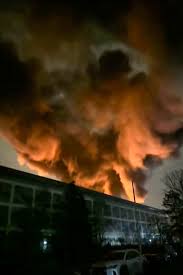
Heathrow Airport announced that it was “fully operational” on Saturday; however, thousands of passengers were still stranded. Airlines cautioned that significant disruptions would continue for several days as they worked to reposition aircraft and crews to facilitate travel for passengers.
On Saturday, the British government initiated an investigation into the nation’s “energy resilience” following a fire at an electrical substation that caused Heathrow Airport to close for nearly a day, raising alarms about the U.K.’s capacity to endure disasters or attacks on essential infrastructure.
Although Heathrow Airport announced it was “fully operational” on Saturday, many passengers remained stranded, and airlines cautioned that significant disruptions would persist for several days as they worked to reposition aircraft and crews to facilitate travel.
Frustrated passengers, irate airlines, and concerned politicians are all seeking clarity on how a single, seemingly accidental fire could incapacitate Europe’s busiest airport.
“This incident is a major embarrassment for Heathrow and for the country, highlighting how a fire in one substation can lead to such severe consequences,” stated Toby Harris, a Labour Party politician and head of the National Preparedness Commission, which advocates for enhanced resilience.
Energy Secretary Ed Miliband indicated that he had requested the National Energy System Operator, responsible for overseeing the U.K.’s gas and electricity networks, to conduct an “urgent investigation” into the fire to identify any broader lessons regarding energy resilience for critical national infrastructure.
The initial findings are anticipated within six weeks.
“The government is committed to taking all necessary measures to prevent a recurrence of the situation at Heathrow,” Miliband affirmed.
Stalled Journeys
On Friday, over 1,300 flights were canceled, leaving approximately 200,000 travelers stranded due to an overnight fire at a substation located 2 miles (3.2 kilometers) from Heathrow Airport, which disrupted power to the airport and affected more than 60,000 properties.
Heathrow announced on Saturday that it had “added flights to today’s schedule to accommodate an additional 10,000 passengers.” British Airways, the airport’s largest carrier, indicated that it anticipated operating around 85% of its 600 scheduled flights on Saturday.
While many travelers were able to continue their interrupted journeys, others remained in a state of uncertainty.
Laura Fritschie from Kansas City was vacationing in Ireland with her family when she received the news of her father’s passing. On Saturday, she found herself stranded at Heathrow after her British Airways flight to Chicago was abruptly canceled.
“I’m very frustrated,” she expressed. “This was my first significant vacation with my children since my husband passed away, and now this. I just want to go home.”
Shutdown highlights a larger issue
Residents in west London reported hearing a loud explosion followed by a fireball and plumes of smoke as the fire engulfed the substation. Although the blaze was contained after seven hours, the airport remained closed for nearly 18 hours, with only a few flights taking off and landing late Friday.
Authorities stated that they do not regard the fire as suspicious, and the London Fire Brigade confirmed that its investigation would concentrate on the electrical distribution equipment at the substation.
Nonetheless, the significant repercussions of the fire have prompted scrutiny regarding the state of Britain’s aging infrastructure, much of which has been privatized since the 1980s. The center-left Labour government has pledged to enhance the U.K.’s troubled railways, outdated water systems, and particularly its energy network, with commitments to lower carbon emissions and boost energy independence through investments in wind and other renewable energy sources.
Over the past four to five decades, efforts have been made to enhance the efficiency of services, according to Harris. “We have eliminated redundancies and streamlined processes, transitioning towards a ‘just in time’ economy. However, it is crucial to also prepare for unexpected situations, ensuring availability for ‘just in case’ scenarios,” he stated.
‘Significant Planning Oversight’
Heathrow Airport, one of the busiest in the world for international travel, accommodated 83.9 million passengers last year.
Chief Executive Thomas Woldbye expressed pride in the response of airport and airline personnel. “The airport was not closed for days; we were only shut down for hours,” he remarked during an interview with the BBC.
Woldbye noted that while Heathrow’s emergency backup power supply functioned as intended, it was insufficient to power the entire airport, which consumes energy comparable to that of a small city. “This is typical for most airports,” he explained, asserting that a similar situation would occur at other airports facing a comparable incident.
However, Willie Walsh, the head of the aviation trade organization IATA, raised concerns about the situation, stating, “This incident raises significant questions.” He questioned how critical infrastructure, vital on both national and global levels, could rely entirely on a single power source without an alternative. “If this is indeed the case, it represents a clear failure in planning by the airport,” he added.
Walsh further commented that “Heathrow has minimal motivation to enhance its operations,” as the airlines, rather than the airport, bear the costs associated with managing affected passengers.
‘Absence of a Contingency Plan’
The disruption experienced on Friday was among the most severe since the 2010 eruption of Iceland’s Eyjafjallajokull volcano, which led to the closure of European airspace for several days.
Approximately 120 flights were airborne when the announcement of Friday’s closure was made, resulting in passengers landing in various cities and even different countries.
Mark Doherty and his wife were en route across the Atlantic when the inflight map indicated that their flight from New York’s John F. Kennedy Airport to Heathrow was being redirected.
Doherty remarked, “I thought you must be joking,” prior to the pilot informing the passengers that they were returning to New York.
Doherty described the scenario as “characteristic of England — there is no backup plan in place for situations like this. There is no contingency plan.”