


















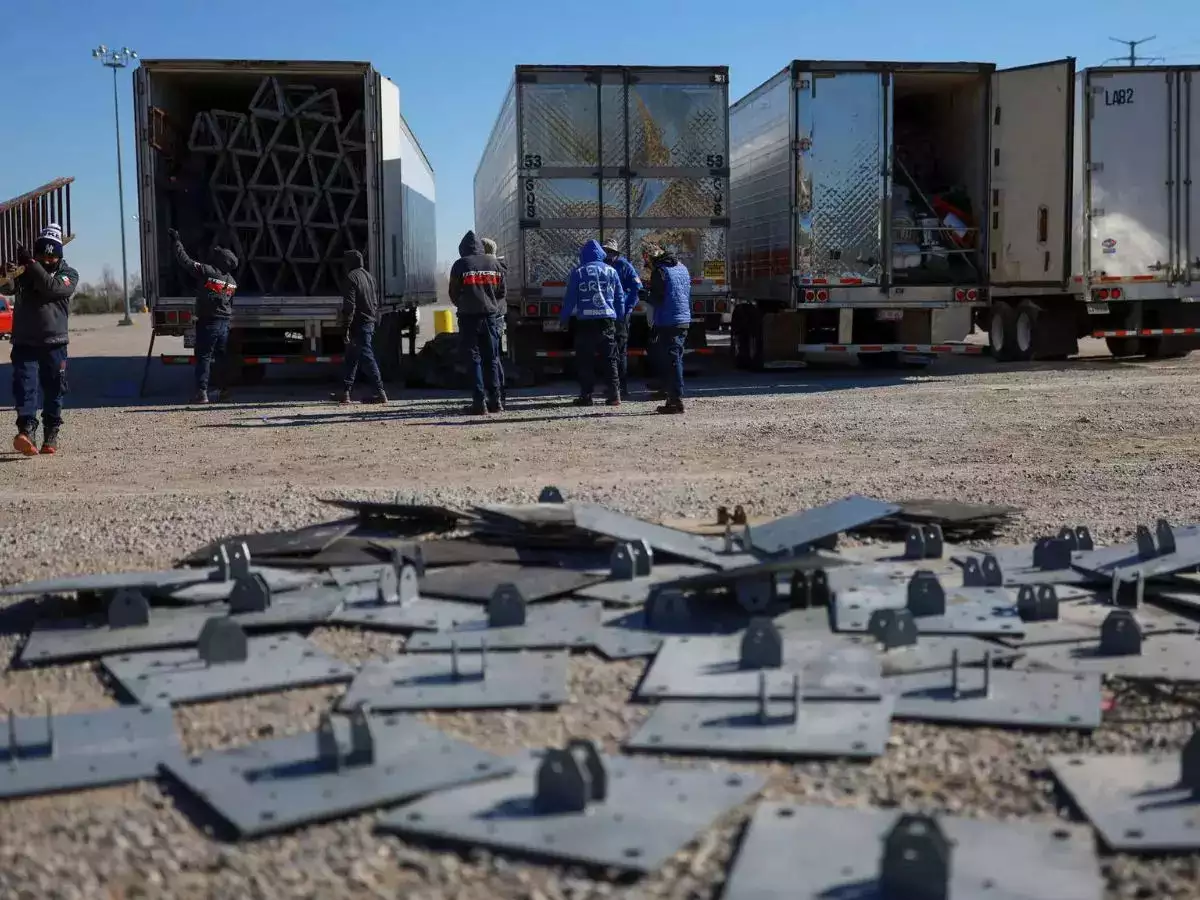
Mexico is establishing large tents along the United States border on Wednesday in anticipation of President Donald Trump’s initiative for mass deportations.
In Ciudad Juárez, adjacent to El Paso, Texas, cranes have been utilized to erect metal frames for the shelters in an unoccupied area near the border.
Enrique Serrano, a representative from the state of Chihuahua, indicated that these tents represent the initial phase of a broader operation, with plans to expand the facilities should a larger number of migrants congregate at the border. He mentioned that migrants from other nations who are expelled from the United States would be relocated to Mexico City or southern regions of Mexico, as has been done in the past.
In Nogales, Mexico, directly across from Nogales, Arizona, officials announced the construction of shelters on soccer fields and within a gymnasium. Similar initiatives have been undertaken in the border cities of Matamoros and Piedras Negras.
At a border crossing in Tijuana, Mexico, on Tuesday night, one individual called out to reporters, stating that he was being deported as part of a group apprehended earlier that day in agricultural fields near Denver. Another individual mentioned being part of a group transported from Oregon. Each person carried their belongings in a small orange bag.
The number of deportations on Tuesday was lower than the daily average of approximately 500 recorded last year, as noted by Mexican President Claudia Sheinbaum during her daily press briefing. Furthermore, many border shelters that have historically provided refuge to migrants remained relatively underutilized compared to the significant influx of migrants observed just a year prior.
Nevertheless, leaders of migrant shelters, such as José María Garcia, director of the Tijuana shelter Movimiento Juventud 2000, are preparing for potential challenges ahead.
“Mass deportations in the United States, coupled with the arrival of thousands of migrants from the south, could overwhelm the city of Tijuana and other border cities, leading to a crisis,” he stated.
Mexican Foreign Affairs Secretary Juan Ramón de la Fuente and the newly appointed U.S. Secretary of State Marco Rubio engaged in their inaugural telephone conversation in their respective roles.
“It was a very productive and cordial discussion, focusing on migration and security matters,” stated Sheinbaum.
Following a commitment to significantly alter border and immigration policies, President Trump announced the termination of the CBP One program on Monday, which had allowed asylum seekers to arrange appointments via their mobile devices prior to reaching the border, thereby facilitating a certain level of order. On Wednesday, the Pentagon revealed plans to deploy up to 1,500 active-duty troops to the border.
In the meantime, Garcia, who oversees the Tijuana migrant shelter, indicated that conversations were ongoing regarding preparations for border cities in anticipation of a potential surge in migrants. The Mexican government has also announced plans to transport some deportees to their homes in the interior of Mexico and to provide deported migrants with cards worth 2,000 pesos, approximately $100, upon their arrival at the border to assist with their immediate needs.
In Ciudad Juárez, Rev. Juan Fierro, director of the Good Samaritan shelter, is also bracing for changes.
He has observed a shift in the shelter’s demographic over recent years, moving from young men crossing an unguarded border for employment to families seeking asylum, with migration patterns fluctuating in response to political developments in the U.S. During Trump’s initial term, the policy requiring asylum seekers to remain in Mexico while awaiting U.S. processing resulted in individuals staying at the shelter for extended periods, sometimes up to three years, according to Fierro.
Now, he is preparing for another influx.
“This shelter operates on a very limited budget; we are essentially managing on a day-to-day basis,” Fierro remarked.
His facility accommodates 180 individuals and has the capacity to provide meals for approximately 50, he stated. Due to a notable decrease in migration figures over the last year, he only hosted a small portion of that number this week and is concerned about a potential increase, particularly as he intends to allow deportees a few months to evaluate their choices: returning to their home country, seeking employment in another Mexican state, or trying to re-enter the United States.
“Individuals determined to reach the United States will seek out a means to achieve that,” he remarked.