

















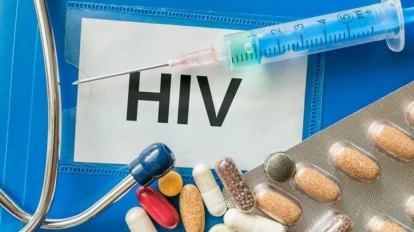
A medication designed to decrease the likelihood of contracting HIV, known as Pre-Exposure Prophylaxis (PrEP), has been deemed both acceptable and safe for Men Having Sex with Men (MSM) and Transgender Women (TGW) based on a demonstration project conducted by the Indian Council of Medical Research’s National Institute of Translational Virology and AIDS Research in Pune. Dr. Seema Sahay, a scientist at ICMR-NITVAR, stated, “The implementation of Pre-Exposure Prophylaxis (PrEP) can significantly reduce the risk of HIV transmission through sexual activity. Our findings indicate that PrEP is both acceptable and safe for MSM and TGW participants in this project.”
India has achieved a notable 66 percent reduction in HIV incidence since the year 2000. Nevertheless, managing the situation among MSM and TGW continues to pose significant challenges. To date, there have been no studies assessing the practicality of oral PrEP for these populations in India. Pre-Exposure Prophylaxis (PrEP), an oral biomedical intervention for HIV prevention, has transformed global efforts in this area. This preventive approach is particularly advised for individuals in high-risk categories who are not HIV-positive but face an elevated risk of exposure, including female sex workers, MSM, and TGW.
“Despite the established efficacy of PrEP in studies, the real-world challenges associated with its implementation in India remain largely unexamined,” remarked the research scientists involved in the study. Consequently, they initiated the first demonstration project targeting MSM and TGW in India to explore the feasibility of providing PrEP through both clinic-based and community-based service delivery models.
Dr. Sahay, the project leader, reported that a total of 650 men who have sex with men (MSM) and transgender women (TGW) were enrolled at the sites in Pune, Maharashtra, and Jalandhar, Punjab.
Each participant received follow-up care for 12 months following the prescription of pre-exposure prophylaxis (PrEP) by a healthcare professional.
“PrEP can significantly reduce the risk of acquiring HIV through sexual activity. Our findings indicate that PrEP is both acceptable and safe for MSM and TGW participants in this project. As an essential element of a comprehensive approach to HIV prevention, PrEP should be used in conjunction with regular HIV testing and consistent condom use. With the development of long-acting injectable formulations on the horizon, PrEP is set to play an even more crucial role in curbing the global spread of HIV,” stated Dr. Sahay. In 2023, approximately 5.4 million of the 39.9 million individuals living with HIV worldwide—equivalent to one in seven—were unaware of their HIV status. Concurrently, 9.3 million individuals, nearly one in four, were not receiving essential treatment.
Dr. Ishwar Gilada, President Emeritus of the AIDS Society of India, emphasized that India has an estimated 2.54 million people living with HIV (PLHIV), ranking it among the most affected nations globally, following South Africa and Nigeria. “Efforts by non-governmental organizations and the National AIDS Control Organisation (NACO) have led to a 48 percent reduction in new infections from 2010 to 2021. However, with nearly 68,000 new infections occurring each year, raising awareness and ensuring early intervention are vital for achieving a future free from HIV,” Dr. Gilada remarked. Experts have noted that despite significant progress in long-acting PrEP and treatment options, these innovations remain largely inaccessible in low- and middle-income countries. High medication costs, restrictive licensing, and limited manufacturing capabilities are likely to impede the distribution of long-acting PrEP products, according to IAS experts.