

















The Pakistan government officially granted the Inter-Services Intelligence (ISI), the nation’s top spy agency, the authority to intercept and track calls for the purpose of national security.
The ministry of information technology and telecommunication issued a notification under the Pakistan Telecommunication (Re-organisation) Act, 1996, regarding this authorization.
The notification stated that the federal government, in the interest of national security and in the prevention of any offense, has authorized officers not below the rank of grade 18, nominated by the ISI, to intercept calls and messages or trace calls through any telecommunication system as outlined in Section 54 of the Act.
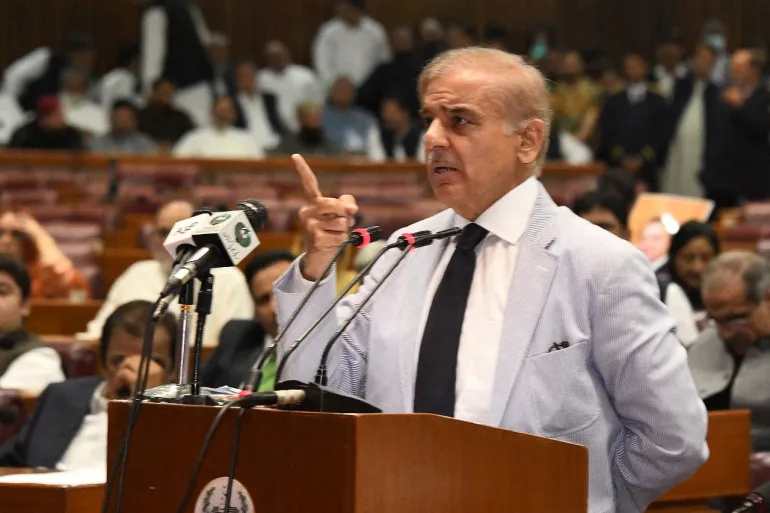
Additionally, it emphasized that the government will have priority and precedence in the telecommunications system over any licensee to protect national defense or security against foreign threats. Sources indicated that this notification was issued following the formal decision by Prime Minister Shehbaz Sharif’s government at the cabinet level to permit the ISI to trace and record calls.
The government’s decision seems to be part of an initiative to strengthen control over social media platforms, especially after the Opposition Pakistan Tehreek-e-Insaf (PTI) utilized them to connect with its supporters due to limited space in traditional media outlets.
In May, Sharif also endorsed a proposal to amend the Prevention of Electronic Crimes Act (PECA) 2016, which recommended the establishment of a Digital Rights Protection Authority.
Reports from the media indicate that the government is in the process of implementing a national firewall across various Internet service providers (ISPs) to regulate social media by using filters to block undesirable content from reaching a wider audience. The Elon Musk-owned X has been inaccessible since February, and the government recently defended this action in the Sindh High Court.
In response to the recent authorization granted to ISI, PTI leader Omar Ayub Khan warned that the same measures could be turned against the government and its allies once they are no longer in power.
“If they implement these measures now, they will face legal challenges in the future,” he stated. Authorities clarified in court on Monday that banning X does not violate the country’s laws.