


















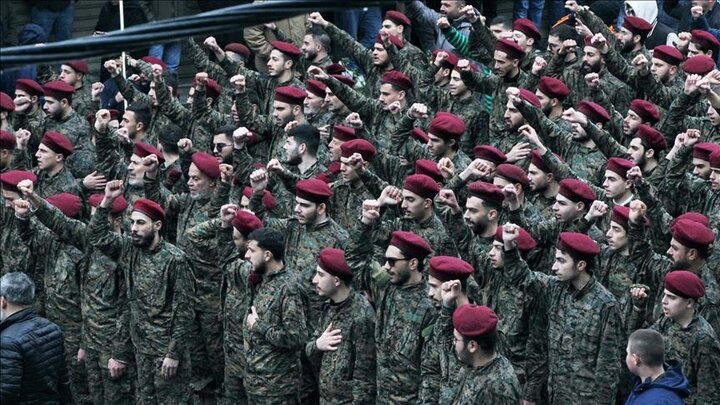
Hezbollah, a Lebanon-based terrorist organization backed by Iran, has been a significant player in the country’s political landscape and has engaged in frequent clashes with Israel, heightening tensions in the region.
The recent revocation of Hezbollah’s terrorist designation by the Arab League, despite ongoing concerns about the escalation of the Israel-Hamas conflict into Lebanon, signals a shift in the League’s approach towards the group.
The decision to revoke the designation, which was first imposed in 2016, is seen as a step towards opening lines of communication with Hezbollah. Hossam Zaki, the Assistant Secretary General of the Arab League, stated that the previous terrorist designation had hindered engagement with the organization and that it was time to reassess this approach. He emphasized that the Arab League does not maintain a specific list of terrorist organizations, hence the need to reconsider Hezbollah’s classification.
This change in policy by the Arab League, while taking place amidst rising tensions in the region, reflects a broader effort to engage with key stakeholders in the pursuit of stability and dialogue.
The Times of Israel reported that the Arab League does not have an official list of terrorist organizations, and it seems that their decision in 2016 was made in order to align with the Gulf Cooperation Council (GCC), who had recently labeled Hezbollah as a terrorist group.
The Arab League’s recent decision to revoke Hezbollah’s terrorist designation should be viewed within the broader regional context. In light of the widespread anger towards Israel in the Arab world, governments in the region must carefully navigate their relationships with groups like Hamas and Hezbollah while also maintaining a strong stance against Israel.
The Arab League’s move can be interpreted as a step towards opening communication channels with Hezbollah. By removing the terrorist label, the Arab League may be seeking to engage in direct dialogue with the group in order to address regional tensions and prevent further escalation of conflicts.
In the broader regional context, it is important to consider the increasing – albeit cautious – acceptance of Iran and Syria in the region. Syria was readmitted as a member of the Arab League last year after being in exile for 12 years due to the civil war in the country.
Hezbollah’s involvement in Syria in support of Bashar al Assad, along with the terrorist designation, was part of the regional opposition to Iran and its proxies like Hezbollah backing Assad’s regime. With the Syrian Civil War now largely settled in Assad’s favor and Saudi Arabia and Iran having normalized relations, the circumstances of 2016 when Hezbollah was labeled a terrorist organization are no longer applicable.
The broader context at play here revolves around the potential for conflict between Israel and Hezbollah. There is growing concern in the region about the possibility of war, with some countries considering advising their citizens to leave.
According to Middle East analyst Seth Frantzman, reports indicate that countries like Saudi Arabia are already urging their citizens to depart from Lebanon. Additionally, the Kingdom of Jordan has cautioned its citizens against traveling to the area. Hezbollah, as part of the Iran-sponsored ‘Axis of Resistance’ in the Middle East, stands in opposition to Israel.
Alongside Iran and Hamas, Hezbollah is dedicated to the annihilation of Israel and refuses to acknowledge Israel’s right to exist. It is the most formidable among the various armed groups in the region that oppose Israel. The US Central Intelligence Agency (CIA) has publicly stated that the group consists of approximately 45,000 personnel and possesses an arsenal of around 150,000 missiles and rockets of different varieties.